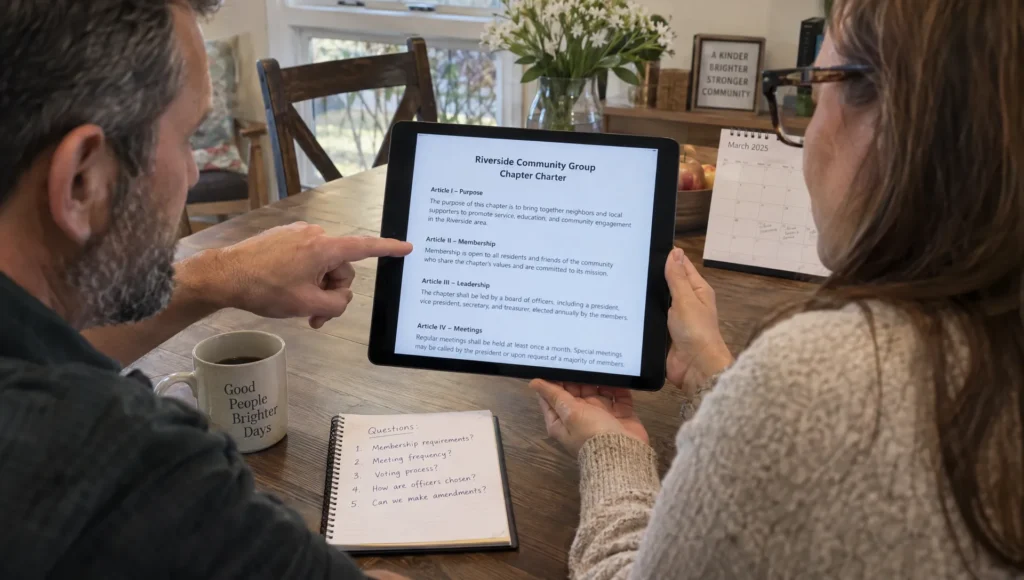
Democratic decline is often discussed as if it begins with a coup, a stolen election, or one authoritarian leader crossing a red line. In reality, it usually starts earlier and more quietly. It begins when citizens feel politics no longer belongs to them, when public institutions stop listening, when parties become vehicles for power instead of representation, and when people learn to express rage more easily than judgment.
That is why democratic decline is not only a warning to governments. It is also a curriculum for every political movement that wants to rebuild public life. If democracy weakens through disengagement, distrust, propaganda, corruption, and institutional inertia, then democratic renewal must work in the opposite direction: civic participation, transparent institutions, discursive democracy, and deliberative democracy.
The JustSocial manifesto frames this challenge as a failure of industrial-era political structures to adapt to a technological society. Citizens are no longer willing to be reduced to voters, taxpayers, and consumers. They expect to be heard more often than once every few years. A serious political movement should treat that expectation not as a threat, but as the raw material of democratic reform.
Democratic decline begins when politics becomes remote
Freedom House has reported many consecutive years of global democratic backsliding, while V-Dem has documented the spread of autocratization across different regions and political systems. These reports differ in methodology, but they point toward the same basic reality: elections alone do not guarantee democratic health.
A country can still hold elections while public debate deteriorates, media trust collapses, courts are pressured, legislatures become performative, and citizens feel powerless between election cycles. That is the danger of treating democracy as a calendar event rather than a civic practice.
For a political movement, the first lesson is simple: do not wait until institutions visibly break. By the time people agree that democracy is in crisis, the deeper habits that sustain democracy may already be weak.
Those habits include listening to opponents, accepting institutional limits, distinguishing disagreement from betrayal, and believing that participation can change outcomes. A movement for democratic reform has to rebuild those habits before it can win durable policy change.
Lesson 1: Treat apathy as a signal, not a character flaw
Political apathy is often described as laziness. That is too easy. Many citizens disengage because their experience has taught them that participation does not matter. They vote, then watch parties ignore them. They comment online, then watch outrage disappear into algorithms. They attend protests, then see institutions absorb the pressure without changing.
A democratic political movement should interpret apathy as evidence of broken feedback loops. People are not only asking, “What do I believe?” They are asking, “If I speak, will anyone hear me?”
This is where civic participation must be redesigned. The point is not to pressure everyone into constant activism. The point is to create credible channels where ordinary people can contribute at different levels of time, knowledge, and emotional energy.
Some citizens will join assemblies or local working groups. Some will vote on community priorities. Some will review public documents. Some will comment on policy drafts. Some will only participate occasionally. A healthy movement does not shame low-intensity participation. It makes it meaningful.
Lesson 2: Build civic participation as a rhythm
Election-centered politics creates long silences. A campaign asks people to care intensely for a few months, then asks them to wait years before being heard again. That rhythm is poorly matched to modern life, where citizens discuss public issues daily through messages, posts, groups, and local networks.
The manifesto’s idea of continuous public input responds to this mismatch. It imagines a society where citizens can weigh in regularly on public priorities, not as a replacement for institutions, but as a democratic layer that helps institutions see what people think, fear, need, and value.
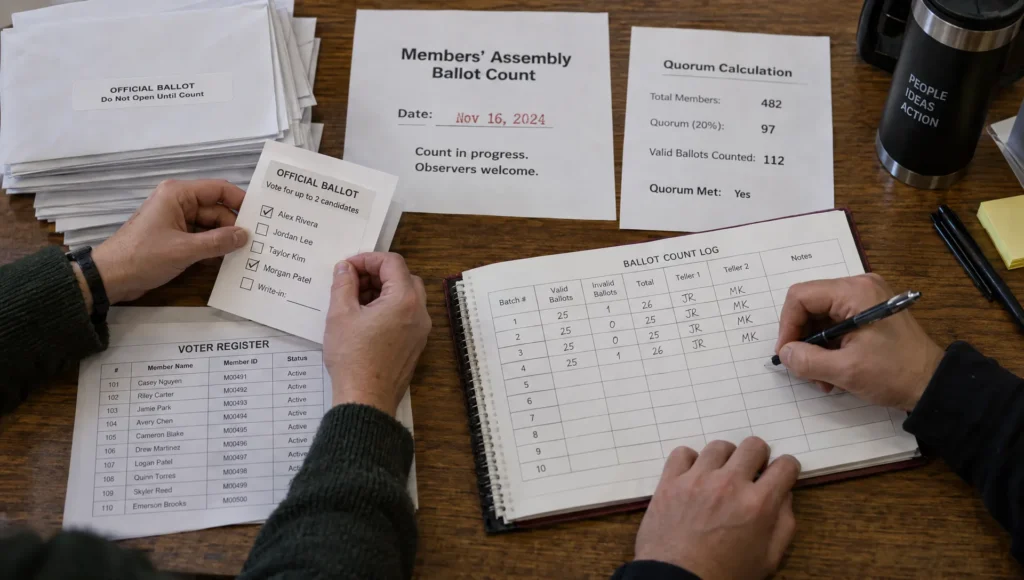
For a political movement, this means creating recurring civic rituals. Weekly issue discussions, monthly community ballots, public policy explainers, local deliberation circles, open digital forums, and transparent summaries of public opinion can all help transform participation from an emergency response into a civic habit.
The key is consistency. A movement cannot ask people to trust participation if it only appears during crises or fundraising drives. It must prove, repeatedly, that participation changes what the movement learns, says, and does.
Lesson 3: Discursive democracy must be designed, not wished into existence
Discursive democracy is the democratic value of public reasoning. It is the idea that citizens do not merely count preferences, they form and revise opinions through discussion. In a declining democracy, that process becomes polluted by humiliation, misinformation, tribal loyalty, and algorithmic escalation.
A movement cannot simply tell people to “have better conversations.” It has to design spaces that reward better conversations.
That includes moderation rules that protect disagreement without tolerating harassment. It includes formats that separate questions of fact from questions of value. It includes public summaries that show participants their views were understood accurately, even when they did not win.
It also includes listening where people already are. A small reform movement may not have the budget to commission large polling operations, but it can still observe public language, recurring objections, and emerging concerns across digital spaces. Tools that help organizers monitor public conversations on X and Reddit can be useful when used ethically, not to manipulate people, but to understand where civic frustration is already becoming politically meaningful.
Discursive democracy is not a comment section. It is a discipline. It turns scattered speech into public understanding.
Lesson 4: Deliberative democracy turns opinion into judgment
If discursive democracy is about conversation, deliberative democracy is about considered judgment. It asks citizens to weigh tradeoffs, hear evidence, encounter opposing views, and make recommendations that can guide public action.
This matters because democratic decline feeds on simplification. Complex problems become slogans. Opponents become enemies. Every compromise looks like betrayal. Deliberative democracy works against that decline by slowing politics down enough for citizens to think together.
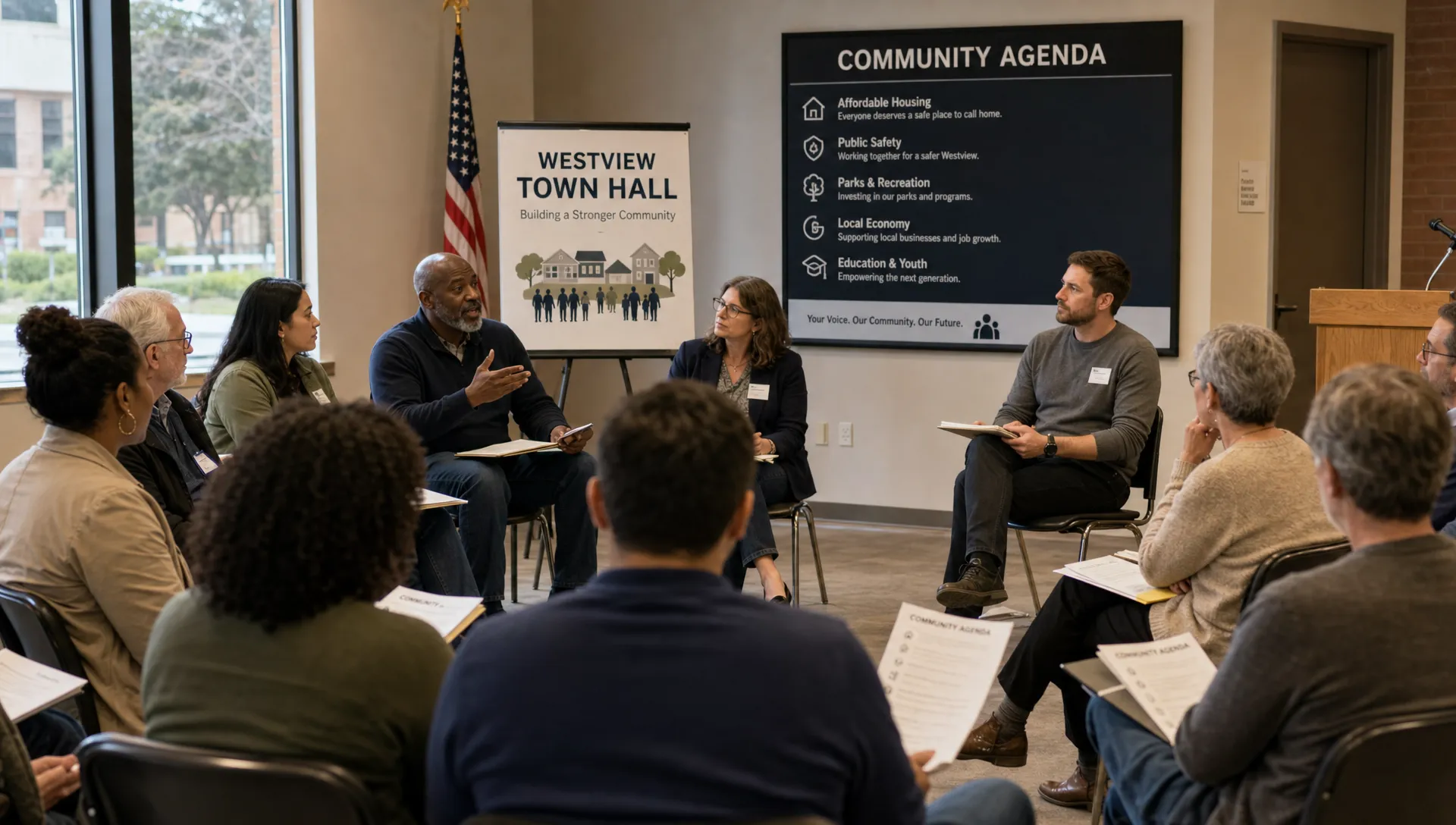
A political movement can practice deliberation before it has state power. It can convene citizen panels, publish balanced briefing materials, invite expert testimony, and ask participants to explain not only what they prefer, but why. It can report minority opinions fairly. It can show where consensus exists and where disagreement remains legitimate.
That last point is crucial. The purpose of deliberation is not forced unity. It is public maturity. A movement that models fair disagreement becomes more credible than one that only performs certainty.
| Symptom of democratic decline | Common movement mistake | Better democratic lesson |
|---|---|---|
| Citizens feel unheard | More slogans and louder messaging | Create repeatable participation channels |
| Public debate becomes hostile | Treat opponents as unreachable | Build structured spaces for discursive democracy |
| Institutions lose legitimacy | Promise instant disruption | Prove transparency, competence, and accountability |
| Policy becomes tribal | Poll supporters only | Use deliberative democracy to test tradeoffs |
| Young people disengage | Treat civic education as secondary | Teach participation as a life skill |
Lesson 5: Transparency is not a promise, it is infrastructure
Every declining democracy has a transparency problem. Citizens may technically have access to information, but the information is buried, fragmented, unreadable, or released too late to matter. When people cannot see how decisions are made, suspicion fills the gap.
The manifesto’s proposals for public recordings, committee documentation, and organized legal repositories point toward a deeper lesson: transparency should not depend on heroic journalists, leaks, or occasional investigations. It should be built into the operating system of government.
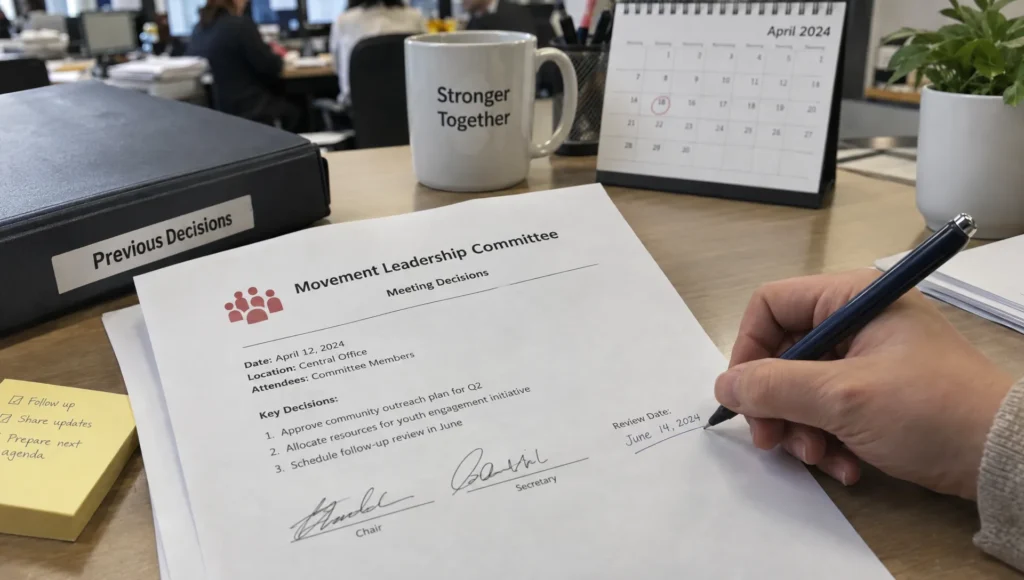
A political movement can begin with its own conduct. Publish meeting notes. Explain funding. Record internal votes when appropriate. Show how priorities are chosen. Make policy drafts visible. Admit uncertainty. Correct mistakes publicly.
This is not just moral hygiene. It is strategic. A movement that cannot operate transparently while small will not magically become transparent when it gains power.
Lesson 6: Technology must serve legitimacy
Digital tools can strengthen democracy, but they can also accelerate decline. The difference is not the tool itself. The difference is governance.
An online voting platform, public consultation system, or civic engagement tool must be designed around trust. Citizens need to know who controls the data, how privacy is protected, how identities are verified when necessary, how manipulation is prevented, and how results are interpreted.
The manifesto is optimistic about technology, but it is not merely technocratic. Its deeper claim is that modern technology should help the public sector listen, learn, and respond. That requires safeguards. Without them, digital democracy can become surveillance, noise, or a legitimacy theater where leaders collect input but ignore it.
A serious political movement should therefore avoid two extremes. It should reject the old view that public institutions can remain frozen in the 20th century. It should also reject the naive view that technology automatically democratizes power.
Technology becomes democratic only when citizens can understand it, challenge it, and see its influence on public decisions.
Lesson 7: Democratic education is a movement priority
Democracy does not reproduce itself automatically. People learn democratic habits through families, schools, communities, workplaces, media, and public institutions. When those environments reward passivity or tribal aggression, democracy weakens.
This is why the manifesto connects political reform with educational reform. A society that wants citizens to participate must educate them for participation. That means teaching students how to ask public questions, evaluate evidence, deliberate with peers, understand institutions, and connect personal concerns to common problems.
A political movement should support democratic education without turning schools into propaganda channels. The goal is not to tell students what to think. The goal is to help them practice how to think, speak, listen, organize, and decide with others.
JustSocial has explored this distinction in its article on how a movement can support democratic education while respecting pluralism. That approach matters because civic ignorance is not solved by partisan instruction. It is solved by civic practice.
Lesson 8: Build institutions, not only resistance
Democratic decline often produces protest, and protest is sometimes necessary. But protest alone cannot renew democracy. It can expose a crisis, delegitimize abuse, and create urgency. It cannot, by itself, build the systems that allow citizens to govern together.
A political movement has to become an institution builder. That does not mean becoming rigid or bureaucratic. It means creating durable practices that outlast a news cycle.
This includes local chapters that know their communities, digital tools that preserve institutional memory, volunteer roles that develop skill over time, policy groups that can translate values into proposals, and transparent decision processes that prevent personality cults.
It also means understanding the difference between movement energy and governing capacity. Energy gets attention. Capacity earns trust.
For readers thinking about this practically, JustSocial’s article on political movement strategy for long-term reform expands on how movements can organize beyond short-term reaction.
The deepest lesson: citizens must feel like members, not spectators
The manifesto’s discussion of the Greek polis is important because it points to a political feeling that modern states have largely lost. In the polis, citizenship was not only a legal status. It was a lived relationship between the person and the community.
Modern societies cannot and should not copy the ancient polis. It was small, exclusionary, and historically specific. But the emotional lesson still matters: democracy is strongest when citizens feel they are members of public life, not spectators watching elites perform politics from a distance.
That is why democratic decline is not only institutional. It is existential. People lose the sense that politics can give common life meaning. They retreat into private consumption, online anger, or cynical detachment.
A democratic political movement has to offer a better civic identity. Not blind loyalty. Not ideological purity. Not worship of leaders. A better identity is this: we are people capable of governing ourselves, if we build the habits, tools, and institutions that make self-government real.
This connects directly to JustSocial’s reflection on political movement lessons from the Greek polis, especially the challenge of recovering civic intensity without repeating ancient exclusions.
From decline to renewal
The central mistake of many democratic movements is believing that decline can be reversed by replacing the wrong leaders with the right leaders. Leadership matters, but democratic decline is deeper than personnel. It is a breakdown in participation, trust, conversation, education, transparency, and institutional responsiveness.
The opposite of democratic decline is not merely electoral victory. It is a public culture where citizens can speak, listen, learn, decide, and hold power accountable continuously.
That is a larger task than winning a campaign. It is also a more hopeful one. If decline is built through habits, renewal can be built through habits too.
A political movement that understands this will not only ask, “How do we win?” It will ask better questions: How do we make participation normal? How do we make disagreement productive? How do we make institutions visible? How do we educate for citizenship? How do we ensure technology serves the people rather than replacing them?
Those are the questions democratic decline forces us to answer. They are also the questions that can turn a movement from a reaction into a beginning.
Frequently Asked Questions
What can a political movement learn from democratic decline? It can learn that democracy weakens long before institutions formally collapse. Movements should rebuild participation, trust, transparency, public reasoning, and civic education before crisis becomes irreversible.
How is civic participation different from voting? Voting is essential, but civic participation is broader. It includes public discussion, local organizing, policy feedback, community decision-making, volunteering, deliberation, and ongoing accountability between elections.
Why are discursive democracy and deliberative democracy important? Discursive democracy helps citizens form opinions through public conversation. Deliberative democracy helps citizens turn those opinions into considered judgments after weighing evidence, tradeoffs, and opposing views.
Can technology solve democratic decline? Technology can help, but it cannot solve democratic decline by itself. Digital tools must be transparent, accountable, privacy-conscious, and connected to real institutional response, or they risk becoming another layer of distrust.
Help build the democratic habits we need
Democratic decline is not inevitable. It is a warning that old political structures are failing to meet the civic needs of modern citizens.
JustSocial exists to advance a political movement built around continuous civic participation, transparent institutions, and the belief that citizens should have a real role in shaping public life. If these ideas resonate with you, read, share, volunteer, organize locally, and help turn democratic frustration into democratic capacity.