Most democracies still rely on an old bargain: citizens obey the law, pay taxes, vote every few years, and then trust representatives to govern in their name. That bargain made sense when information moved slowly, public administration was paper-based, and large-scale civic participation was difficult to organize.
By 2026, it feels increasingly thin. Citizens are more informed, more connected, and more exposed to public decisions in real time, yet their formal power is still concentrated into rare election days. The result is a legitimacy gap. People are asked to live under decisions they can discuss endlessly online but rarely shape meaningfully through public institutions.
Deliberative democracy offers a serious way to rewrite that bargain. It does not treat the public as a crowd to be measured, manipulated, or mobilized. It treats citizens as capable co-authors of public judgment, provided the state gives them time, evidence, structure, and real channels of influence.
This is where deliberative democracy meets the new social contract. In the JustSocial manifesto, the citizen is no longer reduced to voter, taxpayer, and private consumer. The citizen becomes a continuous participant in public life, and the state becomes responsible for listening in a measurable, transparent, and technologically mature way.
Why the Old Social Contract No Longer Matches Democratic Life
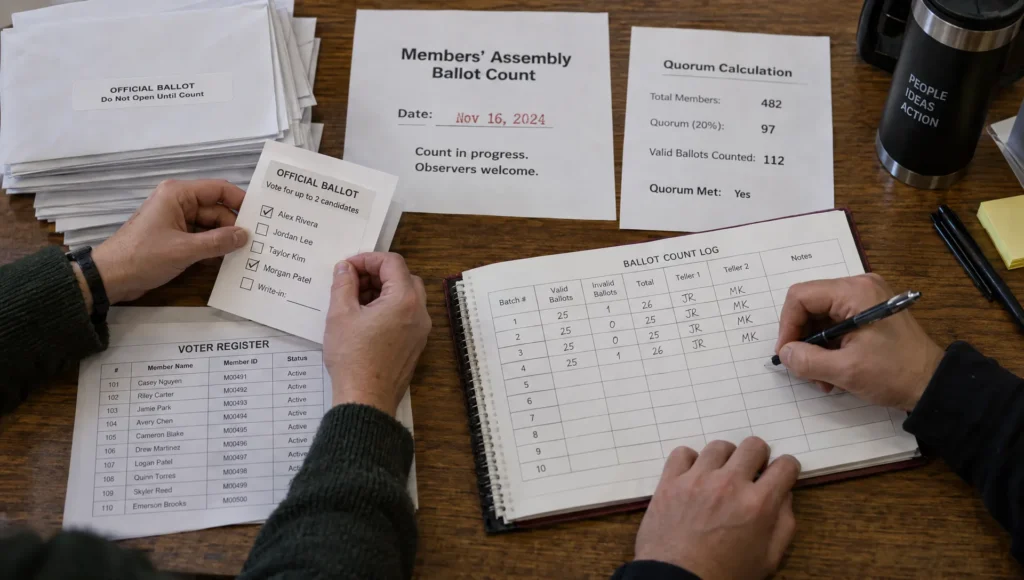
The classic social contract is usually imagined as an exchange. Individuals surrender some freedom to the state, and the state provides order, rights, security, infrastructure, and public services. In representative democracies, elections become the central ritual of consent.
That model has a problem: consent becomes too occasional. A vote every few years cannot carry the full weight of modern democratic legitimacy. It cannot express how citizens think about a war, a school reform, a tax change, a housing crisis, a climate policy, a judicial reform, or a public technology system as those issues unfold.
The old contract also assumes that public institutions can understand society through elections, polling, lobbying, media pressure, and expert administration. But these channels are distorted. Elections simplify complex preferences into party competition. Polls measure opinion without giving citizens time to learn. Lobbying gives organized interests privileged access. Social media amplifies outrage more easily than judgment.
A new social contract must therefore include something stronger than periodic representation and louder than online reaction. It must include civic participation that is continuous, structured, inclusive, and connected to decision making.
That does not mean every citizen votes on every detail of every policy. It means the state must build institutions that let citizens learn, deliberate, signal priorities, review tradeoffs, and hold representatives accountable between elections. For a broader civic participation angle, JustSocial has already argued for a new digital social contract built around continuous participation. Here, the focus is narrower: deliberation as the moral and practical bridge between public input and legitimate public power.
What Deliberative Democracy Adds to the Contract
Deliberative democracy begins with a simple claim: political decisions are more legitimate when they are shaped by public reasoning among free and equal citizens. It is not enough to count preferences. Democracies must also create the conditions in which preferences can become informed judgments.
That distinction matters. A snap poll asks what people think now. A referendum asks which option they choose. A deliberative process asks what citizens conclude after hearing balanced evidence, questioning experts, considering opposing views, and discussing tradeoffs with others who do not necessarily share their background or ideology.
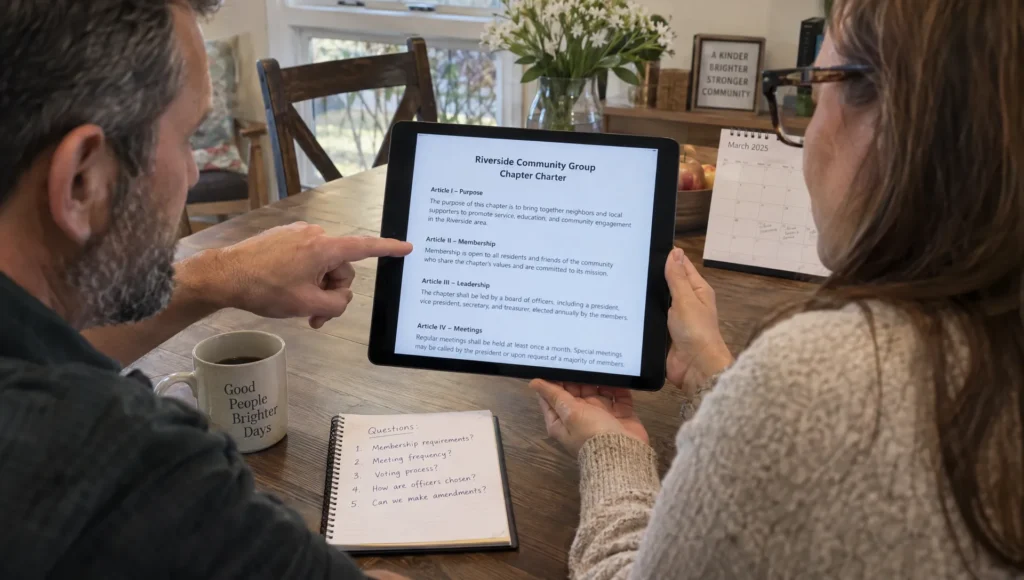
The OECD’s work on representative deliberative processes has helped mainstream this idea in public governance. Citizens’ assemblies, citizens’ juries, and deliberative panels have been used around the world to address issues such as climate policy, constitutional reform, urban planning, health policy, and electoral reform.
The most important feature is not the meeting format. It is the change in democratic expectation. The public is no longer treated only as an audience watching political actors perform. The public becomes a reasoning body that can examine evidence and make recommendations.
In a new social contract, deliberative democracy gives citizens a right to more than expression. It gives them a right to public conditions that make meaningful judgment possible. That includes accessible information, fair facilitation, balanced expert input, transparent agendas, and a visible path from civic deliberation to institutional response.
From Consent to Co-Authorship
The strongest version of the new social contract does not merely ask government to consult citizens more often. Consultation can still be shallow. A survey can be ignored. A town hall can be dominated by the loudest voices. A digital platform can become a comments box with better branding.
Co-authorship means something deeper. Citizens help define the public problem, examine possible solutions, deliberate on tradeoffs, and see how their input affected the final decision. Representatives still govern, courts still protect rights, administrators still implement policy, and experts still provide knowledge. But the public is present throughout the process, not only at the beginning or end.
| Old democratic bargain | New deliberative social contract |
|---|---|
| Citizens vote periodically | Citizens participate continuously and meaningfully |
| Public opinion is inferred through elections, polls, and media | Public judgment is developed through structured deliberation |
| Experts advise government behind institutional walls | Experts inform citizens in open, balanced, reviewable processes |
| Representatives claim a broad mandate after elections | Representatives must explain how civic input shaped decisions |
| Citizens are mainly governed subjects | Citizens become co-authors of public priorities |
This shift also changes how we think about disagreement. In the old model, disagreement is often treated as a threat to governability. In a deliberative model, disagreement is treated as democratic material. The goal is not to erase conflict. The goal is to process conflict fairly enough that even losing sides can recognize the legitimacy of the outcome.
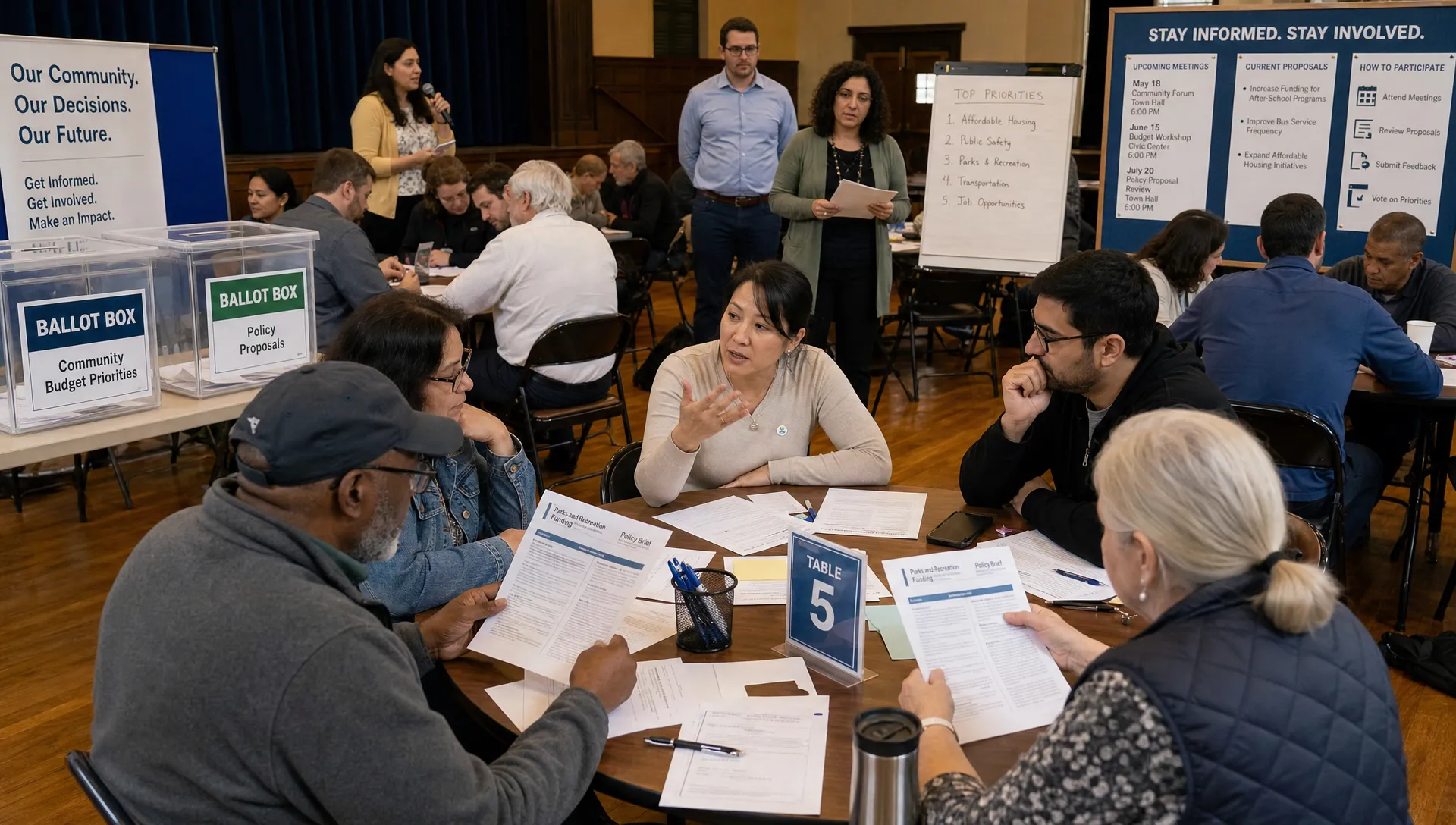
Discursive Democracy: The Wider Conversation Around Deliberation
Deliberative democracy cannot exist only inside formal assemblies. It needs a surrounding culture of public conversation. That is where discursive democracy becomes essential.
Discursive democracy refers to the broader public sphere where citizens, journalists, academics, community leaders, activists, and elected officials exchange reasons. It includes formal debate, media analysis, local discussion, classroom learning, social networks, civic forums, and everyday argument about public life.
If deliberative democracy is the structured room where citizens weigh evidence, discursive democracy is the open public square where issues become visible, language is formed, and competing narratives are tested. A healthy democracy needs both.
Without a discursive layer, deliberative panels risk becoming isolated civic workshops. They may produce thoughtful recommendations, but the wider public never absorbs the reasoning behind them. Without deliberative structures, discursive democracy can collapse into endless talk, outrage cycles, and identity performance.
The new social contract should connect the two. Public discussion should feed deliberative agendas. Deliberative outcomes should return to the public sphere in clear language. Journalists should be able to scrutinize the evidence. Schools and universities should help citizens understand the tradeoffs. Digital platforms should make public reasoning easier to follow, not harder.
This connects directly to JustSocial’s vision of technology-driven civic infrastructure. The point is not to make politics more digital for its own sake. The point is to make democratic conversation more accountable, more transparent, and more connected to public decision making.
Direct Democracy Needs a Deliberative Backbone
Direct democracy and deliberative democracy are often discussed as separate models, but a serious new social contract needs them to work together.
Direct democracy gives citizens direct power over choices. Deliberative democracy improves the quality of the judgment behind those choices. If direct democracy is used without deliberation, it can become reactive, emotional, or vulnerable to manipulation. If deliberation is used without any meaningful decision power, it can become symbolic.
A continuous direct democracy model should therefore include deliberative stages. Citizens may signal priorities daily or weekly through digital democracy tools, but major decisions should be supported by evidence review, facilitated discussion, expert questioning, and minority protections.
This is why the distinction explored in JustSocial’s guide to deliberative democracy vs direct democracy is so important. Direct democracy answers what the people choose. Deliberative democracy asks whether the people had a fair chance to understand, discuss, and revise their views before choosing.
The new social contract should not romanticize instant public opinion. It should respect citizens enough to give them better democratic conditions than a rushed vote or a viral slogan.
The State’s Side of the New Bargain
A deliberative social contract creates duties for the state. If government wants citizens to trust public institutions, it must stop treating participation as a favor granted from above. Participation becomes part of the democratic service the state owes its people.
That duty includes several practical commitments:
- Evidence access: Public decisions should be accompanied by clear, balanced, and accessible evidence that ordinary citizens can understand.
- Fair participation design: Deliberative processes should include diverse citizens, not only activists, donors, insiders, or those with free time.
- Privacy and security: Digital participation systems must protect identity, prevent coercion, and guard against manipulation.
- Institutional response: Governments should publicly explain what they accepted, rejected, or modified after civic deliberation.
- Civic education: Schools should teach students how to reason publicly, evaluate evidence, disagree respectfully, and participate in community decisions.
- Independent review: Academia, civil society, and oversight bodies should evaluate whether deliberative processes are fair and evidence-based.
The last point is especially important. In the JustSocial framework, academia is not imagined as a ruling elite. It is imagined as a public reasoning infrastructure that helps society examine facts, methods, and long-term consequences. That idea is developed further in JustSocial’s article on deliberative democracy and the role of academia.
A state that builds deliberative democracy must therefore invest not only in online voting platforms or decision-making software, but also in public knowledge systems. Technology can collect input. It cannot, by itself, create legitimacy. Legitimacy requires process, trust, transparency, and reason-giving.
The Citizen’s Side of the Bargain
A new social contract also asks more of citizens. Civic empowerment is not passive. If citizens demand more influence, they also accept a larger role in public judgment.
That role does not require everyone to become a full-time political activist. A healthy democracy should respect different levels of time, interest, ability, and expertise. Some people will vote often. Some will deliberate occasionally. Some will follow issues through trusted civic summaries. Some will contribute locally through schools, neighborhoods, unions, professional communities, or public forums.
The key change is cultural. Citizens begin to see public life not as a distant machine, but as a shared project. The state is no longer only something that happens to them. It becomes something they help shape.
This is close to the manifesto’s return to the idea of the Polis, not as nostalgia for a small ancient city-state, but as a reminder that democracy once meant daily belonging. Modern societies are too large and complex to copy the Polis directly. But with public technology, deliberative institutions, and continuous civic participation, they can recover some of its intimacy at scale.
How a Political Movement Can Start Before the State Does
A new social contract will not appear because institutions politely decide to give away power. Political systems tend to preserve themselves. Parties, bureaucracies, media structures, and interest groups benefit from familiar routines.
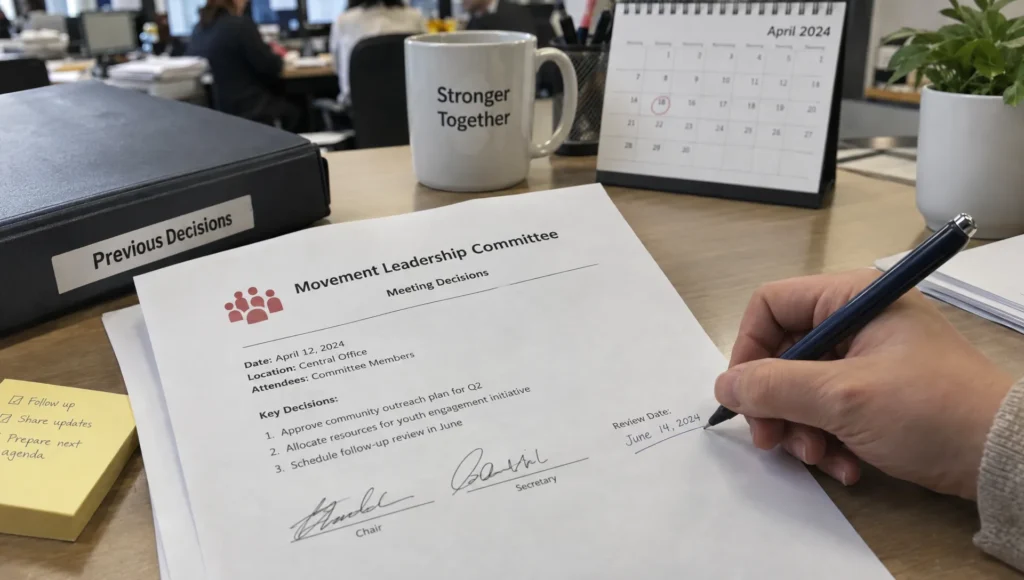
That is why a political movement matters. A movement can create language before laws change. It can build prototypes before governments adopt them. It can educate citizens before institutions invite them. It can pressure representatives, occupy party lists, organize local experiments, and prove that people want more than symbolic participation.
JustSocial positions itself as a political movement for continuous direct democracy, citizen empowerment, public transparency, and technology-driven civic engagement. Its role is not to claim that all answers already exist. Its role is to insist that the public must become part of producing the answers.
This is a crucial difference. A technocratic reform says better experts should fix the system. A populist revolt says the people should override the system. A deliberative political movement says the people deserve institutions that help them reason, decide, and govern with seriousness.
Risks That Must Be Designed Against
A deliberative social contract is not automatically safe. Bad design can turn civic technology into surveillance. Poorly moderated platforms can amplify harassment. Online voting can be attacked. Participation systems can be captured by organized groups. Deliberative panels can be manipulated through biased evidence or selective expert testimony.
There is also a risk of civic fatigue. If every issue demands attention, citizens may withdraw. Continuous democracy must not become compulsory politics. It must offer meaningful opportunities without making ordinary life impossible.
The solution is not to abandon democratic innovation. It is to design it with constitutional seriousness. Privacy protections, transparent algorithms, independent audits, pluralistic evidence, accessibility standards, and clear limits on data use should be treated as democratic foundations, not technical details.
The new social contract must be built around trust, but not blind trust. Citizens should be able to verify how participation systems work, who controls them, what data they collect, and how public input affects decisions.
What Success Would Look Like
Imagine a city considering a major education reform. Under the old model, officials draft a plan, interest groups lobby, media outlets frame the fight, citizens react, and elected representatives vote. Many people feel ignored, even if the policy is reasonable.
Under a deliberative social contract, the process looks different. Citizens first help identify the problem through public participation channels. A representative deliberative group studies evidence from teachers, parents, students, researchers, and administrators. The wider public follows the discussion through transparent summaries and discursive forums. Residents signal preferences through secure civic tools. Officials then publish a final proposal with a clear explanation of how civic input shaped the outcome.
Not everyone gets what they want. That is not the promise of democracy. The promise is that citizens can see a fair path from public concern to public reasoning to public decision.
That is the heart of deliberative democracy and the new social contract. The citizen is not a spectator. The state is not a distant manager. Public life becomes a shared, continuous process of learning, arguing, deciding, and improving together.
Frequently Asked Questions
How is deliberative democracy different from direct democracy? Direct democracy lets citizens make or approve decisions directly. Deliberative democracy focuses on the quality of discussion and evidence before decisions are made. A strong democratic system can use both.
Why does the new social contract need deliberation? Without deliberation, participation can become reactive or symbolic. Deliberation gives citizens the information, structure, and time needed to form public judgment, not just express immediate opinion.
What is discursive democracy? Discursive democracy is the wider public conversation that surrounds formal decision making. It includes media, civic debate, education, public forums, and digital discussion where citizens exchange reasons and shape political meaning.
Can deliberative democracy work online? Parts of it can work online, especially access to evidence, public comments, agenda-setting, and secure civic input. But the design must protect privacy, prevent manipulation, and ensure that participation is inclusive and transparent.
Help Build the Democratic Infrastructure We Need
If democracy is going to move beyond the old voter-taxpayer-consumer model, citizens must demand better institutions and help build them. Deliberative democracy is not a luxury reform. It is a foundation for legitimate public power in a connected society.
Join the conversation, challenge the old contract, and explore the political movement working toward continuous direct democracy at JustSocial.