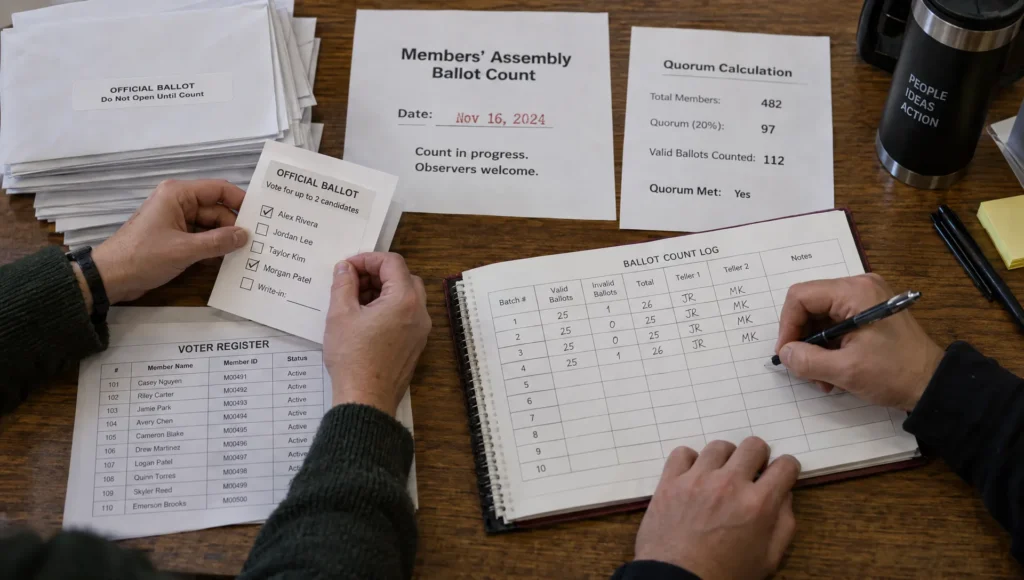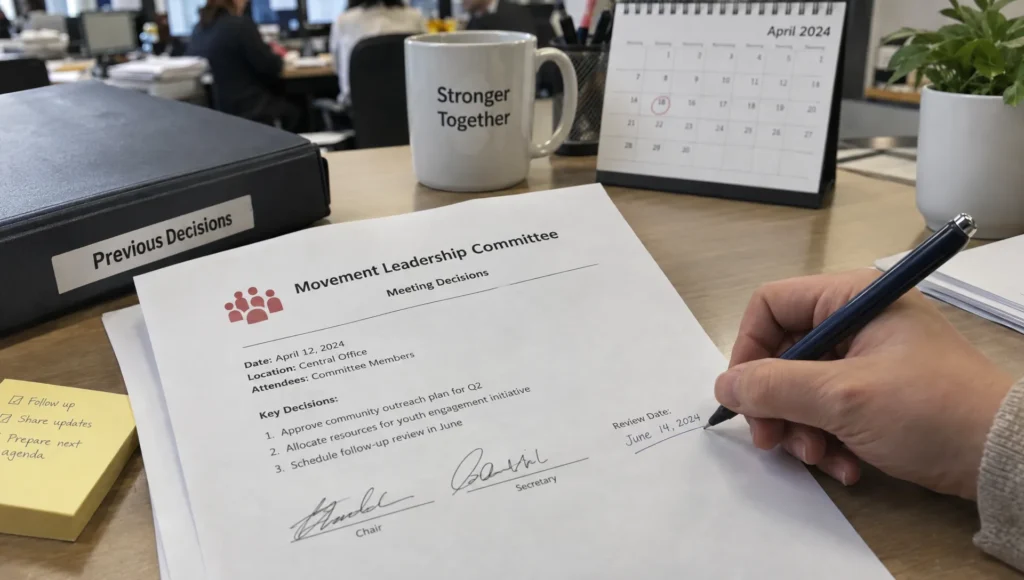
Democracy can survive disagreement. It cannot survive citizens who no longer inhabit a recognizable public world.
That is why discursive democracy needs more than open comment sections, online polls, town halls, and civic apps. It needs shared civic context: the common background that helps people understand what is being discussed, why it matters, what evidence is relevant, who is affected, which institutions can act, and how today’s debate connects to past decisions.
Discursive democracy is built on public reasoning. It asks citizens to do more than cast a ballot every few years. It asks them to explain, listen, challenge, revise, and keep participating. But without context, even sincere civic participation can become scattered reaction. People may speak loudly, but not necessarily to one another. They may vote, comment, or protest, but still operate from incompatible maps of reality.
The goal is not to make everyone agree. A healthy democracy needs conflict, minority voices, ideological competition, and moral tension. The goal is to create enough shared ground for disagreement to become politically useful instead of socially destructive.
What shared civic context really means
Shared civic context is not propaganda, consensus manufacturing, or one official truth imposed from above. It is the public infrastructure that lets citizens orient themselves inside a common civic conversation.
It includes the basic facts of an issue, the timeline of events, the relevant laws, the institutions responsible for action, the tradeoffs involved, the public arguments already made, and the consequences for different communities. It also includes civic memory: what leaders promised, what citizens demanded, what evidence was presented, and what decisions were eventually made.
In practical terms, shared civic context answers a few simple questions before debate begins: What problem are we talking about? What do we already know? What is disputed? Who has authority to act? What options are realistic? What values are in tension? What happens next?
| Civic ingredient | What it provides | What happens without it |
|---|---|---|
| Shared facts | A common reference point for public reasoning | Competing realities and endless correction loops |
| Institutional clarity | Understanding of who can decide and how | Anger directed at the wrong target |
| Civic memory | A record of promises, arguments, and outcomes | Repeated debates with no accountability |
| Affected voices | Visibility for people most impacted by policy | Decisions shaped by the loudest participants |
| Rules of debate | Standards for evidence, relevance, and conduct | Manipulation, harassment, and performative outrage |
This matters because discursive democracy does not treat citizens as passive spectators. It assumes people can become co-authors of public life when the conditions for meaningful participation exist. Context is one of those conditions.
Why public debate collapses without a common civic map
In a fragmented media environment, people often encounter politics through different information streams, different emotional cues, and different social incentives. One person sees a policy as a rescue plan. Another sees it as corruption. A third sees only a viral clip, detached from the legislative process that produced it.
This fragmentation does not merely create disagreement. It creates misalignment about what the disagreement is even about.
That is why JustSocial’s broader argument about discursive democracy in a fragmented media age is so important. A society cannot reason together if every citizen is forced to reconstruct the full civic background alone. When the burden of context falls entirely on individuals, the most informed people become exhausted and the least informed become easy targets for manipulation.
The result is a public sphere full of speech but short on shared meaning. People debate headlines rather than decisions. They attack identities rather than claims. They confuse visibility with legitimacy. They mistake participation for influence.
Discursive democracy tries to repair that failure by connecting speech to context, context to institutions, and institutions to accountability.
From the Polis to the platform
JustSocial’s manifesto returns to the Greek idea of the Polis, not as nostalgia for ancient city-states, but as a reminder of what political life can feel like when citizens experience the state as something immediate and concrete. In the Polis, civic life was not remote. The citizen could feel the relationship between debate, duty, office, taxation, war, culture, and public meaning.
Modern states lost much of that immediacy. Large republics became too complex for ordinary citizens to track day by day, and representative systems narrowed democratic participation into periodic voting. In the manifesto’s language, citizens became reduced to voters, taxpayers, and consumers.
The promise of modern technology is that some of the intimacy of the Polis can be rebuilt at scale. Not by pretending that a nation-state is a small town, and not by replacing every representative decision with a daily referendum, but by making public affairs legible, participatory, and continuous.
That is where shared civic context becomes essential. A platform can invite people to vote on local priorities, comment on committee hearings, or respond to public policy proposals. But if it does not show the background, the process, and the consequences, it will reproduce the worst habits of social media inside public life.
JustSocial’s manifesto for a continuous democratic future points toward civic tools that connect news, public action, parliamentary transparency, community voting, analytics, legal repositories, and education. The deeper principle behind those tools is context. Citizens should not be asked only to react. They should be equipped to understand.
Civic participation is not enough by itself
Civic participation is often treated as an automatic good. More signatures, more comments, more votes, more meetings, more surveys, more posts. In one sense, that is true. A passive society is easy to rule and hard to renew.
But participation without context can become noise. A petition may gather support from people who understand the issue deeply and from people who clicked after reading one sentence. A public consultation may collect comments that are impossible to compare. A digital vote may show preference without showing reasons. A protest may reveal urgency without clarifying policy.
Discursive democracy adds another demand: participation should become intelligible to the community. Citizens should be able to see not only what people chose, but why they chose it, what evidence they relied on, what tradeoffs they accepted, and what objections remain unresolved.
This does not mean every citizen must write an essay before taking civic action. It means civic systems should help transform many small acts of participation into a structured public record. The democratic value is not only the volume of voices. It is the ability of those voices to shape public reasoning.
Technology can organize context, but it cannot define democracy’s purpose
The private sector already understands the value of context. Businesses do not treat signals as isolated events. They connect data points, enrich records, track intent, route information to the right people, and measure outcomes. For example, a sales team might use AI-powered signal detection and outreach platforms to identify high-intent accounts and coordinate personalized follow-up.
Civic institutions can learn from that operational discipline, but they must not copy the commercial objective. In business, the goal may be conversion, pipeline, or meetings. In democracy, the goal is legitimacy, understanding, accountability, and the protection of public freedom.
This distinction matters. Civic technology should not manipulate citizens into agreement. It should help citizens and institutions see the public conversation more clearly. It should surface arguments, clarify evidence, preserve dissent, protect privacy, and make decision-making more accountable.
The manifesto’s proposed tools, such as parliamentary transparency platforms, community voting systems, public analytics, identity features, and organized legal repositories, all point toward a missing layer in modern government. That layer is not merely technical. It is civic context as public infrastructure.
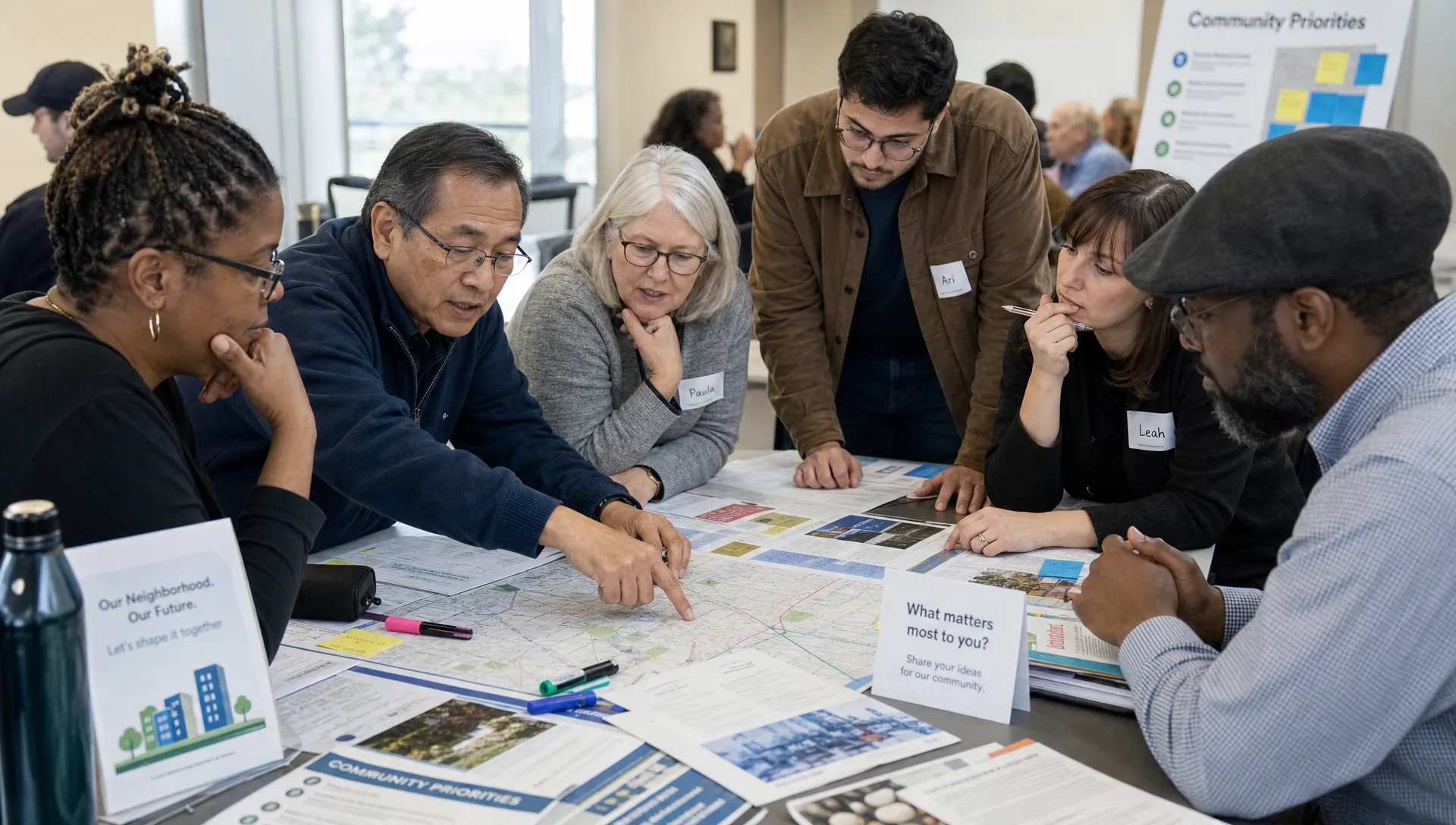
The missing layer between deliberative democracy and public action
Deliberative democracy has long emphasized discussion, reason-giving, and mutual justification. It asks citizens to weigh arguments rather than merely aggregate preferences. Discursive democracy shares that spirit, but it has a broader challenge in the digital age: public reasoning now happens across media platforms, comment threads, news cycles, civic apps, schools, courts, parliaments, and streets.
That means the democratic conversation needs connective tissue. A single deliberative forum can be well designed, but the wider public sphere may still be chaotic. A civic app can collect votes, but citizens may still lack the background needed to interpret the result. A parliamentary committee can publish documents, but the public may not know how those documents connect to daily life.
Shared civic context is the bridge between deliberation and action.
| Democratic layer | Core activity | What shared civic context adds |
|---|---|---|
| Civic participation | People speak, vote, petition, volunteer, and organize | Makes participation informed and comparable |
| Deliberative democracy | People exchange reasons and consider tradeoffs | Gives discussion a shared factual and procedural base |
| Discursive democracy | Public reasoning circulates across society and institutions | Connects debate, identity, evidence, memory, and accountability |
| Political movement | People mobilize around reform | Turns energy into durable institutional change |
This is also why civic apps can become spaces for structured public reasoning only when they are designed around context rather than engagement metrics alone. A platform that maximizes clicks may intensify reaction. A platform that organizes context can deepen judgment.
What shared civic context should look like in practice
A democratic society cannot rely on citizens to assemble context from scattered sources every time an issue appears. Public systems should make context visible by design.
For discursive democracy, that means civic platforms and institutions should develop a few core habits:
- Create public issue pages: Each major policy debate should have a clear page that explains the problem, timeline, responsible institutions, proposed options, evidence, costs, risks, and public participation channels.
- Separate facts from claims: Citizens should be able to distinguish verified information, expert analysis, political arguments, moral positions, and unresolved disputes.
- Preserve the argument record: Public comments, representative statements, committee documents, and citizen proposals should remain searchable and connected to decisions.
- Show who is affected: Context should include communities impacted by policy, especially those who are often absent from high-visibility debate.
- Protect privacy while enabling identity: Citizens may need ways to participate with meaningful civic identity without exposing themselves to harassment or surveillance.
- Moderate for relevance and safety: Moderation should protect debate from abuse, spam, intimidation, and deliberate confusion while preserving legitimate dissent.
- Connect participation to institutions: Citizens should know whether their input informs a committee, a local budget, a party platform, a public consultation, or a nonbinding civic signal.
These practices do not remove politics from democracy. They make politics more honest. People will still disagree about values, priorities, taxes, rights, education, security, climate, and the proper role of the state. But they will disagree inside a clearer civic frame.
The education problem behind the context problem
The manifesto’s argument for educational reform is not separate from discursive democracy. It is central to it.
A society that asks citizens to participate continuously must also prepare citizens to participate meaningfully. If public education trains students only to pass standardized tests, obey schedules, and absorb fragmented subjects, it does not fully prepare them for democratic agency. Citizens need practice in asking questions, evaluating sources, understanding institutions, collaborating across difference, and connecting personal interests to public problems.
This is where project-based learning, student choice, civic discussion, and technology-assisted education become politically relevant. A classroom can become an early model of shared civic context. Students can learn how to choose topics together, investigate evidence, hear minority views, make collective decisions, and revise their views when new information appears.
That does not mean schools should become partisan training grounds. It means they should help students become citizens rather than only future workers. If the state expects people to obey laws, pay taxes, and accept public decisions, it also owes them the civic capacity to understand and influence those decisions.
In this sense, the critique that people are too uninformed for deeper democracy is incomplete. If citizens lack context, the answer is not permanent exclusion. The answer is better civic education, better public information, and better democratic design.
Why a political movement must build context before power
Every political movement faces a temptation: simplify the message, rally supporters, defeat opponents, and seek power as quickly as possible. Sometimes movements need sharp slogans and urgent mobilization. But a movement dedicated to discursive democracy has a different responsibility.
It must build the conditions for public reasoning even when those conditions slow it down.
That means a movement for democratic renewal should not ask people merely to join a side. It should invite them into a shared civic project. It should make its assumptions visible, welcome serious criticism, document its reasoning, and show how its ideas could be tested in communities, institutions, and platforms.
JustSocial’s position is powerful because it does not treat civic participation as decoration. It imagines citizens as a governing presence, not an audience. But for that vision to become durable, it must be built on shared civic context. Otherwise, even the most ambitious democratic tools could become another arena for fragmentation.
The movement’s task is therefore cultural as much as technical. It must help people remember that public life can be meaningful. It must make the state feel less remote. It must turn isolated anger into organized reasoning. It must show that citizens can be more than voters, taxpayers, and consumers.
The real promise of shared context
Shared civic context will not eliminate manipulation, corruption, apathy, or bad faith. No democratic design can do that completely. But it can raise the cost of confusion and lower the cost of participation.
It can help citizens enter debate without starting from zero. It can help representatives understand public reasoning rather than merely count public pressure. It can help journalists connect events to institutional processes. It can help schools teach democracy as a lived practice. It can help communities disagree without dissolving into mutual contempt.
Most importantly, it can restore a basic democratic feeling: that public life is not something happening elsewhere, behind closed doors, among people with private access to knowledge. It is something citizens can see, understand, question, and shape.
That is why discursive democracy needs shared civic context. Without it, speech remains fragmented. With it, civic participation can become public reason, and public reason can become democratic power.
Frequently Asked Questions
What is shared civic context in discursive democracy? Shared civic context is the common background that helps citizens understand a public issue, including facts, timelines, institutions, affected communities, tradeoffs, and the record of previous arguments and decisions.
How is discursive democracy different from deliberative democracy? Deliberative democracy focuses on reasoned discussion and mutual justification, often in forums or assemblies. Discursive democracy expands that logic across the wider public sphere, including media, civic apps, institutions, education, and everyday political conversation.
Does shared civic context mean forcing everyone to agree? No. Shared context is not forced consensus. It creates the conditions for productive disagreement by helping people debate the same issue with access to the same basic civic map.
Why is civic participation not enough on its own? Civic participation can become fragmented if people vote, comment, or protest without shared information about the issue or process. Context helps turn participation into informed public reasoning.
What role can a political movement play in building shared context? A political movement can model transparent reasoning, create civic tools, educate supporters, preserve public memory, and pressure institutions to make public decision-making more understandable and accountable.
Join the work of rebuilding public reason
If democracy is reduced to elections alone, citizens remain politically underused. If participation is reduced to online reaction, citizens remain politically fragmented. The next step is to build civic spaces where people can understand, reason, and act together.
That is the work JustSocial is trying to advance: a political movement for continuous civic participation, stronger public transparency, and democratic tools that make citizens visible to the state without reducing them to data points.
The future of democracy will not be saved by technology alone. It will be shaped by citizens who demand better institutions, better education, better public reasoning, and a shared civic context strong enough to carry real disagreement.