
Political Movement Lessons From the Greek Polis

A political movement that wants to renew democracy should not study the Greek polis as a museum object. It should study it as a warning and a challenge. The polis was intimate, demanding, participator
How a Political Movement Can Build Civic Tech Pilots

A political movement earns trust when it can do more than describe a better democracy. It must show, in public, how people can move from frustration to structured influence. That is what civic tech pi
Political Movement Funding With Trust and Transparency

A political movement does not lose trust only when money is stolen. It loses trust when supporters cannot tell who funds it, what the money buys, who benefits from spending decisions, and whether dono
Political Movement Messaging Beyond Left vs Right

Most political messaging still behaves as if society can be divided into two tidy camps: left and right, progressive and conservative, government and market, nation and individual. That frame is emoti
Political Movement Playbook for Democratic Reform

Democratic reform does not win because a manifesto is inspiring, a protest is large, or a platform gets attention for a week. It wins when ordinary people can repeatedly turn concern into public reaso
Discursive Democracy and Anonymous Civic Identity

Discursive democracy begins with a simple but uncomfortable truth: people often do not say what they really think when political speech can cost them a job, a friendship, a school relationship, a perm
Discursive Democracy for Protest Movements
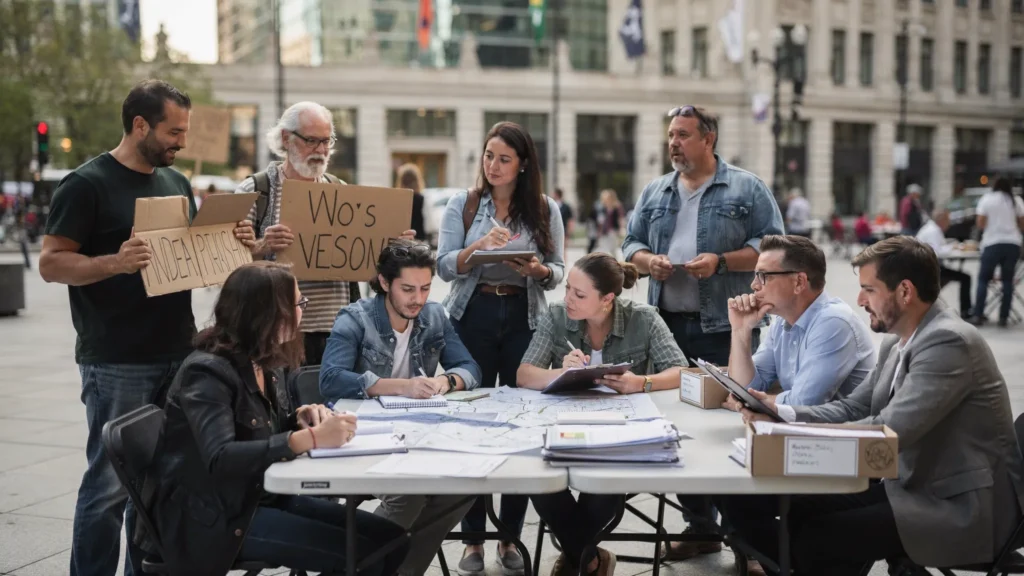
Discursive democracy for protest movements begins with a simple observation: a protest can reveal a crisis of legitimacy, but it does not automatically create a better decision. Marches, slogans, boyc
Discursive Democracy in Public Hearings: Better Rules
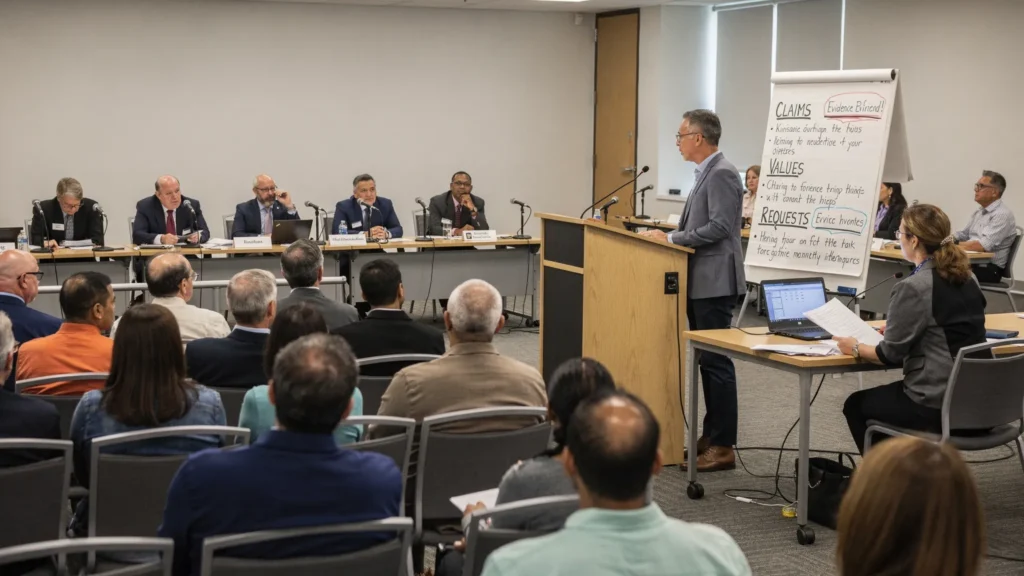
Public hearings are supposed to be one of the most direct encounters between citizens and power. A council, school board, agency, or parliamentary committee opens the room, invites the public to speak
Democracy in the Digital Age – From Theory to Practice

Foundations of Democracy and Its Principles Democracy is the rule of the people (in Greek: the combination of the words demos and kratos). In classical Athens, citizen participation in elections was direct, so citizens had daily influence, but there were limitations on who was defined as a citizen.