Most political messaging still behaves as if society can be divided into two tidy camps: left and right, progressive and conservative, government and market, nation and individual. That frame is emotionally powerful, but it is too small for the problems citizens actually face.
A serious political movement can no longer win trust by asking people to pick a side and wait for salvation after the next election. The more durable message is different: people should have a continuous, inspectable role in public decisions. They should be able to speak, deliberate, vote where appropriate, audit outcomes, and see how their input changed the result.
That is not a soft middle position. It is a structural challenge to politics as usual.
For a movement like JustSocial, messaging beyond left vs right means shifting the public conversation from ideology-first politics to participation-first democracy. The question is not only, “Which policy do you support?” The deeper question is, “Who gets to shape the policy, how are tradeoffs examined, and what proof does the public receive after the decision is made?”
Why the left vs right frame is not enough
Left and right still matter. People disagree about taxation, identity, religion, national security, welfare, education, markets, borders, and the role of the state. A political movement should not pretend those disagreements are fake.
The problem is that the left vs right frame often turns every public issue into a team sport before citizens have a chance to understand the decision itself. It asks people to defend a camp instead of examine evidence, name tradeoffs, or build common rules for participation.
In practice, the binary frame creates several failures:
- It reduces citizens to predictable demographic blocs.
- It rewards outrage that performs well online but produces weak public decisions.
- It makes every compromise look like betrayal.
- It lets institutions claim legitimacy through elections while ignoring citizens between elections.
- It hides process questions, such as who set the agenda, who was heard, what evidence was used, and who must respond.
This is one of the core tensions in JustSocial’s manifesto, The Face of Democracy. The manifesto argues that modern society still carries institutions shaped by older industrial-era assumptions, while digital life has already changed how people communicate, learn, organize, and expect to be heard. Citizens are no longer satisfied with being treated as voters every few years, taxpayers every month, and consumers every day.
A political movement that wants to speak beyond left vs right must name that dignity gap directly.
The new axis: citizen power vs citizen passivity
The better axis for democratic messaging is not left vs right. It is citizen power vs citizen passivity.
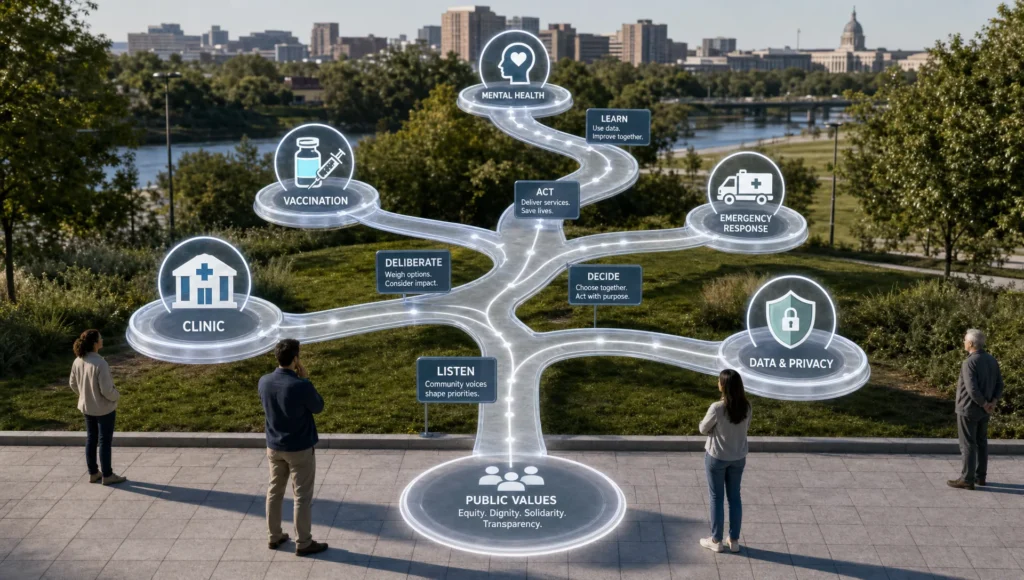
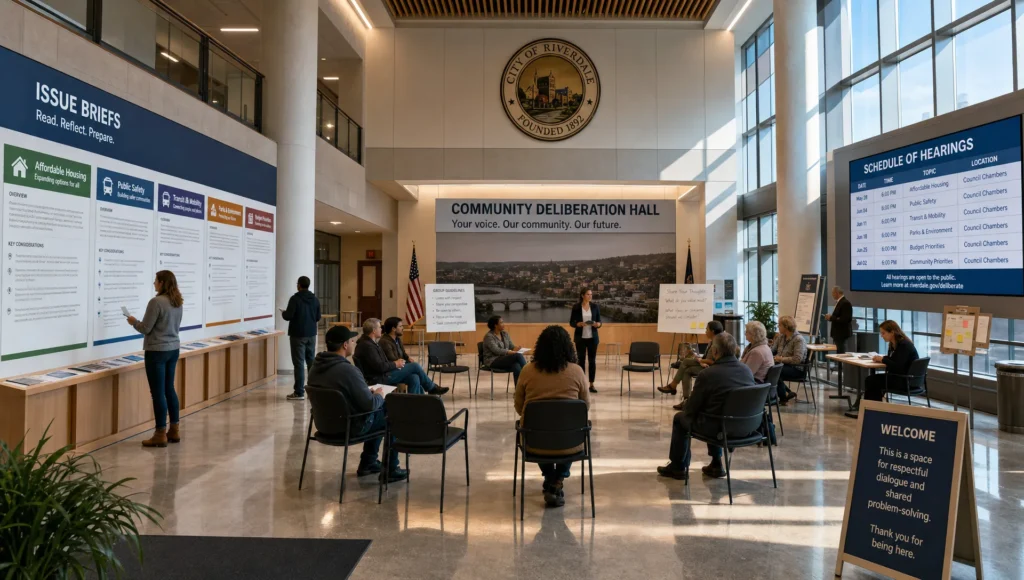
On one side is a political culture where the public is asked to cheer, donate, vote, and then step back. On the other side is a culture where civic participation becomes a normal part of public life, supported by rules, technology, education, transparency, and follow-through.
This frame does not erase ideological disagreement. It changes the container in which disagreement happens.
| Old partisan frame | Participation-first frame |
|---|---|
| “Our side must defeat their side.” | “The public deserves a fair process that can be inspected.” |
| “Trust our leaders.” | “Trust the published rules, evidence, records, and outcomes.” |
| “Vote for us and we will fix it.” | “Participate before, during, and after decisions.” |
| “The other camp is the problem.” | “Unaccountable decision-making is the problem.” |
| “Policy is what leaders announce.” | “Policy is what citizens can trace from input to implementation.” |
The message becomes more resilient because it does not depend on asking everyone to agree. It asks them to demand better democratic infrastructure.
A conservative parent, a progressive student, a small business owner, a union member, a veteran, a teacher, and a civil servant may disagree on policy. But all can understand the need for clear public decisions, transparent evidence, meaningful participation, and implementation tracking.
That is the opening for a new kind of political movement.
Beyond left vs right is not vague centrism
One common mistake is to say, “We are neither left nor right,” and leave it there. That sounds fresh for about five seconds, then it becomes empty.
Messaging beyond left vs right must answer a harder question: if you are not organizing around the old camps, what are you organizing around?
For JustSocial, the answer is not bland moderation. It is continuous civic participation. It is the belief that democracy should not be reduced to episodic elections and professional political bargaining. It should become a living system where citizens can contribute to agenda-setting, public reasoning, deliberation, decision-making, and oversight.
That kind of message can hold strong values without becoming trapped in the old binary. It can say:
We do not ask citizens to abandon their beliefs. We ask public institutions to hear those beliefs continuously, structure disagreement fairly, publish the evidence behind decisions, and show the public what changed.
This is a more demanding message than “unity.” Unity often asks people to suppress conflict. A participation-first movement asks people to process conflict with better rules.
The message should start with dignity
The emotional core of the message is dignity. People do not only want policy outcomes. They want to know that they matter in the public life of their city, school, community, and country.
The manifesto’s critique of the current social contract is powerful here: the modern citizen is often reduced to a narrow role. Go through a schooling system you did not shape. Enter the workforce. Pay taxes. Choose from party lists every few years. Watch decisions happen elsewhere.
Messaging beyond left vs right should challenge that reduction in plain language.
A strong dignity message might sound like this:
You are more than a voter, taxpayer, and consumer. You are a citizen. Public decisions should not happen above your head, behind your back, or only in your name. They should happen with visible ways for you to participate, evaluate evidence, and hold institutions accountable.
This language can reach people who feel alienated from traditional politics without feeding nihilism. It does not say, “Burn everything down.” It says, “You belong inside the democratic process.”
Use discursive democracy to change the conversation
Every political movement has a discourse layer. It includes speeches, posts, town halls, interviews, comments, slogans, memes, local meetings, and informal conversations. Most movements treat this layer as a battlefield for attention.
A participation-first movement should treat it as discursive democracy.
Discursive democracy is the practice of improving public conversation so that claims, reasons, evidence, identities, and disagreements become visible and usable. It does not mean every conversation becomes polite or academic. It means public talk is structured enough to feed real civic work.
For messaging, this creates a major shift. Instead of asking supporters to repeat slogans, ask them to improve the quality of public reasoning.
For example, when discussing a school reform, a discursive message does not only say, “The system is broken.” It asks:
- What exact decision is being made?
- Who owns the decision?
- What evidence is available?
- Which groups are affected differently?
- What tradeoffs are being ignored?
- What response should the public demand?
Those questions turn frustration into civic participation. They also make the movement harder to dismiss as a protest brand or personality project.
Use deliberative democracy to prove seriousness
Discursive democracy improves the public conversation. Deliberative democracy turns that conversation into decision-quality judgment.
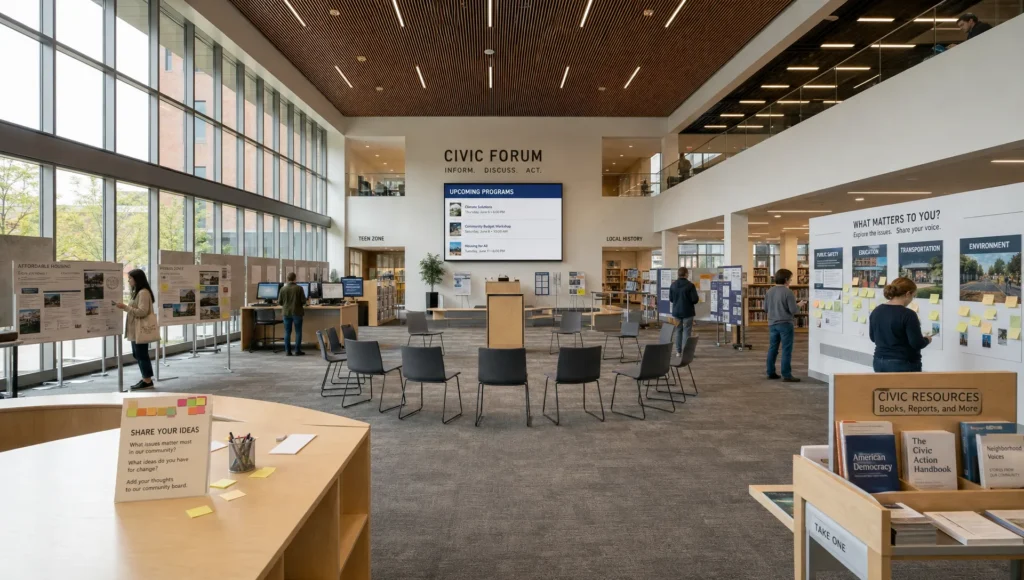
A movement that speaks beyond left vs right should constantly show that it is not afraid of complexity. It should invite citizens into structured processes where they can compare options, hear from affected groups, examine evidence, and produce recommendations that decision-makers can actually use.
This matters because many political messages are emotionally strong but operationally weak. They tell people what to feel, not what to build.
Deliberative democracy gives the movement a proof layer. It says: we do not only demand participation, we know how to organize it responsibly.
A deliberative message might sound like this:
Before a city changes a school schedule, housing rule, transport route, or budget priority, citizens should receive a clear issue pack, participate in structured discussion, see competing options, and get a public response explaining what was accepted, rejected, or revised.
That sentence is less viral than a partisan attack. It is also more trustworthy.
Put technology behind people, not above them
JustSocial’s manifesto includes several technology concepts, including civic action tools, public records of parliamentary work, community voting, analytics, and educational technology. These ideas matter, but the message should not begin with technology.
Most citizens do not wake up wanting blockchain, analytics dashboards, or AI systems. They want public life to feel less rigged, less confusing, less performative, and less distant.
So the message should be: technology can help citizens participate, but it must be governed by democratic rules.
The same expectation exists outside politics. People increasingly expect complex services to combine digital convenience with human explanation, such as modern tools with human guidance for decisions like home financing. Civic technology should meet an even higher standard because democratic participation affects rights, public resources, and legitimacy.
That means a movement should talk about technology in human terms:
- Can people understand the decision?
- Can they participate safely?
- Can they verify what happened?
- Can they appeal unfair treatment?
- Can they see how public input shaped the outcome?
If the answer is no, the technology is not democratic infrastructure. It is just software.
A practical message architecture for a political movement
A movement message needs more than a slogan. It needs a repeatable architecture that can be used in speeches, web pages, volunteer training, social posts, town halls, and policy campaigns.
Here is a simple structure for messaging beyond left vs right.
| Message layer | What it should communicate | Example language |
|---|---|---|
| Problem | Citizens are excluded between elections. | “Public decisions are made continuously, but public participation is treated as occasional.” |
| Dignity | People deserve a real civic role. | “You are not only a voter. You are a citizen with a stake in everyday decisions.” |
| Method | Discourse and deliberation make participation useful. | “We turn public concerns into evidence, options, recommendations, and public receipts.” |
| Safeguards | Participation must protect rights and minorities. | “More participation must also mean privacy, accessibility, anti-manipulation rules, and constitutional limits.” |
| Proof | Trust comes from visible records. | “Every serious process should publish what was heard, what was decided, why, and what happens next.” |
| Invitation | People can start locally. | “Pick one decision in your school, city, workplace, or community and build a participation loop around it.” |
This architecture gives supporters a consistent way to speak. It also prevents the movement from drifting into empty anti-establishment language.
What the message sounds like across issues
The strongest beyond-left-and-right messaging does not avoid real issues. It reframes them through civic power, transparency, and deliberation.
| Issue | Standard left vs right message | Participation-first message |
|---|---|---|
| Education | “More public funding” vs “more parental choice” | “Students, parents, teachers, and experts should help shape school policy through structured deliberation, with public evidence and follow-up.” |
| Housing | “Regulate developers” vs “cut regulation” | “Communities need a transparent housing decision process that shows constraints, tradeoffs, public input, and implementation results.” |
| Public safety | “Back enforcement” vs “reform enforcement” | “Residents, service communities, legal experts, and affected groups should evaluate safety options with evidence and rights protections.” |
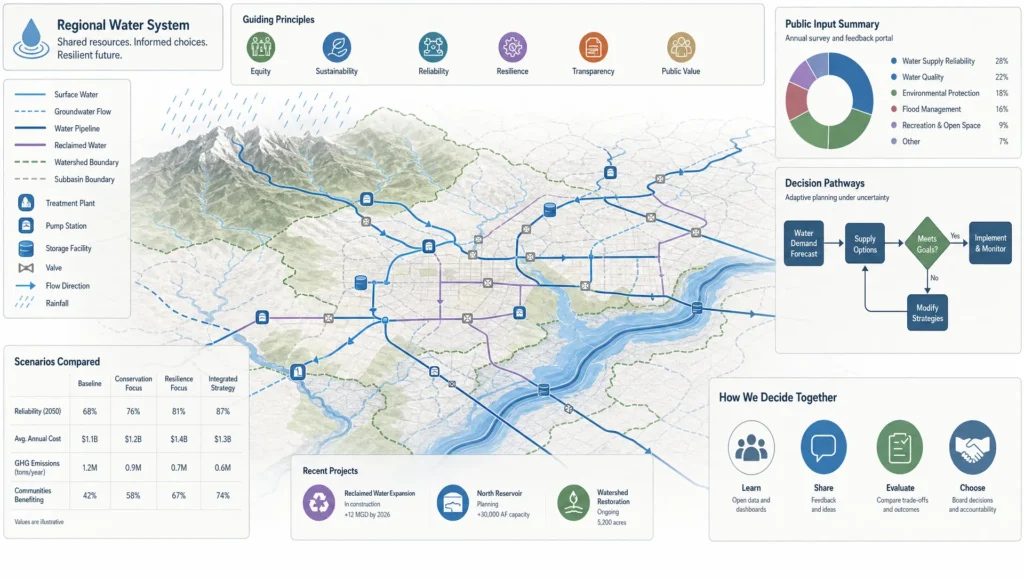
| Budgets | “Raise taxes” vs “cut spending” | “Taxpayers should see budget tradeoffs clearly and participate in priority-setting before decisions are locked.” |
| Technology | “Modernize government” vs “protect against surveillance” | “Public tech must be useful, accessible, privacy-preserving, and auditable.” |
Notice the pattern. The participation-first message does not eliminate policy disagreement. It creates a better route for disagreement to become legitimate public judgment.
The movement should name enemies carefully
Every political movement needs to explain what it opposes. But beyond-left-and-right messaging must be careful not to replace one tribal enemy with another.
The enemy is not “the left,” “the right,” “the people,” “the elites,” “the bureaucrats,” or “the experts” as total categories. The enemy is a set of behaviors and structures:
- Decisions made without public traceability.
- Elections treated as permission to ignore citizens between terms.
- Public consultation with no duty to respond.
- Expert advice used as a shield against accountability.
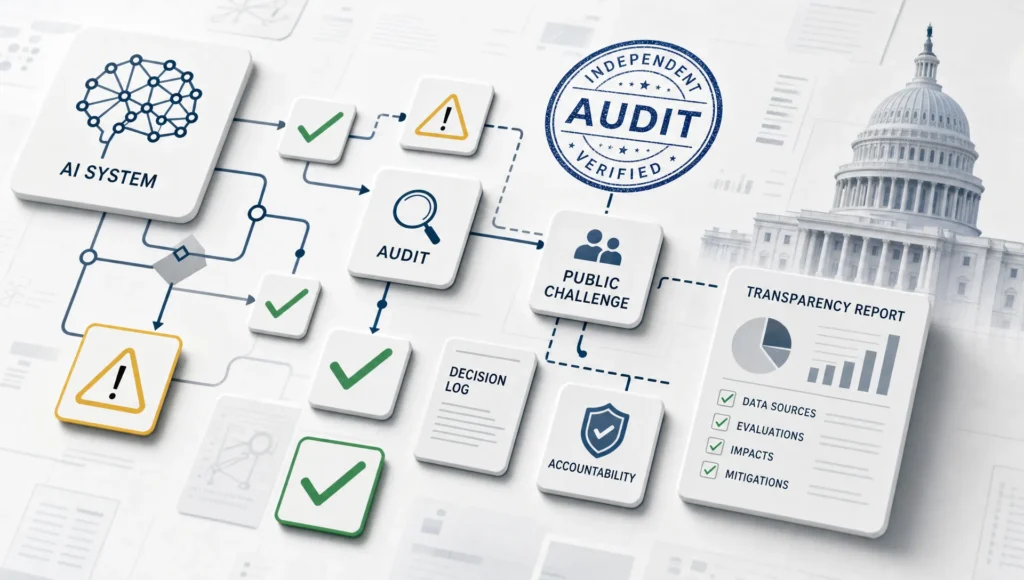
- Technology deployed without transparency, accessibility, or appeal.
- Political communication designed to inflame rather than inform.
This matters because a movement that attacks whole groups will eventually reproduce the same exclusion it criticizes. A movement that attacks broken processes can invite people from many backgrounds to help build better ones.
Connect the message to the People’s Branch idea
One of the most distinctive ideas in the JustSocial manifesto is that “the people” should become a more formal, continuous part of governance. This can be communicated as the People’s Branch, not as a mob and not as a replacement for every existing institution.
The message should be clear: a People’s Branch is a standing civic capacity. It helps citizens express views, deliberate on tradeoffs, inspect government action, and feed public judgment into representative institutions.
That framing helps avoid two common fears.
First, it reassures people who worry that more participation means chaotic majority rule. A People’s Branch can be designed with privacy, rights protections, eligibility rules, deliberative standards, and transparent records.
Second, it reassures people who worry that participation is symbolic. A People’s Branch should produce public artifacts that institutions must acknowledge: issue packs, synthesis notes, options memos, response memos, implementation trackers, and measurable outcomes.
This is where messaging becomes institutional. It does not just inspire people. It shows them the shape of a new civic role.
Speak to identity without trapping people inside identity
Modern politics often speaks through identity: class, religion, nationality, gender, race, ideology, profession, geography, age, and more. Ignoring identity is impossible and often unjust. But trapping people inside identity categories is also dangerous.
A beyond-left-and-right movement should use identity in a civic way. It should say: your lived experience matters, and so does your ability to reason with others about shared decisions.
Discursive democracy helps here because it lets people name how decisions affect them. Deliberative democracy helps because it places those experiences alongside evidence, tradeoffs, and public reasoning.
This is especially important for minority communities, service communities, students, parents, and people who distrust government. The message should never be, “Trust the system.” It should be, “Let us build processes that require less blind trust because they publish rules, records, and responses.”
Avoid the five messaging traps
A political movement trying to move beyond left vs right should avoid five traps.
The empty unity trap: Saying “we need unity” without explaining how disagreement will be handled. Better message: “We need fair rules for disagreement.”
The anti-politics trap: Saying “all politics is corrupt” can mobilize anger, but it often leads to cynicism. Better message: “Politics should be made inspectable, participatory, and accountable.”
The tech-savior trap: Promising that an app will fix democracy. Better message: “Technology can support civic participation only when institutions, safeguards, and public duties are built around it.”
The expert-rule trap: Replacing politicians with experts may sound efficient, but legitimacy still requires citizens. Better message: “Expertise should inform public judgment, not replace it.”
The fake consensus trap: Pretending everyone agrees creates backlash. Better message: “We can disagree openly and still demand transparent decisions.”
A sample core message
Here is one way a participation-first political movement could describe itself:
We are building a political movement for citizens who are tired of being reduced to left vs right labels and election-day choices. Public decisions happen every day, so civic participation should be continuous. We believe communities need better public conversation, structured deliberation, transparent technology, and visible proof of how decisions are made. We do not ask people to abandon their values. We ask institutions to hear citizens, publish evidence, explain tradeoffs, respond to public input, and track results.
This message works because it has a moral claim, a process claim, and an invitation. It says what is wrong, what should replace it, and how people can begin.
The messenger must model the message
The hardest part of political movement messaging is not writing the words. It is living up to them.
If a movement says it believes in civic participation, it should let supporters participate in meaningful ways. If it says it believes in discursive democracy, it should structure internal debate rather than reward only loud voices. If it says it believes in deliberative democracy, it should publish issue materials, decision criteria, and reasons for its own strategic choices when possible.
The movement’s internal culture is part of the message.
That is why public receipts matter. Meeting notes, participation promises, decision logs, volunteer roles, funding explanations, moderation rules, and implementation trackers are not boring administrative details. They are proof that the movement is practicing the democratic culture it wants governments to adopt.
A movement beyond left vs right cannot rely only on charisma. It must build habits that outlast charismatic moments.
Frequently Asked Questions
Is messaging beyond left vs right the same as centrism? No. Centrism usually means positioning between two ideological camps. Messaging beyond left vs right means changing the primary question from “Which camp wins?” to “How do citizens participate in decisions, examine evidence, and hold institutions accountable?”
Can a political movement still take policy positions? Yes. A movement can support specific reforms while also demanding better participation processes. The key is to show how positions were developed, what evidence was considered, what tradeoffs exist, and how dissenting views were handled.
Where do discursive democracy and deliberative democracy fit? Discursive democracy improves the public conversation by structuring claims, evidence, and disagreement. Deliberative democracy turns that conversation into informed recommendations or options. Together, they help civic participation become useful rather than performative.
Does this approach work in polarized societies? It can, but only if the process is concrete. Vague calls for unity usually fail. Clear rules, balanced evidence, privacy safeguards, trained facilitation, public records, and duties to respond give people a reason to participate even when trust is low.
What should a new movement say first? Start with a simple promise: “We will help citizens turn public frustration into decision-ready participation, and we will publish the receipts.” That message is understandable, testable, and different from ordinary campaign language.
Help build the next democratic message
Political language should not keep citizens trapped in a spectator role. A modern political movement can speak beyond left vs right by offering something more concrete than slogans: continuous civic participation, fair public reasoning, deliberative processes, transparent technology, and proof that participation matters.
That is the direction JustSocial is working toward. If this vision speaks to you, read The Face of Democracy, share it with people who are tired of politics as usual, and consider contributing your skills, time, or support to help build democratic infrastructure worthy of the public it serves.