A national crisis changes the emotional weather of a country. After war, terror, institutional collapse, a pandemic, a natural disaster, or a major public failure, people often feel the same mix of grief, anger, distrust, urgency, and helplessness. The question is not only “What happened?” It is also “What kind of society are we becoming now?”
That is where civic participation begins. Not as a slogan, and not only as a protest. It begins when citizens convert shock into structured public action, when communities turn pain into evidence, demands, support networks, and accountable decisions.
In JustSocial’s manifesto, The Face of Democracy, Yuval D. Vered argues that citizens should not be reduced to voters, taxpayers, and consumers. A crisis exposes exactly why that reduction is dangerous. When the public is asked to sacrifice, rebuild, fund, mourn, and adapt, it must also be heard continuously and taken seriously.
So where do you start?
Start by separating three needs: care, truth, and power
After a national crisis, everything feels urgent. That urgency is real, but if every action is treated as equally important, communities burn out quickly. A useful first step is to separate civic work into three lanes.
Care is the immediate human response: helping families, supporting the injured, checking on neighbors, providing transport, translating forms, donating supplies, and protecting vulnerable people from being forgotten.
Truth is the public knowledge response: documenting what happened, identifying which institutions are responsible, correcting misinformation, and building a shared evidence base that citizens, journalists, academics, and decision-makers can inspect.
Power is the political response: influencing budgets, investigations, emergency rules, reconstruction priorities, education policy, public safety reforms, and government accountability.
A healthy civic recovery needs all three. Care without truth can become scattered charity. Truth without power can become endless analysis. Power without care can become cold factional politics.
| Post-crisis need | Civic question | First practical output |
|---|---|---|
| Care | Who is suffering now, and who is missing from official systems? | A community needs map |
| Truth | What do we know, what is uncertain, and who can verify it? | An evidence commons |
| Power | Which decision must change, who owns it, and when? | A decision note |
| Trust | How will the public know what happened next? | Public receipts and trackers |
| Continuity | How do we keep participating after the headlines fade? | A local civic team |
This structure keeps civic participation grounded. It lets people act without pretending that one petition, one demonstration, or one online post can carry the entire burden of democratic repair.
Do not start with “the whole system.” Start with one decision
After a crisis, citizens often say, “The system failed.” That may be true. But the system is too large to influence all at once. Effective civic participation begins by naming one decision surface.
A decision surface is a real place where public authority becomes concrete. It might be a city council vote, a parliamentary committee, a school board policy, a procurement contract, a compensation program, a national inquiry, a public health protocol, or a budget amendment.
Instead of beginning with “We demand accountability,” begin with a sharper question:
- Which official body is responsible for this decision?
- What is the deadline or decision window?
- What evidence is being used?
- Who is excluded from the process?
- What public explanation will be published after the decision?
This is not a call to think small. It is a way to make power visible. A national crisis is made of thousands of decisions, and citizens gain influence when they learn to locate them, name them, and demand a response.
JustSocial’s broader vision of continuous direct democracy is built around this idea: democracy should not be a rare event every few years. It should be an ongoing civic operating system where people can weigh in, deliberate, and track follow-through across public decisions.
Use discursive democracy to make public pain legible
In the first weeks after a crisis, public conversation can become chaotic. People are grieving. Rumors spread. Political camps compete to frame the story. Officials may ask for unity in ways that silence legitimate criticism. Activists may escalate too quickly before communities have agreed on what they are asking for.
This is where discursive democracy matters.
Discursive democracy is the practice of improving public debate so that claims, reasons, evidence, identities, and disagreements become visible and usable. It does not require everyone to agree. It requires the public conversation to become structured enough that it can feed real decisions.
A simple post-crisis discursive format is:
Claim: What do you believe is true or wrong?
Reason: Why do you believe it?
Evidence: What can others inspect?
Impact: Who is affected, and how?
Request: What should a decision-maker do next?
For example, “The emergency housing process is failing displaced families” is a claim. “Families are waiting three weeks without clear status updates” is a reason. Application logs, testimonies, and agency response times are evidence. The affected group may include elderly people, families with children, migrants, or people with disabilities. The request might be: “Publish a weekly dashboard of pending applications, average wait times, rejection reasons, and appeal options.”
That is a much stronger civic contribution than a viral complaint. It can be verified, challenged, improved, and delivered.
Discursive democracy also needs boundaries. Protect private information. Do not turn trauma into content. Separate first-hand testimony from rumor. Mark uncertainty honestly. Give people a way to contribute anonymously or pseudonymously when public exposure could put them at risk.
The point is not to make public debate polite for its own sake. The point is to make public debate useful enough to govern with.
Use deliberative democracy when tradeoffs become unavoidable
Crises create painful tradeoffs. How should limited funds be distributed? Which communities need priority? How should security be improved without destroying civil liberties? What should be rebuilt first? Which reforms are urgent, and which require deeper study?
These questions cannot be answered well by outrage alone. They need deliberative democracy.
Deliberative democracy means citizens reason together under fair conditions, using shared evidence, structured facilitation, and transparent outputs. It is especially important after a crisis because public emotion is high, information is uneven, and political actors may exploit fear.
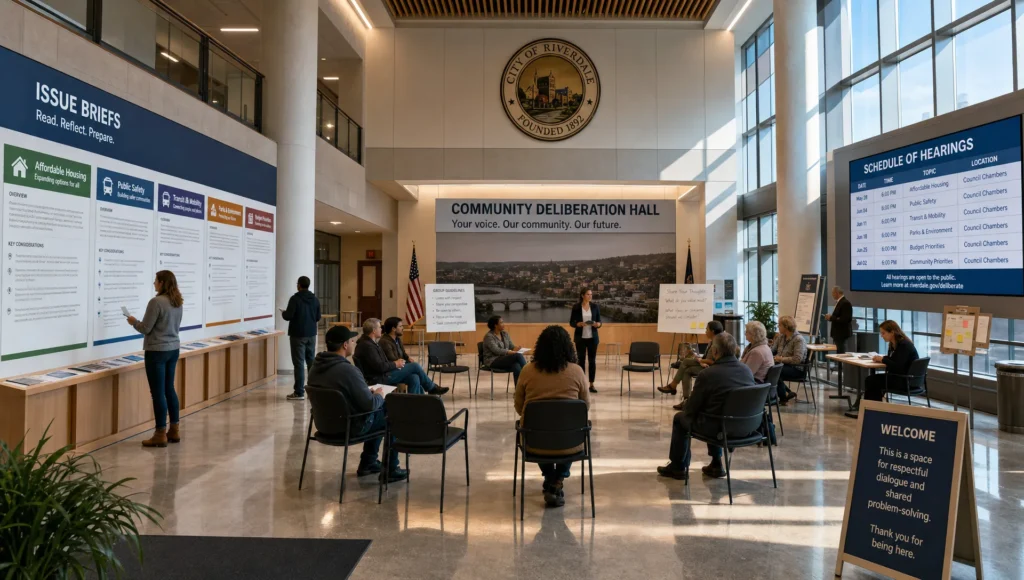
A post-crisis deliberation does not need to be complicated. A community, city, agency, school network, or political movement can run a small deliberative process around one decision.
The minimum structure looks like this:
| Deliberative step | Purpose | Public artifact |
|---|---|---|
| Frame the decision | Prevent vague debate | Decision statement |
| Build shared evidence | Reduce rumor and selective facts | Evidence pack |
| Include affected people | Add lived experience and legitimacy | Participation summary |
| Compare options | Make tradeoffs explicit | Options memo |
| Request a response | Link public reasoning to authority | Response request |
| Track implementation | Prevent symbolic listening | Public tracker |
Imagine a city deciding how to spend a crisis recovery fund. A deliberative group could compare several options: direct household support, infrastructure repair, mental health services, small business grants, or school recovery programs. The group would not simply vote emotionally. It would examine costs, urgency, equity, feasibility, and long-term impact. It would publish an options memo explaining where participants agreed, where they disagreed, and what decision-makers must answer.
The strongest deliberative processes do not replace elected officials. They make public judgment more informed and inspectable. Officials may still decide differently, but they should have to explain why.
Demand public receipts, not vague reassurance
After a national crisis, governments often promise reviews, reforms, lessons learned, and support. Some promises are sincere. Some are vague. Some disappear when attention moves elsewhere.
Citizens should learn to ask for public receipts.
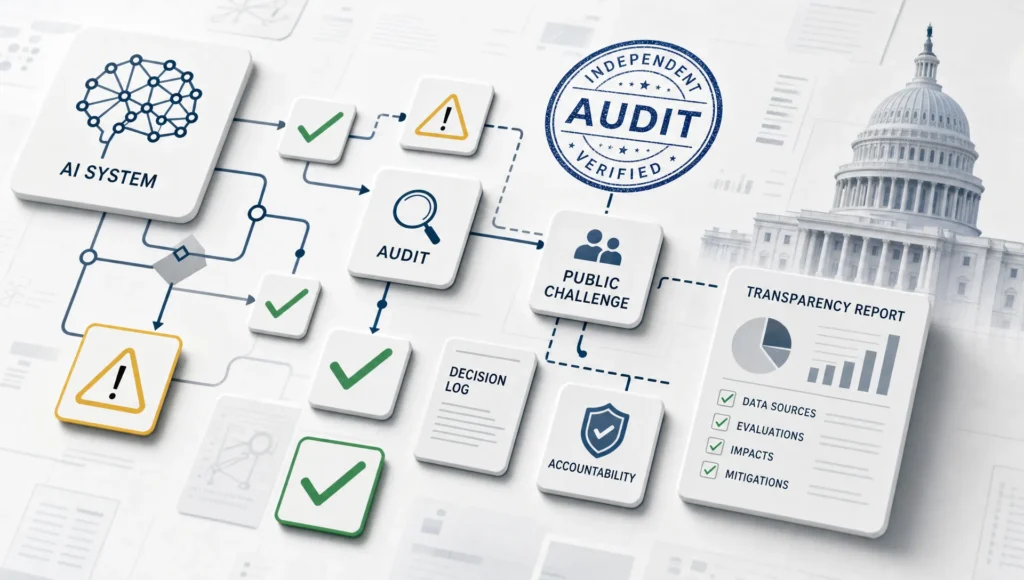
A public receipt is a visible record that proves a decision process happened, shows what evidence was considered, explains the rationale, and allows the public to track implementation. It is a core practice in JustSocial’s approach because transparency should not depend on trust in personalities.
Useful public receipts include:
- A decision statement naming the responsible authority and deadline
- A published agenda for hearings or committees
- A list of evidence reviewed, with privacy protections where needed
- A summary of public input and how it was categorized
- A decision rationale explaining what was accepted or rejected
- An implementation tracker with dates, owners, and status updates
This matters because crisis can become a cover for closed decision-making. According to Freedom House’s 2025 global assessment, political rights and civil liberties remain under pressure worldwide. In that environment, citizens should not accept “trust us” as a sufficient democratic answer.
Public receipts make participation less dependent on faith. They let citizens, journalists, academics, and watchdogs inspect the process.
Let professional communities contribute civic capacity
Not every useful civic contribution looks like chanting in a square or speaking at a hearing. After a crisis, professional communities can bring skills that public institutions badly need: logistics, data management, translation, mental health support, software development, education, design, legal analysis, procurement review, and accessibility testing.
The key is to connect those skills to public decisions, not only to private charity.
A product manager can help build a public tracker. A teacher can help translate crisis policy into student-friendly civic education. A developer can create a secure form for community needs. A lawyer can explain rights and appeals. A designer can simplify official forms. A clinic or small business can model transparent, technology-enabled service for the public, just as fields outside politics have adopted careful digital planning, for example in digital orthodontics in Bucharest where planning, communication, and precision are central to public-facing trust.
The lesson is not that government should copy every private-sector tool. It is that modern public life should not remain trapped in industrial-era bureaucracy while the rest of society learns to use technology for clarity, personalization, and accountability.
That point runs through the JustSocial manifesto: the public sector should stop lagging behind social and technological change. Civic participation after a crisis is one way citizens can push that modernization from below.
Build a small civic team before building a political movement
A national crisis can create the emotional energy for a political movement, but emotion alone does not sustain one. Movements survive when they turn urgency into repeatable civic practice.
Before announcing a national organization, start with a small team that can complete one full participation loop. The team does not need to be large. Five to seven committed people can do meaningful work if roles are clear.
A practical team might include a decision mapper, an evidence lead, a community listener, a writer, a meeting representative, and a tracker. The goal is not to create bureaucracy. The goal is to avoid the common post-crisis pattern where everyone is angry for two weeks, then exhausted for two months.
A movement becomes trustworthy when it can show its work. That means publishing what it is asking for, how it reached that position, who was consulted, what evidence was used, how disagreements were handled, and what happened after officials responded.
This is where JustSocial’s “People’s Branch” idea becomes practical. The people do not need to wait passively for institutions to invite them in. They can begin acting like a civic branch: gathering input, structuring debate, producing options, asking for responses, and tracking outcomes.
A 30-day plan for civic participation after a national crisis
The first month after a crisis should balance urgency with sustainability. The aim is not to solve everything. The aim is to create a civic foothold that can grow.
| Timeframe | Focus | What to produce |
|---|---|---|
| Days 1 to 3 | Stabilize and listen | Needs map and trusted contact list |
| Days 4 to 7 | Choose one decision | One-page decision note |
| Week 2 | Structure public input | Claim, reason, evidence, request summaries |
| Week 3 | Hold a deliberative session | Options memo with tradeoffs |
| Week 4 | Deliver and track | Response request and public tracker |
During the first days, do not over-politicize every interaction. People may need food, housing, childcare, medicine, transport, or emotional support before they can participate. Listening is civic work.
By the end of the first week, choose one decision. It could be narrow, such as school safety procedures, emergency grants, public shelter standards, or committee transparency. Narrow decisions are easier to influence and easier to track.
In the second week, collect input in a structured way. Avoid open-ended “What do you think?” prompts if the goal is decision influence. Ask people what happened, what evidence they have, what they need, and what they want a specific authority to do.
In the third week, convene a small deliberative group. Include affected people, people with relevant expertise, and people who disagree in good faith. The output should be an options memo, not a manifesto of slogans.
In the fourth week, deliver the memo to the decision owner and request a public response. Then track whether anything changes.
What to avoid after a crisis
Civic participation can fail even when intentions are good. The most common failures are predictable.
Avoid turning grief into instant ideology. A crisis may confirm deep structural problems, but people need space to mourn and understand before being recruited into conclusions they did not help form.
Avoid confusing visibility with power. A viral post can raise attention, but if it is not connected to a decision owner, deadline, or request, it may not change anything.
Avoid participation without safeguards. Crisis-affected people may face retaliation, stigma, surveillance, or emotional harm. Design privacy and consent into every process.
Avoid building a movement around one personality. Durable democratic reform requires methods, records, roles, and public accountability.
Avoid waiting for perfect technology. A shared document, a public meeting, a spreadsheet tracker, and a disciplined process can start today. Better tools can come later.
How this connects to a new social contract
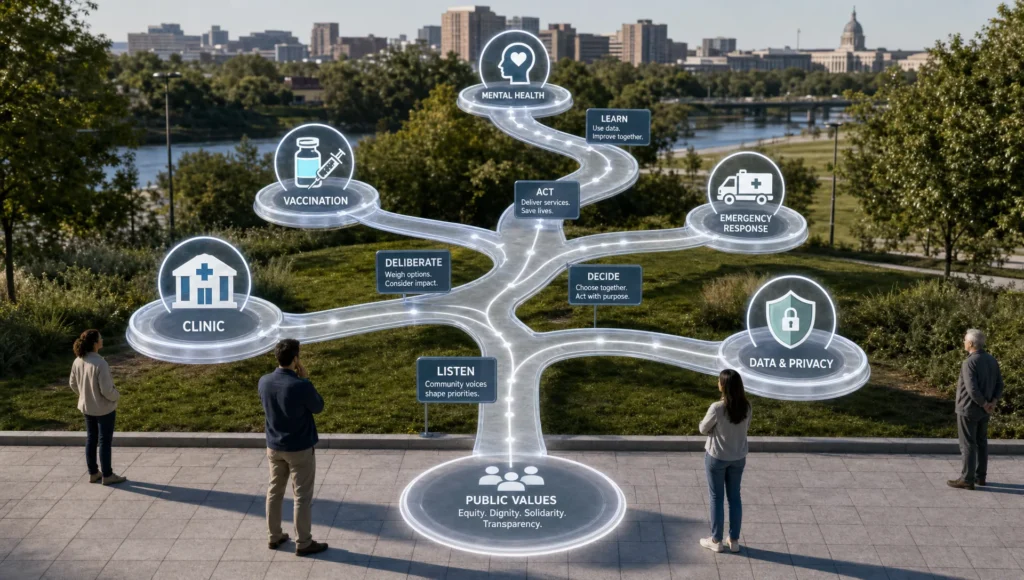
A national crisis tests the social contract. Citizens are asked to trust institutions, obey emergency rules, pay taxes, serve, volunteer, and sacrifice. In return, the state must do more than preserve order. It must listen, explain, learn, and let citizens participate in shaping what comes next.
The old model says citizens can vote occasionally and complain in between. The newer model, the one JustSocial is working toward, says citizens should have continuous ways to influence public life. That includes digital democracy tools, public transparency initiatives, deliberative processes, civic education, and technology that helps governments measure public opinion without reducing people to data points.
But the foundation is cultural before it is technical. People must learn to participate as citizens, not only react as audiences. Governments must learn to publish reasons, not only decisions. Movements must learn to build civic capacity, not only mobilize anger.
After a crisis, the question is not whether people care. They do. The question is whether that care becomes structured enough to rebuild the country differently.
Frequently Asked Questions
What is the first civic participation step after a national crisis? Start by choosing one real decision that will affect recovery, accountability, or reform. Identify who owns it, when it will be made, what evidence is being used, and how citizens can request a public response.
Is protest enough after a crisis? Protest can be necessary, especially when institutions ignore public pain. But protest becomes more powerful when paired with decision-ready requests, evidence, deliberation, and implementation tracking.
How does deliberative democracy help after a crisis? Deliberative democracy helps citizens work through difficult tradeoffs using shared evidence, structured discussion, and transparent outputs. It reduces the chance that fear, misinformation, or partisan pressure will dominate recovery decisions.
What is discursive democracy in this context? Discursive democracy is the practice of making public conversation more reasoned, inclusive, and useful. After a crisis, it helps transform scattered testimony, anger, and disagreement into claims, evidence, impact statements, and specific requests.
Can a small group really influence national recovery? A small group may not change national policy immediately, but it can influence local decisions, create public records, expose gaps, support affected people, and model a process that other communities can copy.
How can technology help without making participation unsafe? Technology can collect input, publish evidence, support online deliberation, and track implementation. But it must be designed with privacy, accessibility, identity safeguards, moderation transparency, and human oversight.
From crisis response to democratic renewal
If a national crisis leaves citizens feeling powerless, the answer is not to wait quietly for the next election cycle. The answer is to build habits, teams, tools, and institutions that make public voice continuous.
JustSocial exists to advance that shift: from occasional representation toward continuous, transparent, technology-supported civic participation. If you believe citizens should be heard not only in moments of collapse, but throughout the life of the state, explore The Face of Democracy, share the ideas, and consider contributing your skills to the movement.
A crisis can break public trust. It can also reveal the need for a deeper democracy, one where people are not spectators of national life, but active participants in rebuilding it.