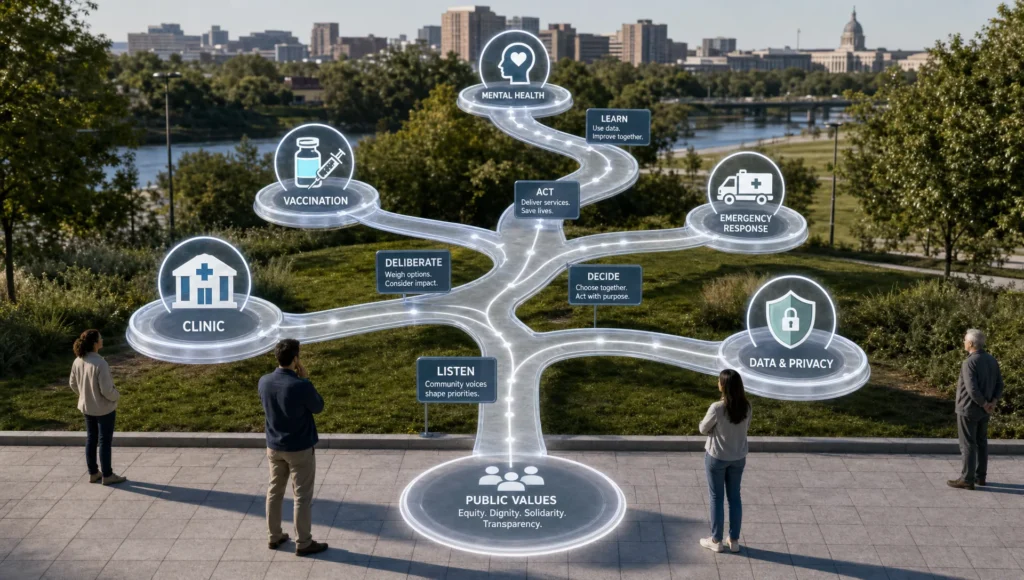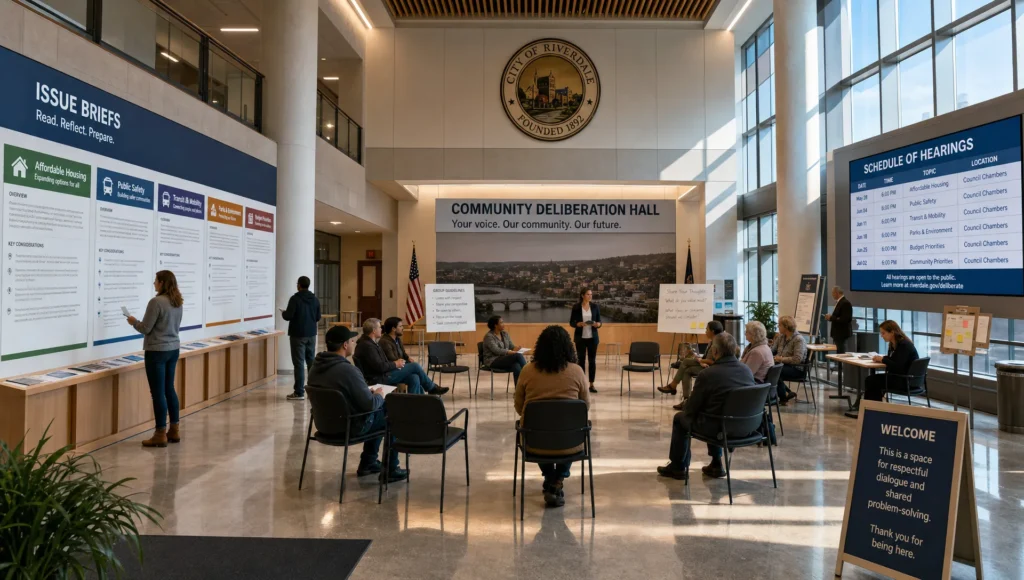
Deliberative democracy for divided societies begins with a simple but demanding premise: people do not have to agree on identity, history, religion, nationhood, or ideology before they can reason together about shared decisions. They do, however, need a process that is safer, fairer, and more consequential than shouting across a feed or waiting for the next election.
In fractured societies, political disagreement often feels existential. One group sees reform as justice, another sees it as erasure. One community hears security, another hears control. One side calls for majority rule, another fears permanent domination. Under those conditions, ordinary participation channels can make conflict worse. Elections compress complex identities into winners and losers. Social media rewards humiliation. Public hearings often privilege the loudest voices, not the most affected or best informed.
Deliberative democracy offers a different democratic habit. It does not promise harmony. It does not ask people to hide their convictions. It creates structured conditions where citizens can learn, question, weigh tradeoffs, hear minority experiences, and produce decision-ready public judgment. For a movement like JustSocial, which argues in The Face of Democracy that democracy must become continuous rather than occasional, deliberation is not a side project. It is one of the core disciplines that can turn civic participation into real public power.
Why divided societies need more than debate
Divided societies are not simply societies with disagreement. They are societies where major political questions overlap with deep group identities: religion, ethnicity, language, class, territory, migration status, historical trauma, or national belonging. When identity and policy become fused, even practical decisions can become symbolic battles.
A school curriculum debate becomes a fight over whose history counts. A housing plan becomes a struggle over demographic control. A police policy becomes a test of dignity and safety. A budget decision becomes proof that one region or group is being neglected.
This is why more speech, by itself, is not enough. Open debate can surface grievances, but it can also amplify fear. Voting can authorize decisions, but it can also leave losing groups feeling conquered. Representative bargaining can stabilize institutions, but it can become elite dealmaking that ordinary citizens cannot inspect.
That is where deliberative democracy becomes useful. It slows down the democratic moment between expression and decision. It asks participants not only what they want, but why, at what cost, with what evidence, and under which safeguards for people who may lose.
The OECD has documented a growing international use of representative deliberative processes, including citizens' assemblies, juries, and panels, to handle complex public issues. The lesson is not that deliberation magically resolves division. The lesson is that democracies are learning to build better rooms for public judgment.
What deliberative democracy changes in a conflict-heavy environment
Deliberative democracy changes the unit of politics. Instead of treating citizens only as voters, activists, consumers, or demographic blocs, it treats them as co-reasoners in public life. This matters because divided societies often suffer from four connected failures.
First, groups talk about each other more than they talk with each other. Second, public debate rewards certainty even when the issue is uncertain. Third, institutions collect input without showing how it shaped the decision. Fourth, minorities are asked to participate in processes that may expose them to harm without giving them actual influence.
A credible deliberative process responds to those failures by creating a structured civic environment with clear rules, balanced information, facilitation, inclusion, and public follow-through. It makes disagreement inspectable rather than chaotic.
| Problem in divided societies | Democratic risk | Deliberative design response |
|---|---|---|
| Identity-based fear | People self-censor or retreat into group loyalty | Use trusted facilitation, privacy options, and explicit safety rules |
| Historical grievances | Debate reopens wounds without producing decisions | Create a testimony phase, evidence timeline, and acknowledgement record |
| Information silos | Groups cannot agree on basic facts | Build a shared evidence commons with competing claims and uncertainty notes |
| Majority domination | Deliberation becomes pressure to assimilate | Use representative recruitment, minority reports, and rights-based boundaries |
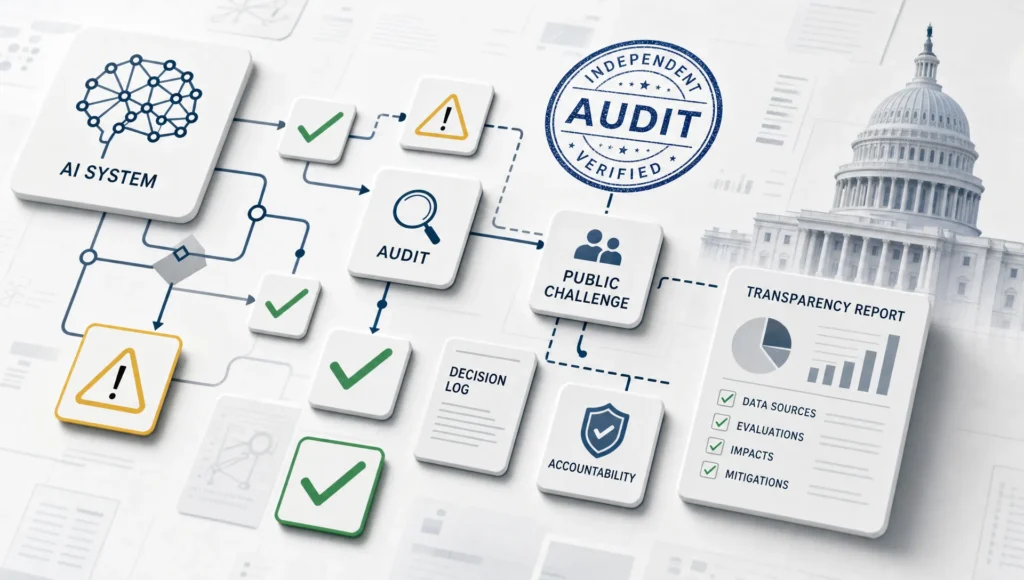
| Institutional distrust | Participation feels like theater | Require a public decision link, response memo, and implementation tracker |
The key point is that deliberation is not merely nicer conversation. It is a public method for converting conflict into usable choices.
Deliberation is not consensus at any cost
A common mistake is to treat deliberative democracy as a search for polite consensus. That is dangerous in divided societies. If the process pushes people toward agreement too quickly, it can silence minority experiences, reward dominant norms, and turn civic participation into emotional coercion.
Healthy deliberation should allow several legitimate outputs. Participants may reach broad agreement. They may produce ranked options. They may identify tradeoffs decision-makers must confront. They may publish a majority recommendation with a dissent report. They may even conclude that the issue is not ready for decision because evidence is missing or rights risks are unresolved.
This distinction matters for JustSocial's broader political vision. The manifesto argues that citizens should be heard continuously and that elected officials should become better pipelines for public consensus and implementation. But consensus should never mean flattening society into one voice. In a diverse democracy, the public voice is often plural. The job of deliberation is to make that plurality legible, reasoned, and actionable.
A three-room model for divided societies
The strongest model for deliberative democracy in divided societies separates three democratic functions that are often confused: public expression, structured judgment, and official decision.
The discursive room: surface the conflict honestly
Before a community deliberates, it must understand what is actually being contested. This is the role of discursive democracy. The discursive room is broader, more open, and more exploratory. It gathers stories, claims, fears, evidence, language, and competing definitions of the problem.
For example, before deliberating on a public safety policy, the discursive phase should ask residents what safety means to them. For one group, safety may mean faster police response. For another, it may mean protection from profiling. For a third, it may mean better lighting, mental health response, or youth programs.
The goal is not to decide yet. The goal is to map the public meaning of the issue. JustSocial has written separately about discursive democracy and deliberative democracy, but in divided societies the distinction becomes especially important. If you skip the discursive room, the deliberative room inherits hidden anger.
The deliberative room: weigh options under fair conditions
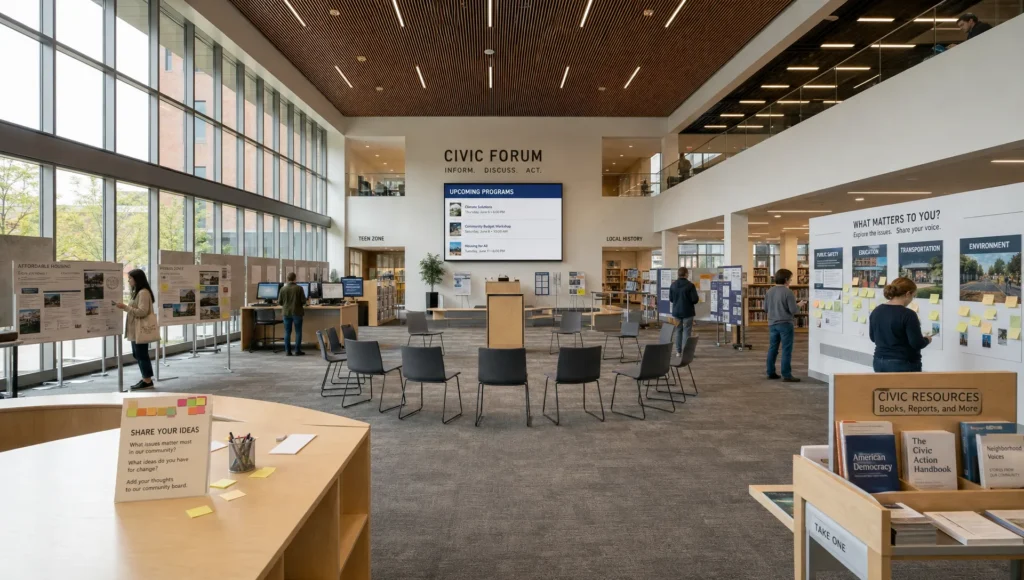
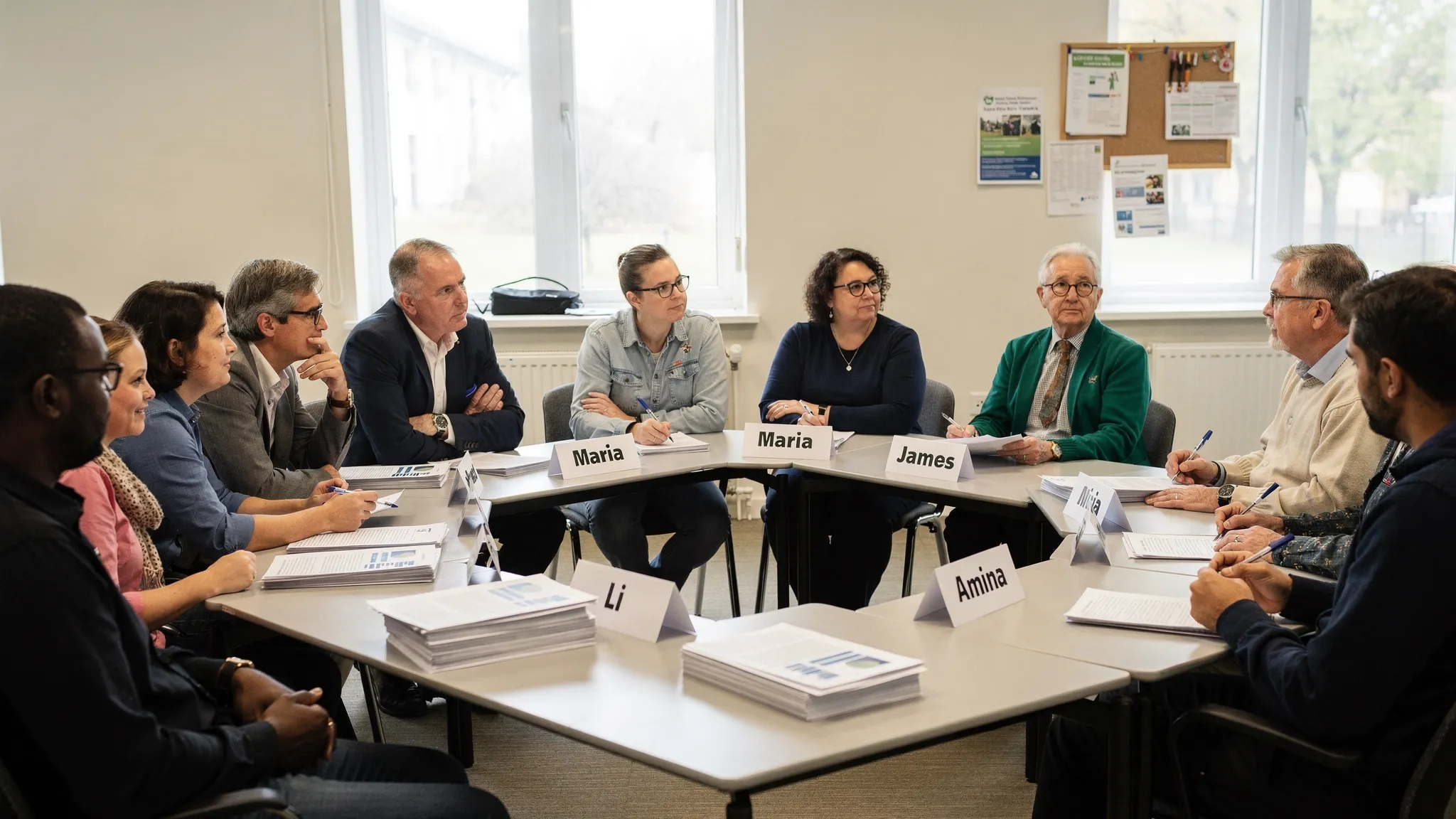
The deliberative room should be smaller, more structured, and more protected. Participants should reflect the society affected by the decision, not just the people with time, confidence, or organizational backing. They should receive balanced information, question experts, hear lived experience, and work through options with trained facilitation.
This is where the group moves from claims to choices. What are the possible policies? Who benefits? Who carries the risk? What would make each option more acceptable? Which safeguards are required? What evidence would change the group's view?
A deliberative group in a divided society should not be asked simply to vote after discussion. It should be asked to explain its reasoning in public terms. A recommendation without reasons is just another political signal. A recommendation with reasons becomes a civic artifact that others can inspect, challenge, and learn from.
The decision room: respond, decide, and show the receipt
Deliberation loses legitimacy when public judgment disappears into an institutional black box. The final room belongs to the decision owner: a council, ministry, school board, agency, parliament committee, or movement leadership body.
The decision owner should publish a response explaining what was accepted, what was rejected, why, and what happens next. This is where JustSocial's recurring emphasis on transparency matters. In the manifesto, Yuval D. Vered argues that the public sector must stop operating as a distant bureaucracy and start precisely measuring and responding to citizen opinion. In practice, that means no serious deliberative process should end without public receipts.
Design principles for deliberative democracy in divided societies
Start with the real decision
People should know what is actually on the table. Is the process advising a law? Recommending a budget priority? Designing a pilot? Revising a school policy? If the decision is vague, distrust will fill the gap.
A good process begins with a decision statement: the decision owner, decision window, scope, constraints, and level of influence. If leaders are only willing to listen, say so. If they commit to a formal response, say so. If the result is binding, define the legal mechanism.
Protect dignity before seeking agreement
No group should be asked to debate whether its basic rights, safety, or civic belonging are legitimate. Deliberation can address how rights are implemented, how competing rights are balanced, and how public resources are allocated. It should not become a stage where vulnerable groups must prove their humanity.
This is especially important for ethnic, religious, national, or minority communities. A fair process must include clear boundaries against harassment, dehumanization, intimidation, and retaliation.
Use expertise without surrendering democracy to experts
Divided societies often distrust experts because expertise appears aligned with one side. The answer is not to remove expertise. The answer is to make it contestable.
Experts should provide evidence summaries, uncertainty statements, tradeoff memos, and evaluation plans. Competing experts should be allowed where the evidence is contested. Participants should be able to ask questions directly.
This connects to JustSocial's proposal for an Academic Branch of government. In the manifesto, academia is imagined as an independent branch that can educate the public and regulate other branches through academic advisories. For divided societies, that idea is powerful if expertise serves public reasoning rather than replacing it.
Publish minority reports
In polarized or divided environments, a minority report is not a sign of failure. It is a trust mechanism. It tells participants that they do not have to choose between being included and being erased.
A minority report can explain unresolved concerns, rights objections, alternative interpretations of evidence, or conditions under which a dissenting group might reconsider. This gives decision-makers a fuller picture and prevents the majority recommendation from pretending to be unanimous.
Build continuity, not one-off forums
One deliberative event cannot heal a divided society. At best, it can model a better habit. The deeper goal is to build standing civic capacity: repeated processes, shared evidence libraries, trained facilitators, public trackers, and community norms for disagreement.
That is why deliberative democracy should be part of continuous civic participation. JustSocial's People’s Branch idea points in this direction: a permanent public channel where citizen input is not occasional noise, but an institutional layer of governance. You can read more about the concept in JustSocial's guide to the People's Branch of Government.
Where technology helps, and where it can harm
Technology can help divided societies deliberate at scale, but only if the democratic process comes first. A platform cannot repair a broken social contract by itself. It can, however, make civic participation more accessible, transparent, and continuous.
Digital tools can support deliberation by collecting structured input, translating materials, mapping recurring claims, publishing evidence, hosting hybrid meetings, protecting identity where appropriate, and tracking implementation. JustSocial's proposed tools in the manifesto, including TakeAction!, rParliament, and rConcensus, point toward this ecosystem: action, transparency, community voting, and analytics connected to public life.
But the risks are real. Online participation can be manipulated by bots, coordinated campaigns, harassment, and algorithmic outrage. Identity systems can exclude people or expose vulnerable participants. AI summaries can distort minority views if not audited. Online voting can create false confidence if the surrounding process is weak.
For divided societies, the rule should be simple: use technology to widen access and publish receipts, not to rush conflict into premature votes.
How a political movement can practice deliberation before it governs
A political movement does not need to wait for state power to model better democracy. In fact, movements that demand democratic reform should practice it internally first. That is how they build legitimacy before asking institutions to change.
A movement can begin with a narrow issue where members disagree but still share enough commitment to continue. It can publish a participation promise, gather discursive input, create an evidence commons, convene a small deliberative group, publish an options memo, and track what leadership does with it.
The first goal is not perfection. The first goal is proof of seriousness. A movement that can show its reasoning, publish its disagreements, protect minority voices, and correct its process in public is already doing something rare in modern politics.
For JustSocial, this is also strategic. A movement for continuous direct democracy must demonstrate that more participation does not mean more chaos. It must show that civic participation can be structured, safe, evidence-informed, and tied to decisions.
A practical example: shared public space in a mixed city
Imagine a city where two communities disagree over the redesign of a central square. One group wants cultural events and late-night activity. Another wants quiet, security, and protection from political provocation. Business owners want foot traffic. Parents want safety. Young people want somewhere to gather. Historical grievances make every proposal symbolic.
A normal process might hold a public hearing, collect angry statements, and let the council decide. A deliberative process would look different.
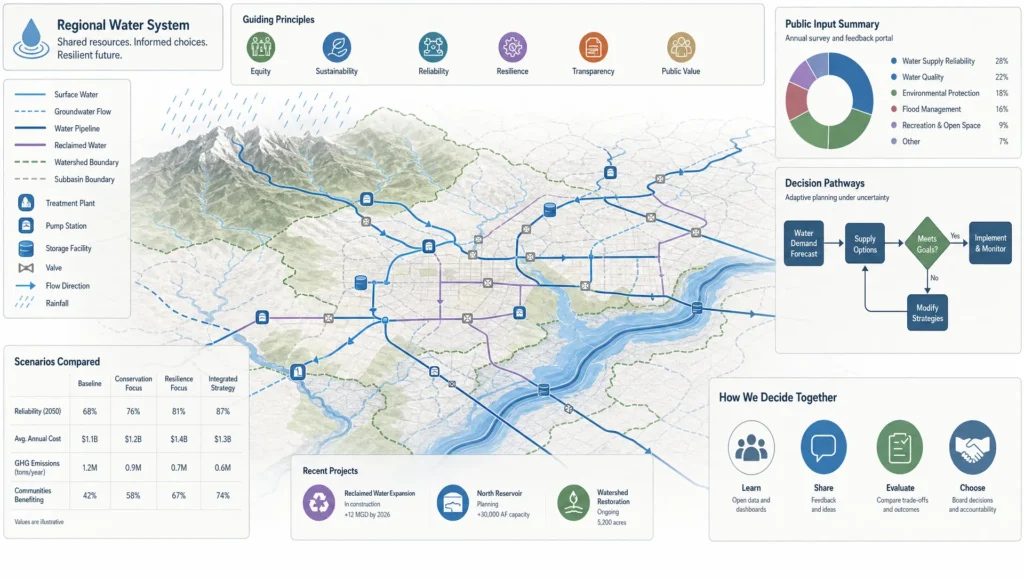
The city would first publish the decision: what budget is available, which department owns the redesign, what constraints exist, and when the decision will be made. Then it would open a discursive phase to gather claims and stories in a structured format. The outputs would be grouped into themes: noise, policing, access, cultural recognition, youth space, business activity, and historical memory.
Next, a representative deliberative panel would receive an evidence pack: usage data, safety reports, cost estimates, accessibility requirements, examples from similar cities, and testimony from affected communities. The panel would question officials and experts, then produce three design options with tradeoffs and safeguards. It might recommend rotating cultural programming, quiet hours, shared maintenance oversight, multilingual signage, and a six-month review.
Finally, the council would publish a response memo and implementation tracker. Even residents who dislike the final choice could see how the decision was made, which concerns were considered, and when the policy would be reviewed.
That is deliberative democracy for divided societies in miniature: not a miracle, but a better civic machine.
What success looks like
Success should not be measured only by whether everyone leaves happy. In deeply divided societies, that is unrealistic and sometimes dishonest. Better indicators include whether affected groups participated safely, whether evidence was shared, whether tradeoffs were named, whether minority concerns were preserved, whether officials responded, and whether the public can inspect the path from input to outcome.
A deliberative process is working when people can say: I did not get everything I wanted, but I understand the decision, I can see my community's concerns in the record, I know who is responsible, and I know how to challenge or revise the outcome later.
That sentence is not utopia. It is the beginning of a healthier social contract.
Frequently Asked Questions
Can deliberative democracy work when groups deeply distrust each other? Yes, but only with strong process design. The process must begin with clear scope, safety rules, balanced evidence, trusted facilitation, and a visible decision link. Trust is not required at the start. The process should reduce the amount of blind trust citizens need by making every step inspectable.
Is deliberative democracy the same as compromise? No. Compromise may be one outcome, but deliberation is broader. It can produce agreement, ranked options, dissent reports, conditions for support, or a recommendation to delay a decision until key evidence or safeguards exist.
How is discursive democracy different from deliberative democracy in divided societies? Discursive democracy improves the wider public conversation by surfacing claims, narratives, identities, and disagreements. Deliberative democracy then uses a smaller, structured process to weigh evidence and produce decision-ready options. Divided societies usually need both.
Does deliberation replace elections? No. Elections remain essential for representation, leadership, and constitutional authority. Deliberative democracy strengthens what happens between elections by helping citizens shape issues, evaluate tradeoffs, and hold decision-makers accountable.
What is the biggest risk of deliberative democracy in divided societies? The biggest risk is fake inclusion: inviting people to speak without giving them safety, influence, or follow-through. That is why public receipts, minority reports, and a duty to respond are essential.
From division to continuous civic power
Divided societies do not need a politics that pretends conflict will disappear. They need institutions that can carry conflict without collapsing into domination, apathy, or violence. Deliberative democracy is one way to build those institutions.
JustSocial's manifesto calls for a future where citizens are not reduced to voters, taxpayers, and consumers, but become active participants in the daily life of the state. That future will require technology, yes, but also civic discipline: better questions, better evidence, better facilitation, better transparency, and better habits of disagreement.
If you believe democracy should be continuous, inspectable, and worthy of divided societies, read The Face of Democracy, explore JustSocial's work, and consider how you can contribute as a citizen, organizer, developer, educator, researcher, or volunteer. The work begins wherever people are willing to turn conflict into public reasoning, and public reasoning into accountable action.