Education reform is usually discussed as if it belongs to ministers, school boards, unions, administrators, and experts. Citizens are invited to react after the main decisions have already been framed. Parents complain. Students protest. Teachers burn out quietly. Communities debate symptoms while the real policy machinery moves somewhere else.
A citizen playbook starts from a different assumption: education reform is too important to be left outside civic participation. Schools shape the future citizen, the future worker, and the future neighbor. If democracy is meant to be lived continuously, not only performed on election day, then education is one of the first places where people should learn and practice it.
This connects directly to JustSocial’s manifesto, which argues that many public institutions still carry the logic of the Industrial Revolution: standardized schedules, fragmented authority, bureaucratic distance, and limited citizen influence. The alternative is not chaos. It is structured, transparent, technology-supported participation that helps citizens, educators, students, and decision-makers reason together and track what happens next.
Why education reform needs civic participation
Most education systems are asked to prepare students for a world that is changing faster than the institutions themselves. Artificial intelligence, hybrid work, digital communities, mental-health pressures, polarization, and economic uncertainty are already reshaping life outside school. Yet many school systems still operate with industrial-era assumptions: fixed timetables, subject silos, standardized testing as the dominant measure, and limited space for student agency.
Civic participation helps because it brings distributed knowledge into the reform process. Teachers understand classroom realities. Students understand daily experience. Parents understand household constraints. Researchers understand evidence. Employers and community organizations understand future skills. Local officials understand budgets and legal limits. None of these groups has the whole picture alone.
The purpose is not to let every crowd rewrite the curriculum overnight. The purpose is to create a legitimate process where public experience becomes usable information, expert evidence becomes understandable, and decision-makers must explain how input shaped the result.
That is the difference between participation as noise and participation as democratic infrastructure.
The citizen’s role: democratic co-designer, not school manager
Citizens should not try to micromanage teachers or replace professional judgment. But they also should not be reduced to occasional voters, taxpayers, or consumers of school services. A healthy reform process gives citizens a clear role: help define problems, surface lived experience, weigh tradeoffs, and hold institutions accountable for decisions.
| Citizen role | What it contributes | What it should avoid |
|---|---|---|
| Students | Daily experience, peer culture, learning needs, safety concerns | Public exposure, performative tokenism, pressure to represent all students |
| Parents and guardians | Household impact, learning support, schedule realities, trust concerns | Turning every issue into a private complaint |
| Teachers and staff | Professional judgment, implementation reality, workload insight | Being used as symbolic approval after decisions are made |
| Researchers and academics | Evidence reviews, uncertainty, evaluation methods | Technocratic control without public reasoning |
| Local residents and taxpayers | Community priorities, resource tradeoffs, democratic accountability | Treating schools as abstract budget lines only |
This division of roles reflects a key idea in the JustSocial vision: the people should have a continuous channel into public life, while expertise should be organized in a way that informs democracy rather than replaces it.
Start with one real decision
The fastest way to ruin education reform is to begin with a slogan like “fix the schools.” It is too broad to deliberate, too vague to measure, and too easy for institutions to ignore.
A citizen playbook begins with one decision that has an owner, a timeline, and a possible outcome. For example:
- Should the district change its phone-use policy for middle schools next semester?
- Should one school pilot project-based learning in two grades?
- Should AI tools be allowed for homework, and under what disclosure rules?
- Should the school day be adjusted to support later start times?
- Should standardized test preparation time be reduced in favor of civic or creative projects?
- Should the district publish committee recordings, documents, and response memos for education decisions?
A good reform question is specific enough that a principal, school board, ministry, or district office can respond. It is also broad enough that citizens can discuss values, tradeoffs, and evidence.
Before mobilizing people, write a one-page Decision Note:
- What decision is being made?
- Who has authority to make it?
- When will it be made?
- Who is affected?
- What information is missing?
- What public response are citizens asking for?
This is the first act of serious civic participation: naming the decision clearly enough that the public can organize around reality instead of frustration.
Build an Education Reform Docket
An Education Reform Docket is a public folder, webpage, or shared document that gathers the materials needed for citizens to participate responsibly. It is not a manifesto, a petition, or a comment thread. It is the civic memory of the reform effort.
At minimum, the docket should include:
- A decision statement
- A timeline and decision owner
- Current policy or practice
- A short evidence summary
- Lived-experience submissions from students, parents, and teachers
- Budget or staffing constraints, if known
- Competing options under consideration
- A participation promise explaining how input will be used
- A response deadline for decision-makers
- An implementation tracker after a decision is made
The docket can be simple. A shared document is better than nothing. A public website is better when the process grows, especially if it is accessible, easy to update, and clear for non-technical users. Local groups that need a basic public home for their reform materials should prioritize clarity and transparent costs, whether they build it themselves or use partners offering transparent fixed-price web design.
The point is not design polish. The point is public inspectability. If citizens cannot see the evidence, the options, the rules, and the follow-up, they cannot tell whether participation mattered.
Use discursive democracy before positions harden
Education debates often become identity battles. Parents are labeled difficult. Teachers are accused of resisting change. Students are dismissed as immature. Reformers are called ideological. Institutions defend themselves. The conversation collapses before the decision is even understood.
Discursive democracy is the practice of improving the public conversation before formal deliberation begins. It does not require everyone to agree. It requires the public sphere to become more useful.
For education reform, that means setting rules for how people contribute:
- Separate people from claims.
- Ask participants to state a claim, a reason, and a request.
- Mark whether a statement is lived experience, evidence, opinion, or a question.
- Protect minors from public exposure and retaliation.
- Publish summaries that include minority concerns, not only majority themes.
- Correct misinformation through evidence notes rather than public shaming.
This stage matters because bad discourse produces bad options. If the only visible voices are the loudest adults, reform will miss the people most affected. If every disagreement becomes personal, teachers and students will withdraw. If social media outrage becomes the main evidence source, decision-makers can dismiss the whole process.
Discursive democracy makes public talk structured enough to be useful, but open enough to surface hidden problems.
Move into deliberative democracy when tradeoffs appear
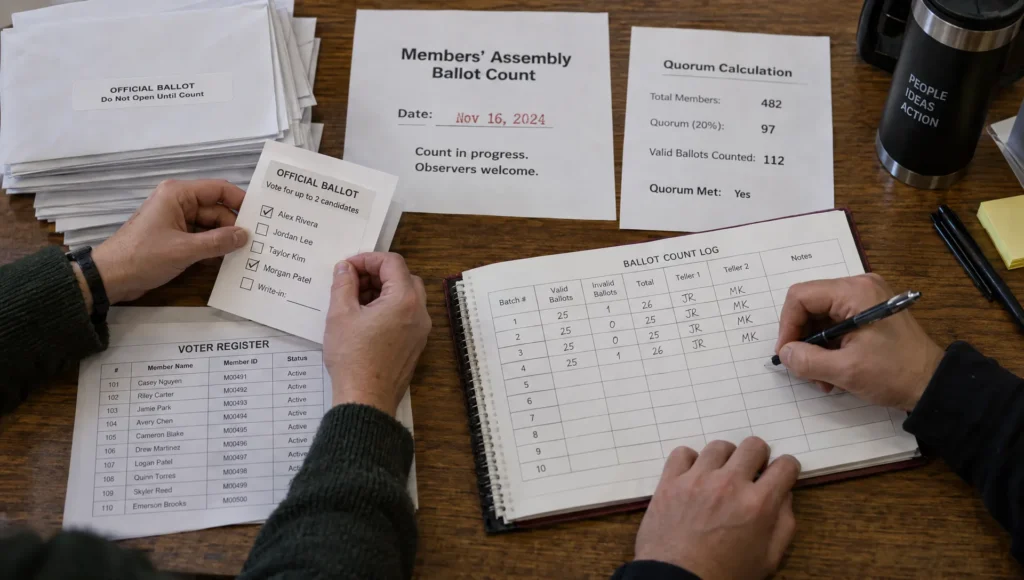
Once a reform issue has been named and public input has been gathered, the next step is deliberative democracy. This is where a smaller, balanced group studies the issue, hears from affected people and experts, weighs tradeoffs, and produces decision-ready options.
Deliberation is especially important in education because nearly every reform has competing goods. More project-based learning may improve creativity but require teacher training. Later school start times may support student health but disrupt family schedules. AI tools may expand personalized learning but create integrity, equity, and privacy risks. More student choice may increase motivation but complicate curriculum planning.
A deliberative working group should produce an Options Memo with three to five realistic paths. Each option should explain:
- What would change
- Who would be affected
- What resources are required
- What risks exist
- What safeguards are needed
- How success would be measured
- What decision-makers must answer publicly
| Stage | Citizen action | Public artifact |
|---|---|---|
| Define | Name the exact education decision | Decision Note |
| Listen | Gather structured input from affected groups | Input Summary |
| Learn | Build a shared evidence base | Evidence Index |
| Deliberate | Weigh tradeoffs in a balanced group | Options Memo |
| Decide | Ask officials for a public response | Response Memo |
| Track | Monitor implementation and outcomes | Implementation Tracker |
This is how civic participation becomes more than pressure. It becomes a disciplined path from public concern to public reasoning.
Make reform itself part of civic education
Education reform should not only change what students learn. It should change how students experience democracy.
The JustSocial manifesto argues for more holistic education, stronger use of project-based learning, and technology that supports teachers rather than simply digitizing old routines. A citizen-led reform process can embody those ideas immediately.
For example, instead of teaching civics only through textbook chapters, a school can let students participate in a real reform question. Students might study the phone policy, interview peers, compare evidence, map tradeoffs, write proposals, and present options to the school leadership. The lesson becomes practical citizenship.
This does not mean minors should be treated as adult political actors in every context. It means they should learn democratic agency with safeguards. They can practice listening, evidence use, disagreement, public writing, and accountability. They can see that public life is not only protest or obedience. It is a craft.
A school that runs reform this way teaches three lessons at once: the subject matter, the civic process, and the dignity of being heard.
A 90-day citizen playbook for education reform
A 90-day process is long enough to gather evidence and short enough to maintain energy. It can be used by parents, students, educators, local organizers, or a political movement trying to build legitimate civic capacity.
Days 1 to 14: Choose the decision and form a small civic team
Pick one reform issue with a real decision owner. Build a team of three to seven people with different roles: coordinator, evidence lead, outreach lead, student or youth-safeguarding lead, documentation lead, and liaison to decision-makers.
Do not start by recruiting hundreds of people. Start by making the process credible.
Days 15 to 30: Publish the Education Reform Docket
Create the first version of the docket. Include the Decision Note, known policies, timelines, and a simple form for structured input. Ask decision-makers what documents already exist and request permission to publish or summarize them.
If officials refuse, publish that refusal politely. Public records of non-response are also democratic receipts.
Days 31 to 50: Run structured listening
Hold listening sessions for students, parents, teachers, and community members. Keep groups separate when power dynamics require it. For example, students may speak more honestly without administrators present. Teachers may need a protected channel to discuss workload.
Summarize input by theme, not by personality. Publish what was heard, what remains unclear, and what claims need evidence.
Days 51 to 70: Convene a deliberative working group
Bring together a balanced group to review the docket and create options. Include affected voices and relevant expertise. Use facilitation rules that prevent domination by the loudest participants.
The goal is not consensus at any cost. The goal is to produce options that are clear, honest, and implementable.
Days 71 to 85: Deliver the Options Memo and request a response
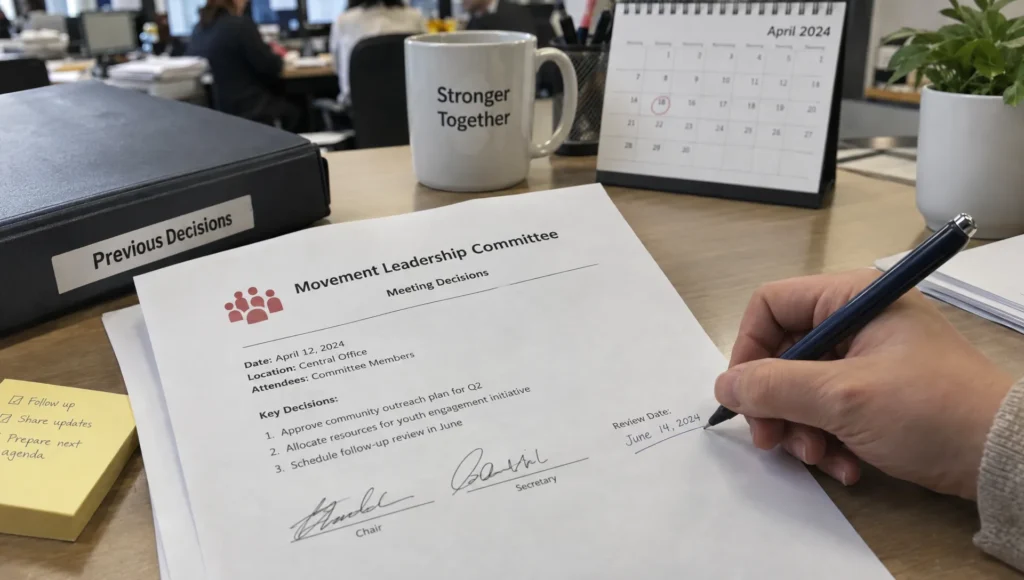
Send the Options Memo to the decision owner. Ask for a written response that accepts, rejects, modifies, or delays each option with reasons.
A response memo is one of the most important artifacts in democratic reform. It shows whether public input entered the institution or disappeared at the door.
Days 86 to 90: Publish the tracker and plan the next loop
After the decision, publish an implementation tracker. Track commitments, deadlines, responsible offices, metrics, and follow-up dates. If a pilot is approved, monitor it. If the proposal is rejected, document why and decide whether to revise, escalate, or choose another decision.
This is continuous civic participation in practice: not one meeting, not one protest, not one election, but a repeatable loop.
What citizens should ask education leaders to publish
Education reform becomes more trustworthy when institutions publish the right materials before, during, and after decisions. Citizens can ask for these without needing to agree on the final policy.
| Public request | Why it matters |
|---|---|
| A clear decision calendar | Citizens need to know when input can still matter |
| Committee agendas and recordings | Transparency should include the places where options are shaped |
| Evidence summaries | The public should see what claims and research influenced the decision |
| Participation rules | People need to know who can participate and how input will be used |
| Response memos | Institutions should explain how public input affected the outcome |
| Implementation trackers | Reform should be judged by follow-through, not announcements |
| Evaluation reports | Pilots should create learning for the next decision |
These requests echo the manifesto’s call for public committees, documents, recordings, and civic technology that make government more visible. In education, visibility is not a luxury. It is how families and communities learn to trust reform.
Safeguards for students, teachers, and minority voices
Education reform is sensitive because the participants are not equally powerful. Students may fear retaliation. Teachers may fear professional consequences. Minority communities may fear being overexposed or outvoted. Parents may have unequal time, language access, or digital access.
A serious citizen playbook includes safeguards from the start:
- Use privacy-by-default for minors.
- Offer anonymous or confidential input channels where appropriate.
- Separate listening spaces when power differences affect honesty.
- Translate key materials for major language communities.
- Provide offline participation options.
- Publish moderation and facilitation rules.
- Include minority reports when disagreement remains.
- Avoid ranking proposals only by raw popularity.
Without safeguards, participation can reproduce the same inequalities it claims to solve. With safeguards, education reform can become a model for inclusive democracy.
Where technology helps, and where it should stay modest
Technology can make education reform more participatory, but only if the democratic process comes first. A platform cannot decide what is legitimate. It can only support rules that humans have made public.
Useful technology includes shared evidence libraries, accessible surveys, livestreamed meetings, searchable transcripts, public trackers, secure identity systems for higher-stakes votes, and AI-assisted summaries with human review. Risky technology includes opaque ranking feeds, surveillance-heavy student monitoring, automated moderation without appeal, and AI-generated “consensus” that hides real disagreement.
The manifesto’s technology vision, including civic apps, public analytics, and education-focused AI, is strongest when paired with democratic constraints. AI can help summarize testimony, translate materials, detect repeated themes, and support teachers. It should not replace human judgment, decide policy, or become a hidden authority over students.
The rule is simple: technology should make participation more visible, accessible, and accountable. If it makes power less visible, it is moving in the wrong direction.
How a political movement can help without taking over
A political movement can play a valuable role in education reform, but only if it resists the temptation to control every outcome. Its job should be to build civic capacity.
That means helping communities create dockets, train facilitators, publish public receipts, protect participation safeguards, and connect local reform efforts into a larger learning network. It also means admitting uncertainty and allowing communities to reach different conclusions.
For JustSocial, this is central. The movement’s broader goal is not merely to win a policy argument. It is to help build a culture where citizens can participate continuously and intelligently in public decisions. Education reform is a natural starting point because schools are where the next generation learns what democracy feels like.
If the process is transparent, repeatable, and open to inspection, a movement can strengthen legitimacy. If it hides decisions, manipulates participation, or treats citizens as supporters rather than co-authors, it becomes another version of the problem.
The deeper reform: a new civic social contract
At its best, education reform is not only about curriculum, schedules, assessments, or technology. It is about the social contract between citizens and the state.
The old contract often says: attend school, follow the program, take the tests, graduate, work, pay taxes, vote occasionally, and trust institutions to decide the rest.
A democratic education contract should say something different: learn the knowledge needed for modern life, practice participation, help shape public priorities, understand evidence, deliberate with others, and hold institutions accountable through visible public processes.
This is the bridge between education reform and civic participation. We do not only need schools that prepare students for democracy later. We need schools that practice democracy now.
Frequently Asked Questions
What is civic participation in education reform? Civic participation in education reform means students, parents, teachers, and community members helping shape real education decisions through structured input, evidence, deliberation, and follow-up, not only reacting after decisions are made.
How is deliberative democracy different from a public meeting? A public meeting often collects comments. Deliberative democracy creates a structured process where participants review evidence, hear different perspectives, weigh tradeoffs, and produce decision-ready options for officials to answer.
Can students participate safely in school reform? Yes, but safeguards are essential. Student participation should protect privacy, prevent retaliation, use age-appropriate formats, and avoid forcing minors to disclose personal experiences publicly.
What if school leaders ignore the process? Publish the public artifacts anyway: the Decision Note, evidence summary, input themes, Options Memo, and requests for response. Visible non-response can become the basis for future advocacy, media attention, elections, or institutional reform.
Does this replace professional educators? No. Civic participation should support professional educators by clarifying public values, lived experience, and tradeoffs. Teachers and experts remain essential to designing and implementing sound educational practice.
Build the first loop
Education reform does not have to begin with a national law or a perfect platform. It can begin with one school decision, one public docket, one structured listening process, one Options Memo, and one demand for a public response.
That is how citizens move from complaint to influence. That is how students learn that democracy is not only a chapter in a textbook. And that is how a political movement for continuous participation can prove its value in daily life.
To go deeper into the philosophy behind this approach, read The Face of Democracy. If you want to help build the tools, practices, and civic culture that make this possible, explore JustSocial and choose a role: citizen organizer, educator, technologist, volunteer, supporter, or local pilot builder.