Public decisions fail for many reasons: poor information, rushed timelines, party incentives, bureaucratic distance, private lobbying, and citizens who are invited to “give input” only after the real choices have already been made. Deliberative democracy improves public decisions by changing the conditions under which public judgment is formed. It does not assume that every citizen is always informed, calm, or fair. It builds a process that helps people become more informed, more serious, and more accountable to one another.
That matters because the central democratic problem of 2026 is not simply that people disagree. Disagreement is normal. The deeper problem is that many institutions still treat democracy as a periodic event rather than a continuous public capability. JustSocial’s manifesto, The Face of Democracy, argues that citizens should not be reduced to voters, taxpayers, and consumers. Deliberative democracy is one practical way to turn that belief into better decisions.
What deliberative democracy means in practice
Deliberative democracy is a model of public decision-making where people reason together before decisions are made. Instead of only counting immediate opinions, it asks citizens to examine evidence, hear from affected groups, question experts, discuss tradeoffs, and produce considered recommendations.
It is different from a normal town hall. A town hall often rewards whoever speaks first, loudest, or with the most organized supporters. It is also different from a quick poll, which captures what people think before they have shared facts or discussed consequences. Deliberation aims to create a fair setting where public judgment can mature.
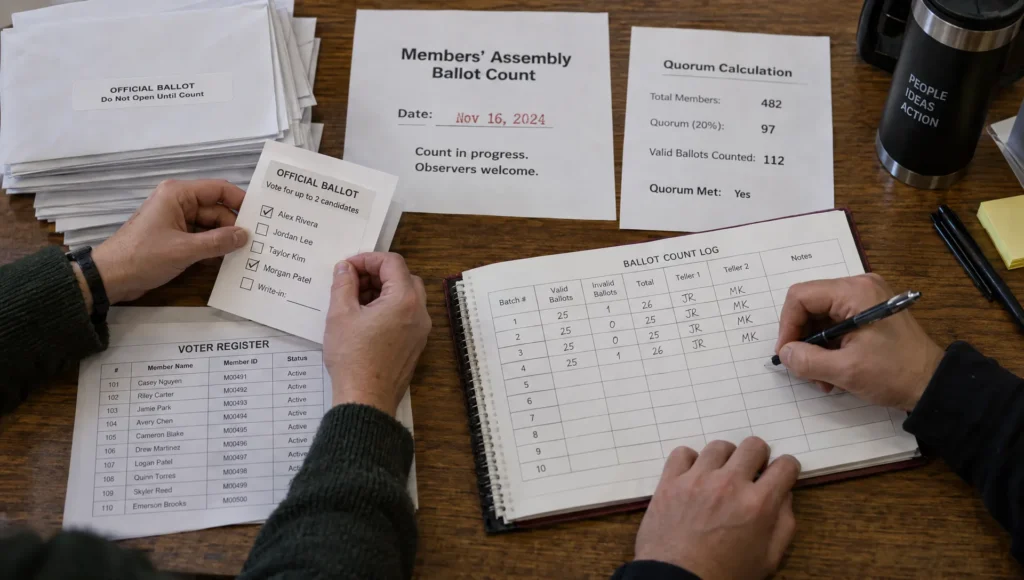
In a credible deliberative process, participants usually receive balanced information, meet under clear facilitation rules, work through competing values, and produce a public record of their reasoning. The result may be a recommendation, an options memo, a citizens’ statement, or a rationale that elected officials must answer.
For a deeper definition of the model, see JustSocial’s guide to the definition of deliberative democracy. This article focuses on the core question: why does deliberation actually improve public decisions?
Better decisions start with considered judgment
Most public input systems collect raw opinion. Raw opinion has value, but it is incomplete. People often respond to a proposal based on headlines, group identity, fear, personal experience, or partial information. That does not mean citizens are incapable of judgment. It means institutions have not created the conditions for judgment.
Deliberative democracy improves decisions by turning first reactions into considered judgment. Participants are asked to slow down, compare claims, test assumptions, and listen to people who experience the issue differently. This is especially important for complex public choices like housing, education, transportation, policing, climate adaptation, public budgets, and emergency policy.
The Stanford Center for Deliberative Democracy describes Deliberative Polling as a method that measures how public opinion changes when people have access to balanced information and structured discussion. The key lesson is simple: what people think after learning and deliberating can differ from what they thought at the beginning.
That difference is not a flaw. It is the point. A democracy that only measures instant opinion may be measuring frustration rather than judgment. A democracy that supports deliberation can ask a better question: what do citizens believe after they have had a fair chance to understand the decision?
The decision quality problem deliberation solves
Public decisions are rarely about choosing between good and bad. They are usually about choosing between imperfect options. Every serious policy carries tradeoffs. A housing decision may balance affordability, neighborhood character, public revenue, property rights, and displacement risk. A school policy may balance student safety, autonomy, learning outcomes, parent concerns, and teacher workload.
Deliberation improves decisions because it makes those tradeoffs visible. When tradeoffs are hidden, politics becomes symbolic. People argue over slogans because the real constraints are not public. When tradeoffs are explicit, citizens can debate priorities instead of fighting shadows.
| Common public decision failure | How deliberative democracy responds | Better decision output |
|---|---|---|
| Public debate is slogan-driven | Participants work from a shared evidence base | Claims become testable and comparable |
| Tradeoffs are hidden | Options must state benefits, costs, and risks | Decision-makers see real choices, not vague demands |
| Experts dominate or are ignored | Expertise is presented in plain language and questioned publicly | Evidence informs citizens without replacing them |
| Organized groups capture the process | Recruitment, facilitation, and transparency reduce domination | More affected voices enter the record |
| Officials say “we listened” without proof | A public rationale links input to the final decision | Citizens can inspect how influence happened |
This is why deliberative democracy is not just a participation method. It is a decision-quality method. It helps public institutions produce choices that are more informed, more legitimate, and easier to explain.
Deliberation connects expertise with lived experience
Modern government deals with technical issues. Public health, urban planning, education technology, energy grids, AI regulation, and budgets all require expertise. But expertise alone cannot answer democratic questions. Experts can explain likely consequences. They cannot decide, by themselves, what a community should value most.
Deliberative democracy creates a bridge between expert knowledge and lived experience. Experts can clarify facts, uncertainty, and tradeoffs. Citizens can explain how policy will affect daily life, dignity, trust, safety, and fairness. A better public decision needs both.
This connects directly to JustSocial’s manifesto, which proposes a stronger role for academia as a public-facing branch of democratic life. The idea is not technocracy. It is not rule by experts. It is a system where academic knowledge becomes publicly useful, contestable, and connected to citizens’ judgment.
In practice, that means experts should not arrive as authorities who close the conversation. They should provide evidence summaries, uncertainty statements, and option analysis that citizens can question. Deliberation improves decisions when expertise becomes a public resource rather than a private weapon used by whichever side can afford it.
It reduces capture by the loudest voices
Ordinary participation often favors people with time, money, confidence, networks, and professional advocacy skills. Public meetings can be dominated by organized interest groups. Online spaces can be distorted by outrage, bots, astroturfing, or algorithmic amplification. Even well-intentioned consultation can end up hearing mostly from the already powerful.
Deliberative democracy can reduce this problem, though it cannot eliminate it automatically. Good design matters. Many deliberative processes use random selection, stratified recruitment, accessibility support, facilitation rules, and transparent records to give a more representative group of citizens a real voice.
The OECD’s work on deliberative democracy has documented the growth of representative deliberative processes across democratic governments. These processes are often used when elected officials need informed public judgment on complex or contested issues.
The benefit is not that randomly selected citizens are morally superior to activists, experts, or elected officials. The benefit is that a well-designed deliberative body can create a different incentive environment. Participants are not rewarded for viral performance. They are rewarded for listening, reasoning, revising, and producing something usable.
Deliberative democracy improves legitimacy, even when people still disagree
A public decision can be unpopular and still legitimate if people can see that it was made through a fair, informed, and accountable process. The reverse is also true. A decision can have majority support and still feel illegitimate if minorities were ignored, evidence was manipulated, or the outcome was predetermined.
Deliberative democracy strengthens legitimacy by giving people inspectable reasons. Citizens may not agree with the final decision, but they can ask:
- Was the real decision clearly named?
- Were affected groups included or heard?
- Was evidence balanced and public?
- Were tradeoffs honestly stated?
- Did officials explain what they accepted, rejected, and why?
- Is there an implementation tracker after the decision?
These questions matter because democracy is not only about final authorization. It is also about public reasoning. The process should show why a choice was made, what alternatives were considered, what objections remain, and how the decision will be reviewed.
This is central to JustSocial’s idea of continuous direct democracy. Continuous participation does not mean that every public input becomes binding law. It means citizens are heard consistently, public reasoning is recorded, and institutions must respond with evidence and accountability.
Discursive democracy prepares the ground for better deliberation
Deliberative democracy works best when it is not isolated from the wider public conversation. Before a small group can deliberate well, the broader community needs a way to surface concerns, name harms, challenge frames, and propose questions. This is where discursive democracy matters.
Discursive democracy focuses on the quality of public discussion. It asks whether people can make claims, give reasons, bring evidence, disagree safely, and be recognized as legitimate participants. Deliberative democracy then takes the best-structured inputs from that wider discourse and turns them into decision-ready options.
A healthy democratic process often needs both layers. Discursive democracy opens the public conversation. Deliberative democracy disciplines that conversation into judgment. Civic participation links the result to real institutions.
Without the discursive layer, deliberation may begin with a narrow or biased frame. Without the deliberative layer, public discourse may remain expressive but not consequential. Without decision linkage, both can become participation theater.
This is why JustSocial repeatedly emphasizes public artifacts: issue packs, evidence commons, options memos, response memos, and implementation trackers. These records turn speech into civic memory. They help communities move from noise to judgment, and from judgment to accountable action.
Real-world examples show the value of structured public judgment
Deliberative democracy is not only a theory. It has been tested in different forms around the world.
Ireland’s citizens’ assemblies are often cited because they helped create structured public judgment on difficult constitutional and social questions. The Citizens’ Assembly in Ireland brought together randomly selected citizens, expert evidence, facilitated discussion, and public recommendations that connected to national decision-making.
Oregon’s Citizens’ Initiative Review is another useful model. Through the Citizens’ Initiative Review, a panel of citizens studies a ballot measure and produces a statement for voters. The aim is not to replace the public vote, but to improve the information environment around it.
These examples show a practical pattern. Deliberation is most valuable when the issue is complex, the public is divided, and officials need more than a poll. It gives democracy a way to think before it acts.
What makes a deliberative process decision-grade
Not every process labeled “deliberative” improves decisions. Some are symbolic. Some are captured. Some generate discussion but no consequence. To improve public decisions, deliberation needs minimum design standards.
A decision-grade deliberative process should include:
- A real decision link: Participants must know who can act on the output, when the decision will be made, and what kind of influence is promised.
- A balanced issue pack: Evidence should include competing arguments, known uncertainties, budget constraints, legal limits, and affected-community perspectives.
- Fair participant design: Recruitment should address inclusion, accessibility, language, disability, digital access, and overrepresentation by organized groups.
- Facilitation rules: The process should prevent domination, require reasons, protect dignity, and separate evidence from personal attack.
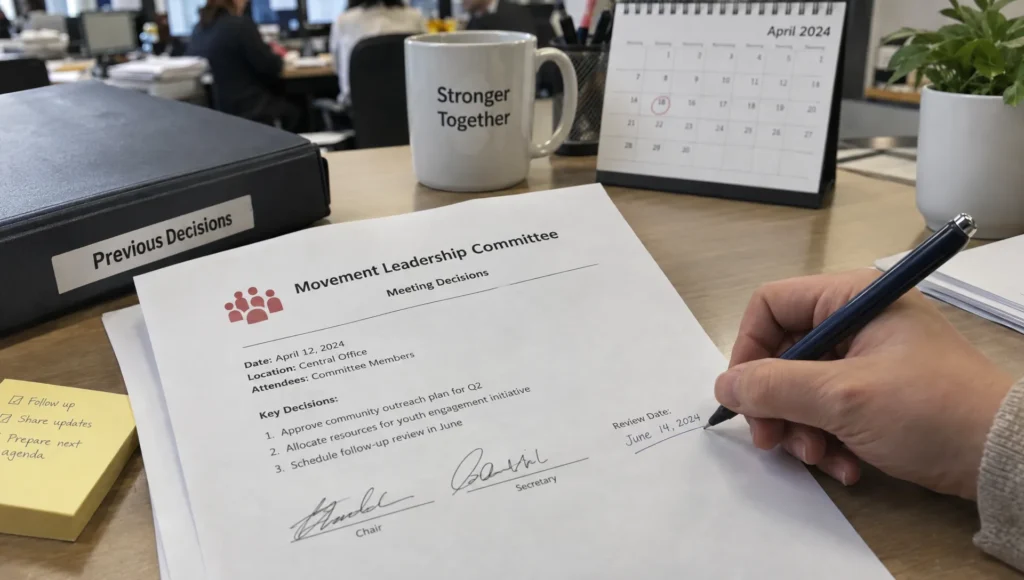
- Public receipts: The final output, official response, dissenting views, and implementation status should be published in a way citizens can inspect.
This is where technology can help, but only if governance comes first. Online voting platforms, decision-making software, public transparency tools, and civic analytics can make participation easier to scale. But technology cannot substitute for clear rules, public accountability, and institutional duty to respond.
JustSocial’s manifesto names possible civic tools such as public parliamentary records, community voting systems, news-to-action platforms, and public analytics. The important point is not the software alone. The point is to build democratic infrastructure where citizens can participate continuously and see what happens next.
A better public decision is not always the fastest decision
One objection to deliberative democracy is that it takes time. That is true. It can be slower than a closed meeting, a quick poll, or a partisan vote. But speed is not the only measure of public value.
Bad decisions create downstream costs. They trigger lawsuits, protests, noncompliance, distrust, policy reversals, and implementation failure. A rushed decision may appear efficient while quietly producing years of conflict.
Deliberation adds time at the front end to reduce damage later. It helps officials discover objections before implementation. It reveals practical obstacles that technical staff may miss. It gives affected citizens a reason to believe the process was not rigged. It creates records that future decision-makers can learn from.
This does not mean every decision requires a citizens’ assembly. Routine administrative matters may only need clear transparency and feedback channels. High-stakes, contested, value-heavy decisions deserve deeper deliberation.
How deliberation fits a modern political movement
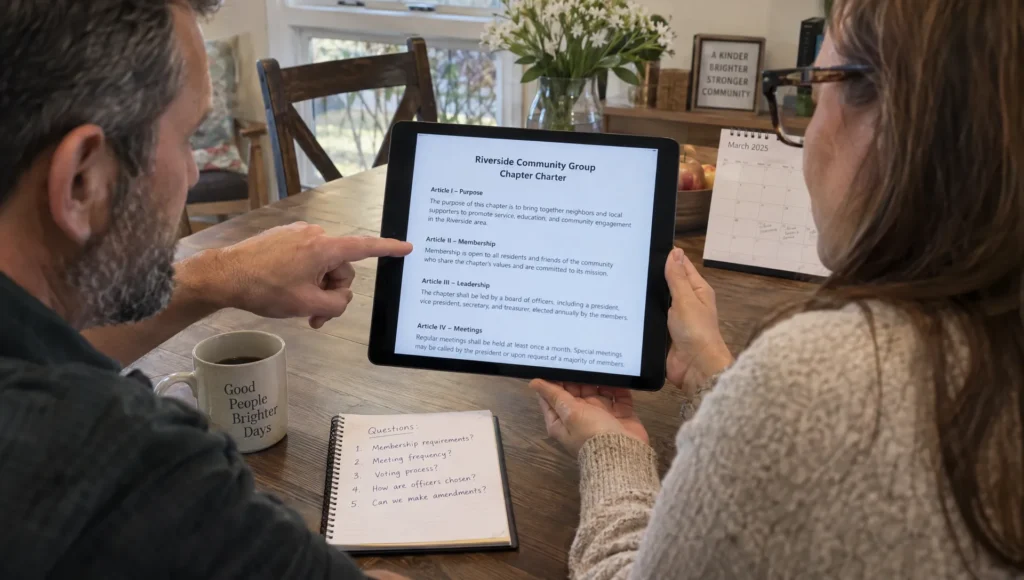
A political movement that wants democratic reform cannot only demand better institutions. It has to model them. That means using deliberative practices internally: publishing rules, structuring disagreement, documenting reasoning, and showing how supporters’ input changes priorities.
For JustSocial, this is especially important because the movement’s broader vision is continuous direct democracy. If the goal is to build a future where citizens are heard continuously, then the movement itself must prove that continuous participation can be serious, transparent, and resistant to manipulation.
A movement can start small. It can choose one local issue, publish a participation promise, gather structured public input, convene a diverse deliberative group, produce an options memo, request an official response, and track implementation. That single loop is more valuable than thousands of vague engagement signals because it creates proof.
In the language of the manifesto, this is how people begin to act less like spectators and more like a public branch of democratic life. Not by replacing every institution overnight, but by building repeatable civic capacity.
The public decision test
If a government, city council, school district, agency, or civic movement claims to support deliberative democracy, ask one simple question: can the public inspect the path from input to decision?
If the answer is no, the process may still be engagement, but it is not yet decision-grade deliberation. Public decisions improve when citizens can see the full chain: the question, the evidence, the participants, the reasoning, the recommendation, the official response, and the follow-through.
That chain is the difference between being heard emotionally and being counted institutionally. It is also the difference between a democracy that asks citizens to trust leaders blindly and a democracy that earns trust through visible reasoning.
Frequently Asked Questions
Is deliberative democracy the same as direct democracy? No. Direct democracy usually focuses on citizens voting directly on decisions. Deliberative democracy focuses on structured public reasoning before a decision. The two can work together when deliberation informs a later vote or official decision.
Does deliberative democracy replace elected representatives? It does not have to. In many models, deliberation advises elected officials, improves public input, and requires a public response. Representatives can still decide, but they should explain how they used or rejected the deliberative output.
Why is deliberation better than a public poll? A poll captures opinion at a moment in time. Deliberation captures considered judgment after people review evidence, hear different perspectives, and discuss tradeoffs. Both can be useful, but they answer different questions.
Can deliberative democracy work online? Yes, but only with careful design. Online deliberation needs accessibility, identity and privacy safeguards, transparent moderation, balanced evidence, anti-manipulation protections, and public records. The platform must serve the process, not replace it.
What is the first step for a community that wants to try it? Start with one real decision. Name the decision owner, timeline, and promised use of public input. Then publish a short issue pack, gather structured input, convene a small facilitated group, and ask officials for a written response.
Help build public decisions people can trust
Deliberative democracy improves public decisions because it treats citizens as capable of judgment, not merely as voters to be counted or audiences to be managed. It creates the conditions for better evidence, fairer tradeoffs, stronger legitimacy, and visible accountability.
That is the democratic direction JustSocial is working toward: continuous civic participation, transparent public reasoning, and technology that empowers citizens rather than replacing them. If that vision speaks to you, read The Face of Democracy, explore JustSocial.io, and consider how you can help build the civic infrastructure that modern democracy now requires.