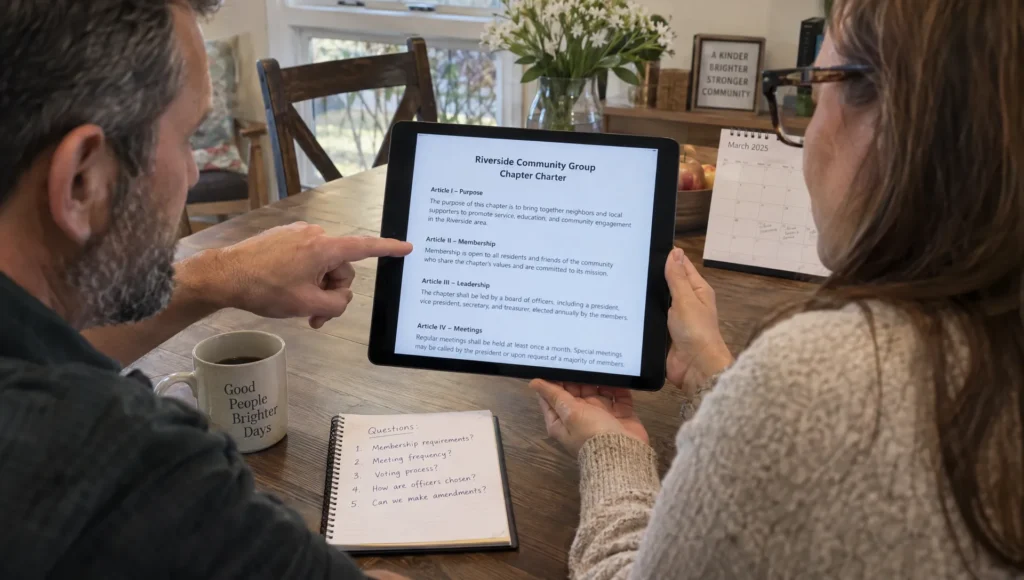
Education reform usually enters public life as a promise: a new curriculum, a new schedule, a new test, a new technology, a new vision for what children should learn. Then the pattern repeats. Leaders change, budgets move, teachers are exhausted, parents feel unheard, students adapt to another experiment, and the reform becomes a slogan before it becomes a culture.
The missing ingredient is often not expertise. Schools have experts. It is not passion. Families and teachers have plenty. The missing ingredient is durable civic participation, a public structure that lets people help define problems, weigh trade-offs, follow decisions, and keep improving policy after the announcement fades.
In the JustSocial manifesto, Yuval D. Vered describes much of modern schooling as a relic of the Industrial Revolution: fragmented schedules, standardized testing, and institutions that too often treat students and families as passengers rather than participants. The manifesto points toward a different social contract, one where education is shaped by students, parents, teachers, academia, and public officials through continuous democratic engagement.
That is the core idea behind education reform that lasts. A reform survives when the public does not merely approve it once. It survives when the public understands it, debates it, tests it, corrects it, and feels responsible for its success.
The real test of education reform is ownership
A reform can be well-written and still fail. It can be evidence-based and still be rejected. It can be popular in a campaign and still collapse in implementation. Education policy touches daily life too deeply to be managed as a distant administrative project.
Parents see whether homework policy works at 8 p.m. Teachers see whether a curriculum fits the real classroom. Students know whether a school schedule supports learning or quietly drains attention. Local employers, universities, and civic groups see whether graduates are leaving school with practical skills, curiosity, and confidence.
Civic participation turns those experiences into public intelligence. It does not mean every citizen gets everything they want. It means decisions are made with structured input from the people who live with the consequences.
| Reform habit | Short-lived reform | Reform that lasts |
|---|---|---|
| Problem definition | Leaders define the problem privately | Communities help name the problem publicly |
| Public role | Citizens react after decisions are mostly made | Citizens participate before, during, and after decisions |
| Evidence | Data is used to justify a plan | Data is used to compare options and revise policy |
| Student voice | Students are surveyed occasionally | Students are treated as stakeholders in school design |
| Accountability | Success is announced by officials | Success is reviewed through transparent public feedback |
| Continuity | Reform depends on one leader | Reform is embedded in repeatable civic processes |
This is why civic participation matters for lasting reform. It creates memory, legitimacy, and pressure. It gives public institutions a way to keep listening without turning every disagreement into a crisis.
Start with discursive democracy: let people name the problem
Discursive democracy is the layer of democracy where public meaning is formed through conversation. Before a district debates whether to extend the school day, adopt project-based learning, use AI tools, or reduce standardized testing, it must understand what people believe the real problem is.
A parent may say the problem is stress. A teacher may say the problem is curriculum overload. A student may say the problem is boredom. A principal may say the problem is absenteeism. A policymaker may say the problem is low achievement. These are not always competing claims. Often, they are different windows into the same system.
Without discursive democracy, reformers jump too quickly from diagnosis to solution. They announce a policy before the community has built shared language around the issue. That creates predictable resistance, because people do not only resist change. They resist being misdescribed.
Strong discursive participation can include:
- Student listening circles focused on daily school experience, safety, motivation, and relevance.
- Teacher forums that document classroom constraints, not just opinions on final proposals.
- Parent conversations held at accessible times and in formats that do not reward only the loudest voices.
- Public issue boards where questions, concerns, and ideas are visible to the whole community.
This is not endless talk. It is the groundwork for serious reform. A school system cannot deliberate well until it first hears how citizens describe the lived reality of education.
For readers who want a more tactical approach to organizing this work, JustSocial has also published a citizen playbook for civic participation and education reform. This article focuses on the durability question: how to make participation strong enough to outlast a single campaign, meeting, or superintendent.
Then use deliberative democracy: turn opinions into judgment
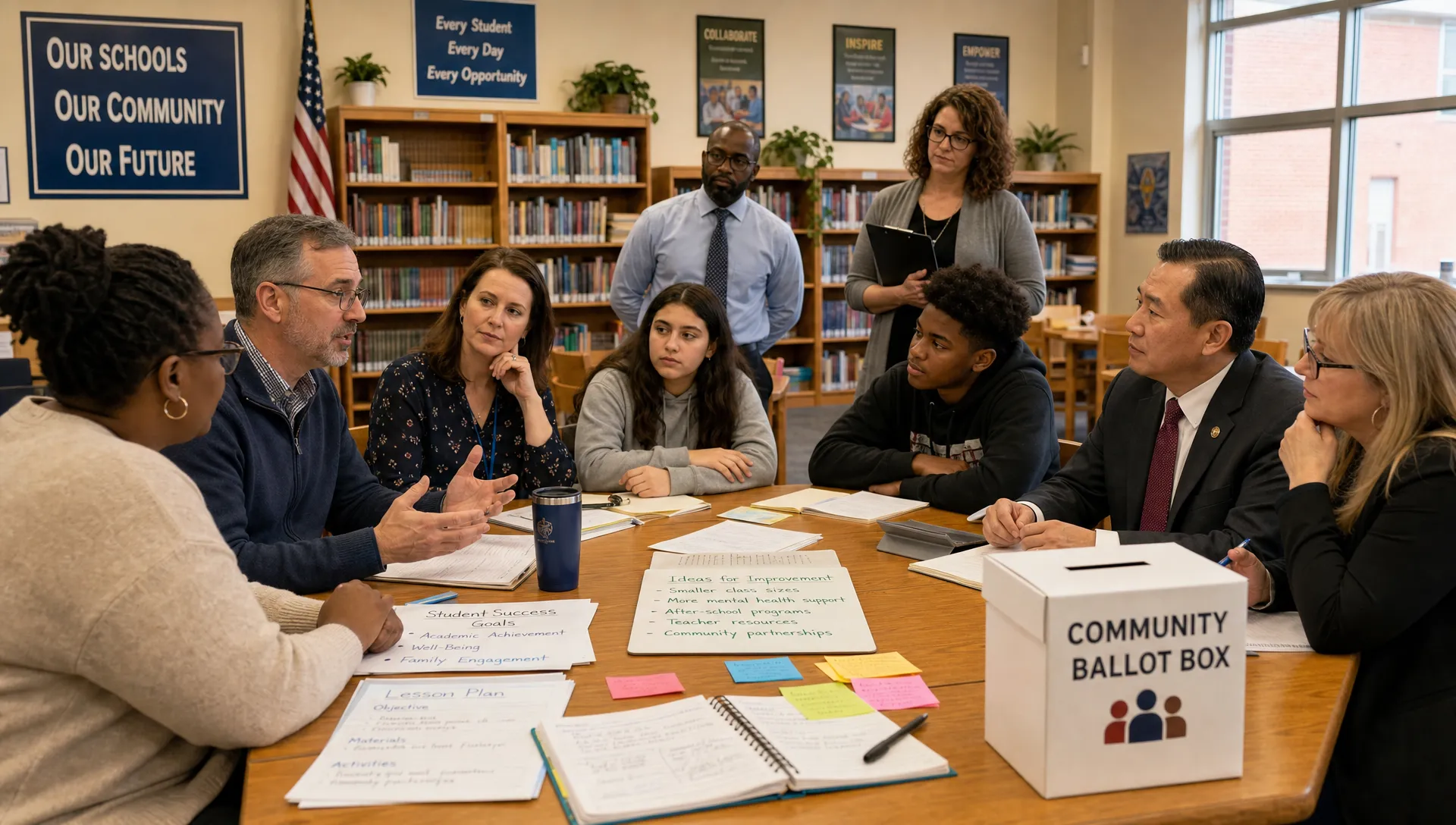
Deliberative democracy is different from a comment box. It asks people to consider evidence, hear opposing views, understand constraints, and make reasoned recommendations. The goal is not to count raw reactions. The goal is to help citizens form public judgment.
The OECD has documented the growing use of citizens assemblies, panels, and juries as ways to involve people in complex public decisions. Education is exactly the kind of field that needs this approach, because almost every serious reform includes trade-offs.
Consider a few examples. A project-based learning model may improve relevance and collaboration, but it requires teacher training and new assessment methods. AI classroom tools may help answer student questions, but they raise concerns about privacy, dependence, and the changing role of teachers. A later school start time may support adolescent sleep, but it affects transportation, family schedules, and extracurricular activities.
Discursive democracy lets people say what matters. Deliberative democracy helps them decide what is worth doing, what risks must be managed, and what evidence should be used to judge success.
This connects directly to the JustSocial manifesto’s emphasis on academia as a public force. Education reform should not be governed only by popularity or party identity. It should combine lived experience with academic standards, research, and professional judgment. Citizens should be heard, but they should also be equipped with the knowledge needed to govern wisely.
Civic participation must be attached to real decisions
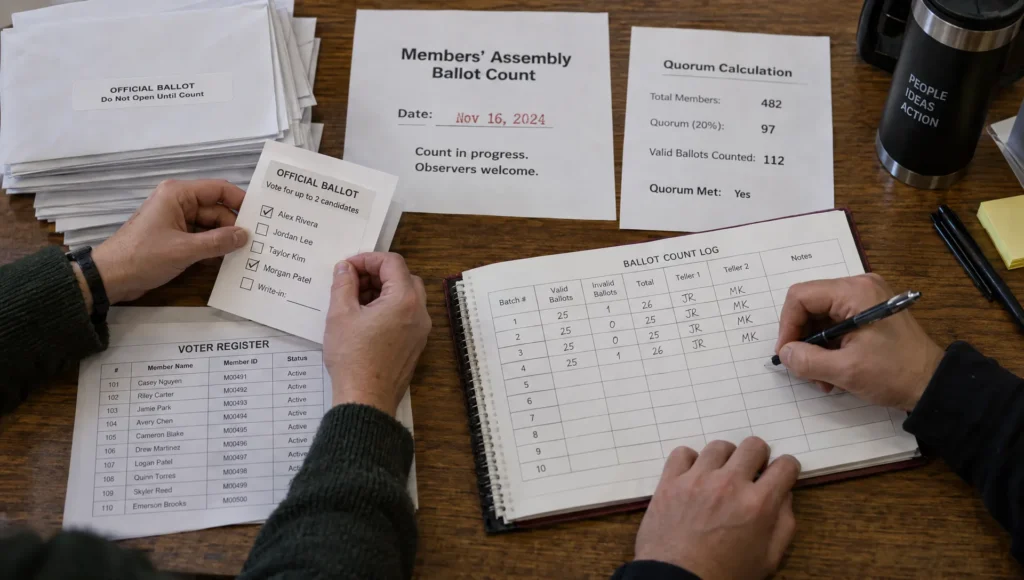
Participation becomes cynical when people speak and nothing changes. A town hall with no decision owner is theater. A survey with no published response is public relations. A committee with no authority is a pressure valve, not democracy.
For civic participation to make education reform last, every engagement process needs a decision map. Citizens should know what is being decided, who has legal authority, what budget limits exist, what timeline applies, and how public input will be answered.
The most important rule is simple: participation must produce a visible public response. If a district rejects a community recommendation, it should explain why. If officials adopt part of a proposal, they should specify which part. If a pilot fails, the evidence should be published. If it succeeds, citizens should know what happens next.
This is the bridge from engagement to power. JustSocial’s broader argument for continuous direct democracy is not that every public question should become an instant referendum. It is that public officials should be continuously informed by structured citizen input and held accountable for how they respond.
Transparency is the memory system of lasting reform
Education systems are full of turnover. Students graduate. Parents move on. Teachers change schools. Principals retire. Board members lose elections. When reform depends only on personal memory, it disappears.
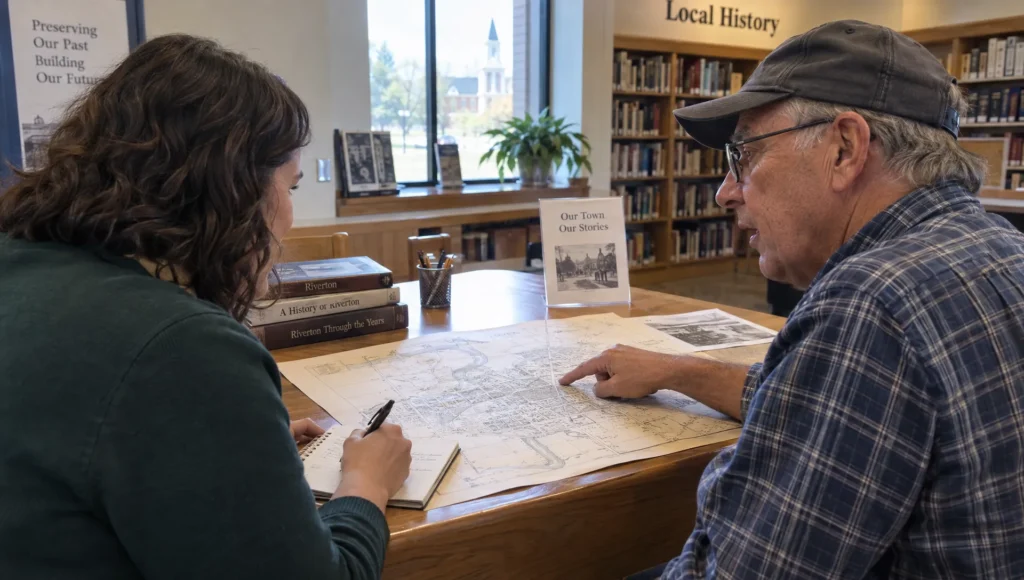
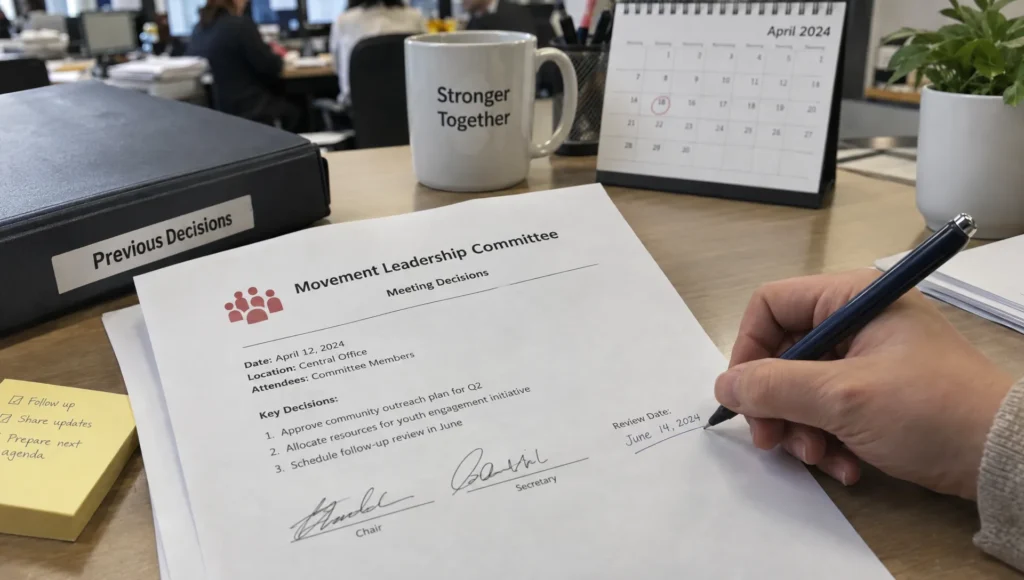
Transparency gives reform an institutional memory. Public records, meeting summaries, budget explanations, pilot results, curriculum materials, and decision timelines help the next group of citizens understand what was tried and why.
The JustSocial manifesto imagines public tools such as committee archives, community voting systems, analytics platforms, and even Git-like repositories for state laws. Whether applied at the national level or adapted locally for schools, the principle is powerful: public decisions should leave a public trail.
This does not mean exposing private student data or turning education into surveillance. Privacy must be protected. But the reasoning behind public decisions should not be hidden. If a school adopts AI support, changes assessment, restructures the school day, or reallocates funding, citizens should be able to trace the decision from problem to proposal to outcome.
Transparency also lowers the temperature of conflict. People are more likely to accept a decision they dislike when they can see the process, the evidence, and the response to objections.
A durable civic model for school reform
Lasting education reform is less like passing a law and more like maintaining a public ecosystem. It needs phases that repeat over time. The following model can work at the school, district, city, or national level.
| Phase | Civic question | Public output |
|---|---|---|
| Diagnosis | What problem are we actually trying to solve? | A public problem statement built from student, parent, teacher, and community input |
| Design | What options are realistic and evidence-informed? | A short list of proposals with costs, risks, and expected benefits |
| Deliberation | Which option best balances values and constraints? | A citizen recommendation with minority opinions included |
| Pilot | What happens when the idea meets real classrooms? | A limited test with clear success measures and safeguards |
| Review | Should we scale, revise, pause, or stop? | A public report and decision response from the authority responsible |
This model matters because reform is rarely right on the first attempt. A durable system does not pretend otherwise. It builds correction into the process.
The manifesto’s education section proposes ideas such as project-based learning, more holistic teaching roles, democratic student choice over some weekly learning topics, and AI tools that support classroom instruction. Whether one agrees with every detail or not, these ideas share a crucial assumption: education should be designed around human development, not institutional inertia.
Civic participation is the mechanism that can test such ideas responsibly. It gives communities a way to ask: What do we want students to become? What should teachers be free to do? What should technology handle, and what should remain deeply human? What outcomes matter beyond test scores?
Why students must be part of the process
Education reform often speaks about students while excluding them from meaningful participation. That is a mistake. Students are not policy experts, but they are experts in the experience of being educated.
Student civic participation should be age-appropriate, safe, and structured. Younger students can help identify what makes learning engaging or confusing. Older students can participate in councils, deliberative panels, curriculum feedback, and school climate reviews. Minors should not be treated as adult voters, but they should not be treated as silent objects of policy either.
The JustSocial manifesto’s proposed social contract makes this distinction clearly: minors can voice democratic opinions and participate in public learning communities, while formal political voting belongs to adulthood. That distinction is useful for education reform. Student voice can inform policy without pretending that children carry the same legal responsibility as adults.
When students help shape learning, they are also practicing citizenship. A school that teaches democracy only through textbooks but makes every meaningful decision from above is sending a mixed message. A school that lets students deliberate, propose, revise, and reflect is teaching civic life by living it.
The role of a political movement in education reform
A political movement can help education reform last when it protects the method, not only the message. Party platforms change. Election slogans fade. But a movement built around civic participation can keep asking the same democratic question: were the people meaningfully included in the decision?
That question matters across ideological lines. Conservatives, liberals, independents, religious communities, secular communities, immigrant families, teachers unions, entrepreneurs, and students may disagree about education policy. But they can still share a demand for transparent process, honest deliberation, and real public influence.
This is where JustSocial’s political movement is distinct from ordinary campaign politics. Its core argument is not merely that one reform should replace another. It is that citizens need democracy tools, public transparency, and continuous participation so public institutions can evolve faster and serve people more directly.
Education is a natural starting point because schools form the citizens who will later inherit democracy. If schools remain industrial, passive, and detached from public voice, society should not be surprised when adults experience politics the same way.
How citizens can begin without waiting for permission
Lasting reform can start small. Citizens do not need to redesign the national education system in one move. They can begin with one concrete decision: a school schedule, homework policy, phone policy, curriculum pilot, tutoring model, student mental health priority, AI use guideline, or local budget question.
The first step is to gather the people closest to the issue and document the problem in their own words. The second is to ask the decision owner, such as a principal, school board, district official, or ministry representative, what decision is actually open. The third is to create a transparent record of proposals, concerns, evidence, and responses.
If the issue begins as protest, it still needs a path into policy. JustSocial’s guide on moving civic participation in schools from protest to policy is useful for communities trying to convert frustration into structured influence.
The key is repetition. A single meeting can be ignored. A repeated civic process becomes harder to dismiss. A public record becomes harder to rewrite. A community that deliberates together becomes harder to divide.
Education reform that lasts is democratic culture
The deepest education reforms are not only about classrooms. They are about the relationship between citizens and the state.
The old social contract reduces people too easily to taxpayers, consumers, and occasional voters. A stronger contract treats citizens as participants in the public systems they fund and live inside. That does not eliminate professional expertise. It gives expertise a democratic home.
UNESCO’s report on reimagining the futures of education argues for education as a public endeavor and a common good. Civic participation gives that principle practical form. It says schools are not merely service providers. They are civic institutions where society decides, again and again, what kind of future it is building.
Reform lasts when citizens stop being an audience for policy and become co-authors of public life. That is not easy. It requires structure, patience, technology, transparency, and trust. But if education is meant to prepare people for freedom, then the process of reform must practice freedom too.
Frequently Asked Questions
What is civic participation in education reform? Civic participation in education reform means students, parents, teachers, and community members have structured ways to influence school decisions before, during, and after policies are adopted.
How is deliberative democracy different from a public survey? A survey collects opinions. Deliberative democracy gives people evidence, time, and a structured setting to weigh trade-offs before making recommendations.
Why does discursive democracy matter for schools? Discursive democracy helps communities define problems in their own language. This prevents leaders from imposing solutions before they understand how students, families, and teachers experience the issue.
Can civic participation slow down education reform? It can slow down the beginning of a reform, but it often prevents bigger delays later by building trust, surfacing risks early, and creating public ownership.
Should students have a voice in education policy? Yes, in age-appropriate and safe ways. Students understand the daily experience of school and should help inform reforms that shape their learning, while adults remain responsible for legal and governance decisions.
Help build education reform that citizens can own
JustSocial is a political movement promoting continuous direct democracy, citizen empowerment, transparency, and technology-driven participation. If you believe education reform should be shaped with the people, not merely announced to them, explore the movement, read the manifesto, and consider how your community can begin practicing civic participation now.
The future of education will not be secured by one perfect policy. It will be secured by citizens who keep showing up, deliberating honestly, demanding transparency, and building democratic habits that last.