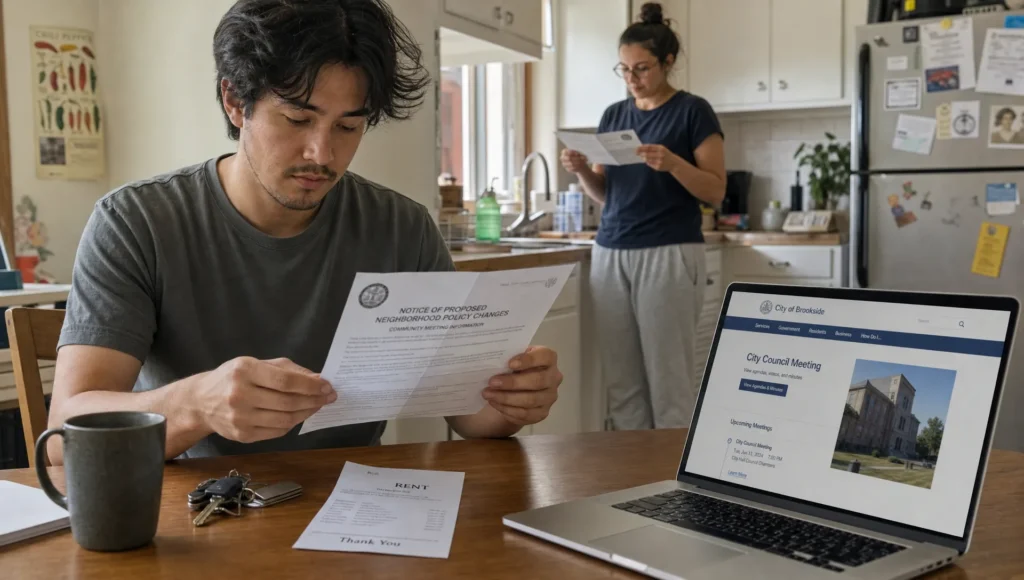
civic participation is often praised as a duty, but it is usually designed as if citizens have unlimited free time. Town halls happen during work hours, consultation documents demand legal literacy, public comment periods reward the loudest and most available voices and volunteer civic labor is treated as morally superior to compensated public work. That arrangement quietly excludes parents, hourly workers, caregivers, disabled citizens, students and anyone living too close to financial stress.
The case for paid participation is not a case for buying opinions. It is a case for recognizing that democracy asks for labor: reading, listening, discussing, weighing tradeoffs, attending meetings and holding institutions accountable. If a democracy wants the public to help govern continuously, then it should stop pretending that public time has no cost.
JustSocial’s wider argument is that modern citizens should not be reduced to voters, taxpayers and private consumers. A political movement built around continuous democracy has to confront a practical question: who can afford to participate, and who is priced out before the conversation even begins?
Why civic participation should not depend on unpaid time
Unpaid participation produces a familiar distortion. People with flexible schedules, secure income and professional confidence are more likely to show up. People carrying multiple jobs, language barriers or caregiving responsibilities are more likely to be absent, even when the issue affects them most directly.
This is not a character flaw in the people who do not attend. It is a design flaw in public participation. When governments say everyone is welcome but offer no compensation, no childcare, no transport support and no accessible formats, they have not built an open process. They have built a process that favors those already closest to power.
In JustSocial’s manifesto, Yuval D. Vered argues that the current social contract leaves citizens heard only intermittently, usually at elections, then largely ignored in the daily operations of the state. Paid public participation responds to that problem at the level of access. It says that public voice should not depend on private wealth.
Payment is not the same as influence buying
The ethical distinction matters. Payment for participation should compensate time, effort and access costs. It should never reward a particular answer, political identity or vote. A citizen in a deliberative panel can be paid for attending, preparing and engaging respectfully without being paid to support the mayor, oppose a bill or endorse a party.
The same principle already appears in civic life. Jurors may receive compensation. Public agencies hire translators, facilitators and subject experts. Campaigns pay staff to organize voters. The public should be equally comfortable compensating ordinary citizens when their lived experience and judgment are part of the decision process.
A democratic process should value more than expertise
Public decisions need technical knowledge, but they also need resident knowledge. A transit planner may understand route optimization, but a night-shift worker knows whether a bus schedule is livable. A school administrator may understand budgets, but a parent knows whether a policy works at 7:30 in the morning with two children and one car.
The case for civic participation with compensation begins from that premise: citizens contribute knowledge that institutions cannot simply extract for free. If governments value that knowledge, they should budget for it.
What paid civic participation would mean in practice
Paid participation does not mean every tweet, complaint or petition signature gets a public stipend. It means formal participation processes should include compensation when the state asks citizens to do structured civic work.
A practical model could include several layers:
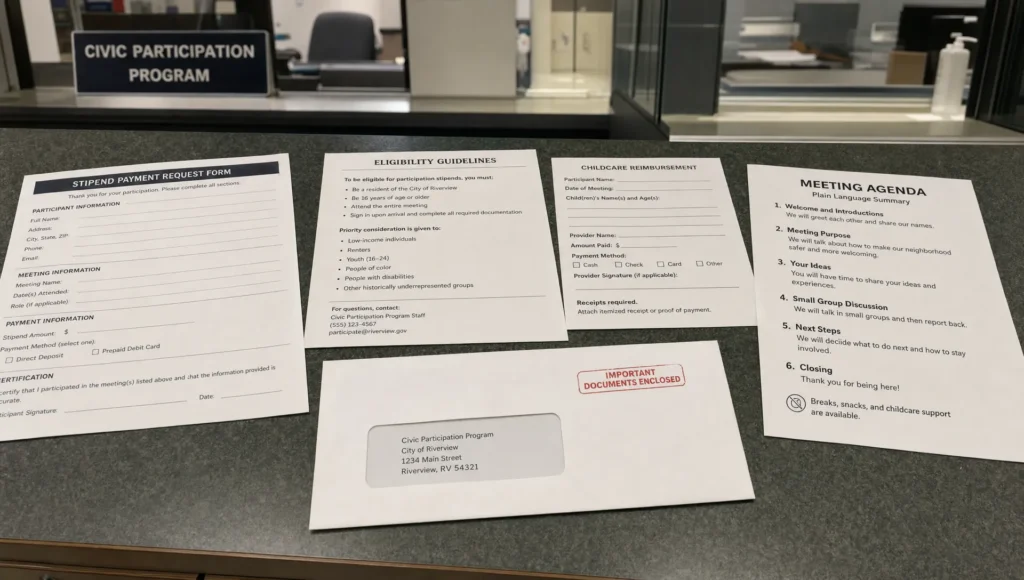
- Participation stipends for residents selected for deliberative panels, community juries, citizen assemblies or long-form consultations.
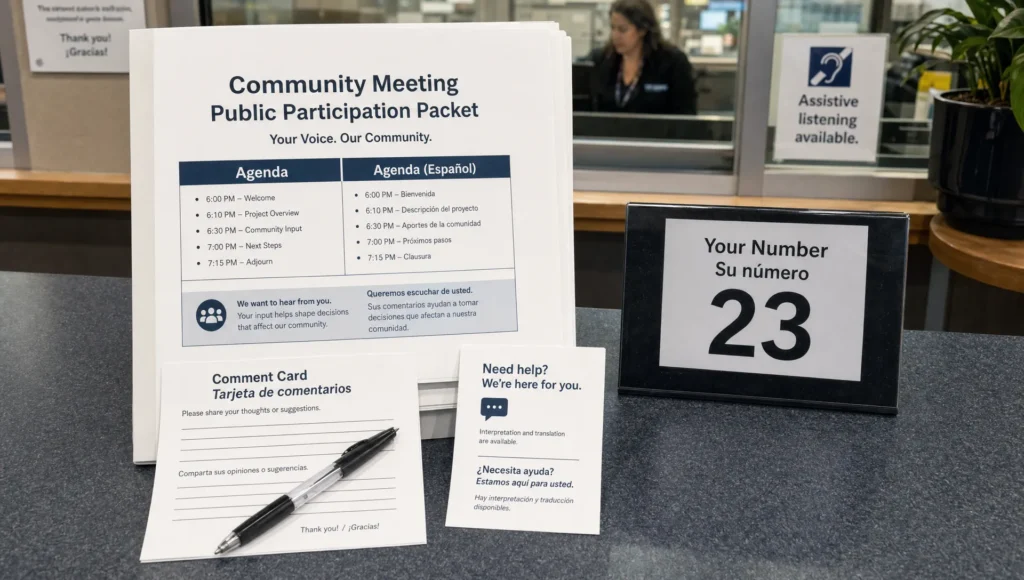
- Access support for transport, childcare, eldercare, disability accommodations and translation.
- Civic learning time for participants who need plain-language briefings before weighing in on complex decisions.
- Workplace civic leave so employees can attend public decision processes without risking wages or employment.
- Transparent compensation rules published before recruitment, with equal pay for equal participation duties.
A healthy model of civic participation pays for time without creating dependency on political approval. Compensation should be modest, standardized and process-based. The goal is inclusion, not patronage.
| Participation model | What citizens contribute | What compensation solves | Main risk to manage |
|---|---|---|---|
| Public comment only | Short statements and objections | Very little, since time burdens remain | Dominance by organized insiders |
| Stipended citizen panel | Time, judgment and deliberation | Lost wages, preparation time and access costs | Capture through weak selection rules |
| Participatory budgeting support | Project ideas and local priorities | Barriers for low-income communities | Tokenism if officials ignore results |
| Civic leave from work | Attendance at formal public processes | Fear of losing pay or hours | Unequal access if only some workers qualify |
| Community reporting roles | Local evidence and lived experience | Ongoing civic labor | Confusion between public input and paid advocacy |
Paid participation strengthens deliberative democracy
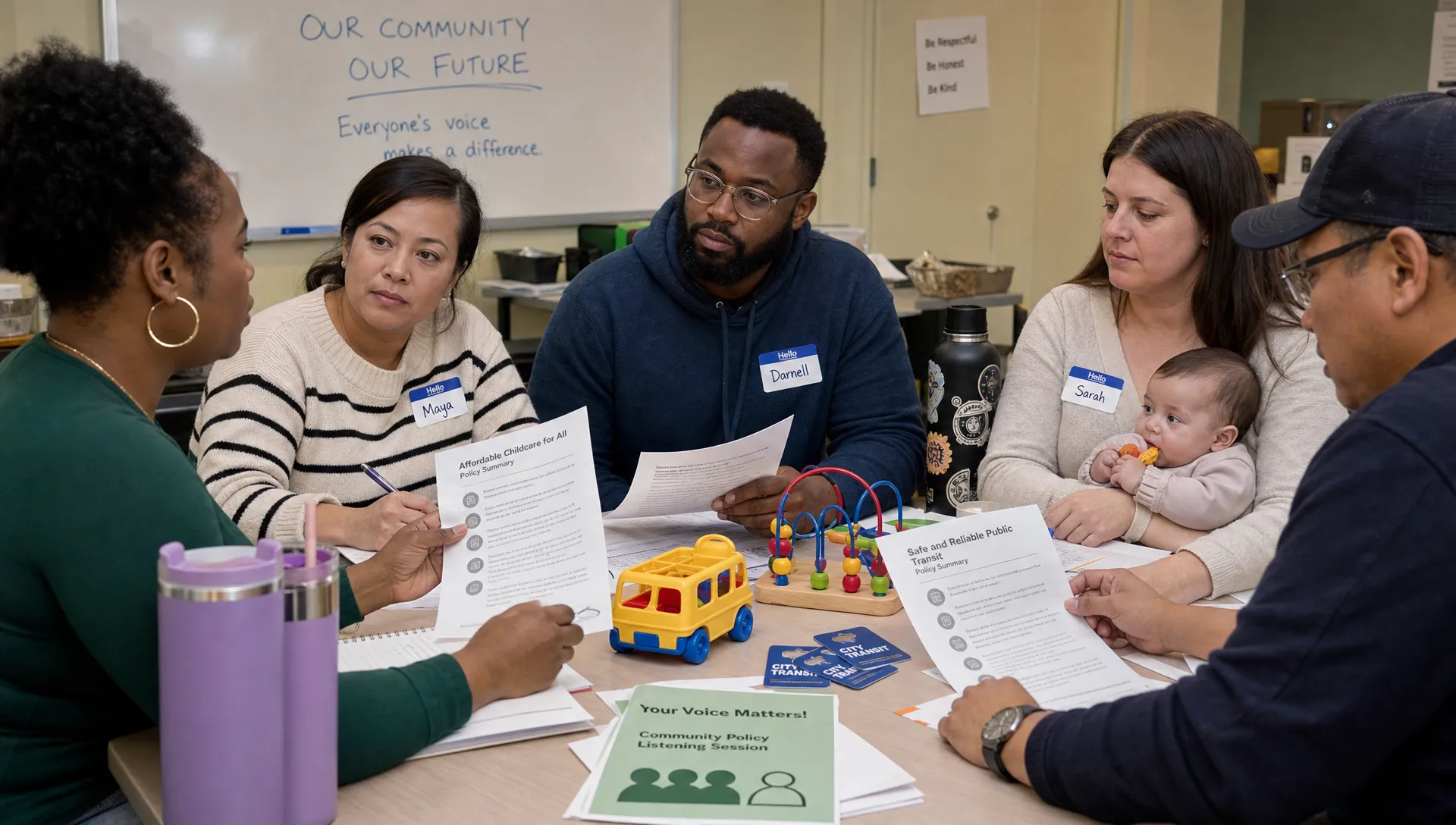
Deliberative democracy depends on the quality of public judgment, not just the number of people who click a poll. It asks citizens to hear evidence, consider opposing views, ask questions and produce recommendations that decision-makers must answer.
That takes time. If only unpaid volunteers can join, deliberative bodies become less representative. Payment helps build panels that better reflect the public across income, age, neighborhood, disability, family status and work schedule. It also signals that preparation matters. Citizens are not being invited as decoration. They are being asked to perform a real public function.
This is where paid participation becomes a democratic design tool. It can help governments recruit beyond the usual civic insiders, reduce dropout rates and make participation credible for people who would otherwise say, correctly, that they cannot afford to spend three evenings discussing a policy document for free.
Paid participation also improves discursive democracy
Discursive democracy is broader than formal panels. It concerns the public conversation itself: how people form opinions, exchange reasons, challenge narratives and build shared meaning. Payment cannot and should not commercialize ordinary speech. But it can support the infrastructure that makes public discourse less chaotic and more useful.
For example, communities can compensate local facilitators who host issue circles, translators who make debate accessible, residents who gather testimony from overlooked neighborhoods and moderators who maintain respectful discussion spaces. In that setting, paid civic participation does not replace spontaneous public speech. It strengthens the channels that allow many kinds of speech to reach decision-makers.
A serious democracy also has to make room for different moral languages. Some citizens approach public life through labor organizing, some through academic research, some through neighborhood life and some through faith. Resources that offer biblical insight for everyday faith can help religious citizens connect conscience with public responsibility, while the civic process itself must remain open, equal and accountable to all.
The JustSocial connection: from Polis to Cosmopolis
JustSocial’s manifesto draws on the Greek Polis to describe a more immediate relationship between citizen and state. The point is not nostalgia. Ancient direct democracy was intimate because citizens could see and feel the public life around them, but it was also limited by scale, exclusion and the technology of its time.
The modern challenge is different. We now have digital tools, social platforms, analytics, cloud infrastructure and emerging AI systems. The question is whether those tools will deepen public agency or merely make citizens more measurable as consumers. For JustSocial, civic participation is not a seasonal ritual. It is the foundation of a future Cosmopolis, a political culture where people can continuously influence public policy without collapsing the independence of institutions.
That is also why the idea of a permanent People’s Branch matters. If the people are treated as a standing democratic branch, not just an election-day audience, then participation has to be funded, protected and audited like any other public function.
How to prevent abuse and preserve legitimacy
Paid participation raises legitimate concerns. Badly designed compensation can become political patronage. Parties or interest groups could try to flood processes with paid loyalists. Citizens might suspect that stipends manipulate outcomes. These risks are real, but they are not reasons to keep participation unpaid. They are reasons to design it carefully.
The core safeguards are straightforward:
- Pay for process, not position: Citizens receive compensation for attending, preparing and participating respectfully, never for supporting a specific outcome.
- Use transparent selection rules: Random selection, stratified recruitment and open eligibility criteria reduce insider capture.
- Separate facilitation from politics: Independent administrators should run the process, not campaign staff or elected officials.
- Publish decision links: Every paid process should identify the decision owner, decision window and duty to respond.
- Audit the system: Compensation, attendance, selection methods and official responses should be reviewable without exposing private votes or sensitive identities.
Anonymous participation can still coexist with verification. A platform may confirm that a person is eligible without publicly exposing how that person voted or what identity tags they chose to share. This aligns with JustSocial’s broader vision of technology that lets citizens be counted without turning them into targets.
A practical pilot for paid civic participation
The best way to test this idea is not a grand national reform on day one. It is a public pilot with a real decision, a limited budget and visible accountability. JustSocial has already argued that participation becomes credible when tested through public pilot programs, and paid participation fits that logic well.
A city could begin with a single issue: redesigning a bus route, allocating a youth services budget, revising school meal policy or improving a permit process. The pilot would recruit a representative resident panel, compensate members for structured sessions, provide plain-language materials, gather wider public input online and require the relevant agency to publish a response.
| Pilot phase | Public question | Paid role | Accountability measure |
|---|---|---|---|
| Recruitment | Who should be in the room? | Selected residents receive clear terms | Selection criteria published |
| Learning | What facts and tradeoffs matter? | Participants are paid for preparation | Briefing materials made public |
| Deliberation | What should government do? | Participants discuss and recommend | Minority views recorded |
| Response | What will officials accept or reject? | No payment tied to outcome | Written decision response required |
This keeps compensation connected to civic work rather than political loyalty. It also gives skeptics something concrete to evaluate: Did more people participate? Were participants more representative? Did the final decision improve? Did officials respond honestly?
The deeper argument: civic work is public work
Democracy already pays for elections, legislatures, courts, police, public schools, procurement systems and regulatory agencies. Yet when ordinary citizens are asked to help correct those systems, they are often told that payment would corrupt the purity of civic duty.
That logic protects an old hierarchy. Professionals are paid to govern. Citizens are expected to donate time if they want to be heard. Paid civic participation challenges that hierarchy by saying that democratic labor has value, especially when it comes from people normally missing from the room.
This does not mean replacing civic virtue with wages. People will still volunteer, organize, protest, write, vote, donate and build communities because they care. But formal public processes should not rely on sacrifice as an access filter. A mother who needs childcare, a delivery driver who loses income by attending a meeting and a student who needs transit fare should not have less democratic standing than a retiree with free afternoons.
The JustSocial vision of continuous democracy depends on this shift. If the future citizen is meant to be more than a voter and consumer, the state must build participation into the social contract. That includes technology, transparency, education and compensation where structured civic labor is required.
Frequently Asked Questions
Is paid participation the same as paying people for votes? No. A legitimate model pays citizens for time, preparation and participation in a public process. It must never pay for a specific vote, opinion, party preference or policy outcome.
Would paid participation make democracy too expensive? It would require public budgets, but the cost should be compared with the price of bad policy, failed consultations and decisions that ignore affected communities. Small pilots can test value before expansion.
Who should receive compensation? Compensation is most appropriate for structured roles such as citizen panels, assemblies, community juries, public service design sessions and intensive consultations. Ordinary political speech should remain free and voluntary.
How does this connect to deliberative democracy? Deliberative democracy asks citizens to study evidence, hear different views and reason together. Payment makes that process more representative by reducing the economic barriers to participation.
Can digital tools make compensation safer? Yes, if designed carefully. Verified identity, anonymous voting, audit trails, transparent selection and privacy safeguards can reduce fraud without exposing citizens to political retaliation.
Help build a democracy people can afford to join
A political movement for continuous democracy cannot rely only on moral appeals. It must build systems that make public agency practical for real people with jobs, families, disabilities, debts, obligations and limited time.
Paid participation is not the whole answer, but it is one necessary correction. If we want citizens to help govern beyond election day, we should design participation as public infrastructure, not unpaid background noise. That is how civic duty becomes civic power.