
Deliberative Democracy for Public Health Priorities
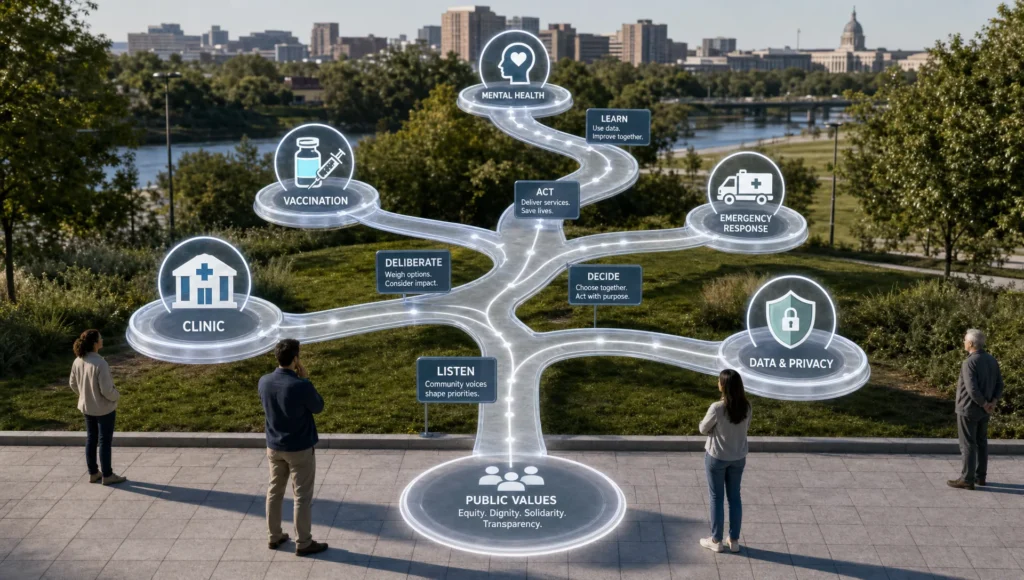
Public health priority setting often looks like a technical exercise. Health departments review disease burden, budget limits, workforce capacity, hospital data and expert advice, then publish plans t
How Deliberative Democracy Handles Irreversible Choices
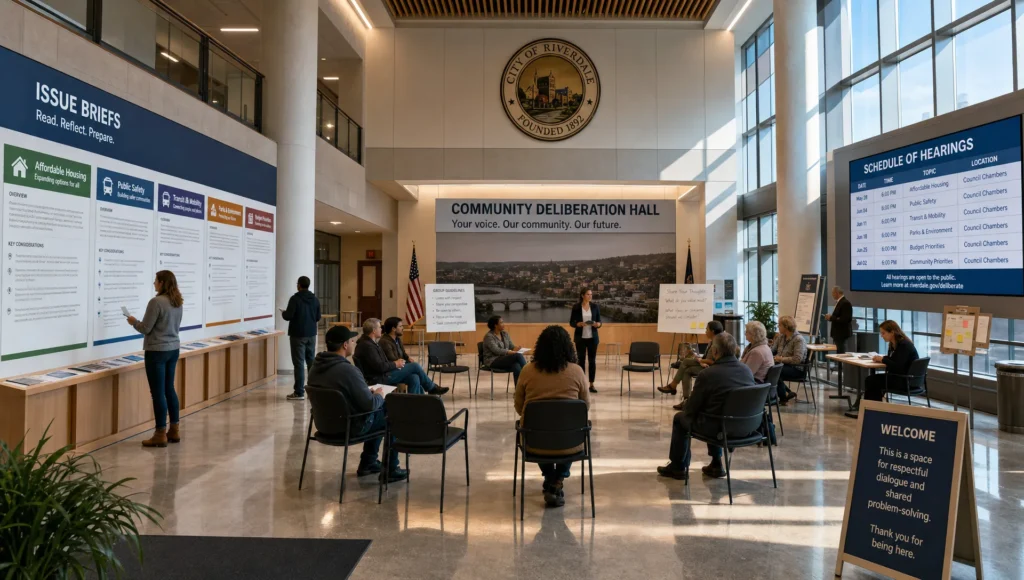
Some public decisions are ordinary mistakes. A city can change a parking rule, repeal a procurement policy or adjust a tax rate after the public sees the results. Other choices are different. They loc
Deliberative Democracy for Fair Transit Planning
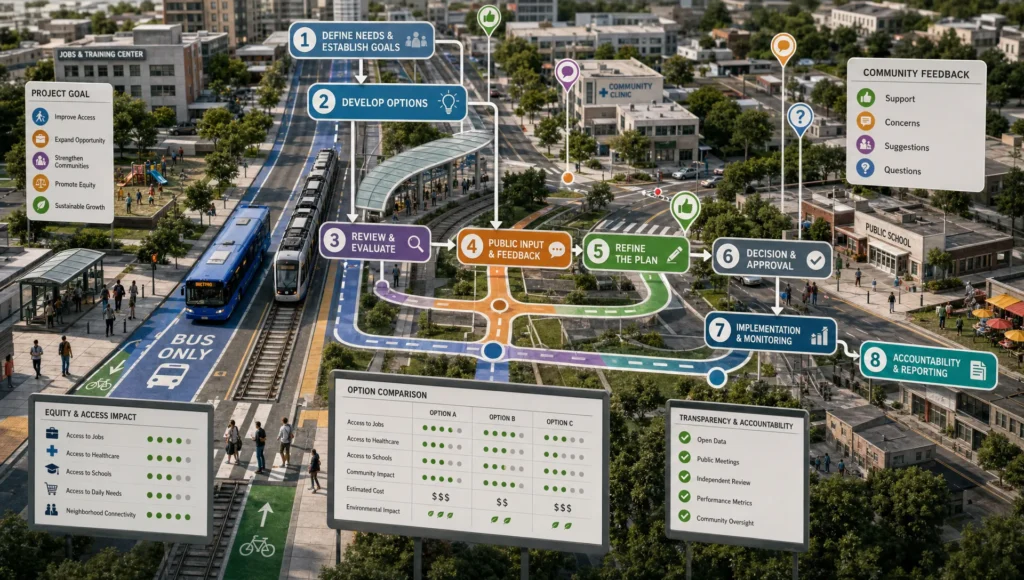
Transit planning is where democracy becomes physical. A bus route, rail extension, sidewalk connection, station design or fare change can decide who reaches work on time, who can get to a clinic and w
Deliberative Democracy for Climate Adaptation Decisions
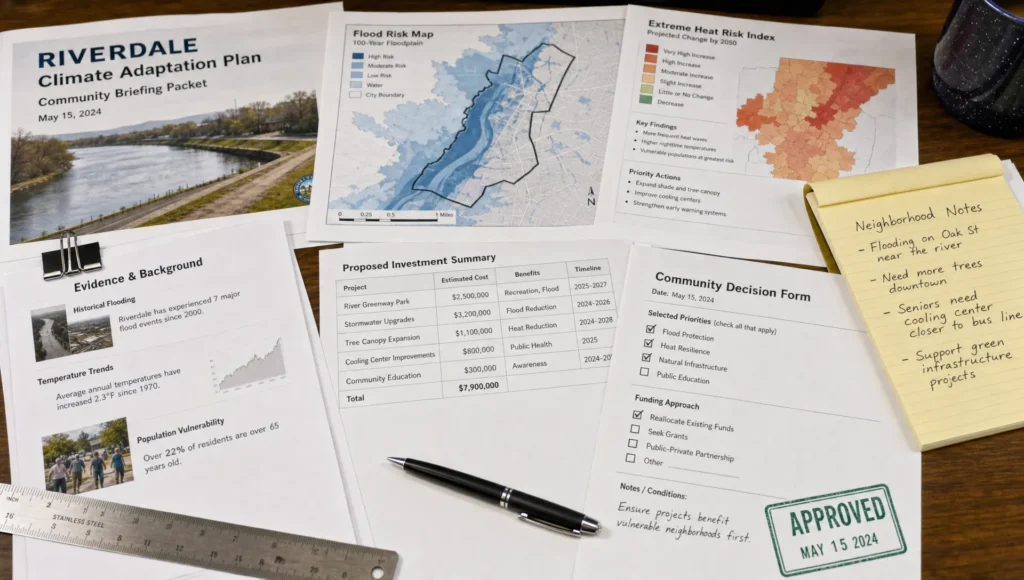
Climate adaptation used to sit inside technical reports, engineering departments and longrange planning documents. By 2026, it has become one of the most immediate democratic questions facing cities,
Civic Participation as a Check on Bureaucratic Drift
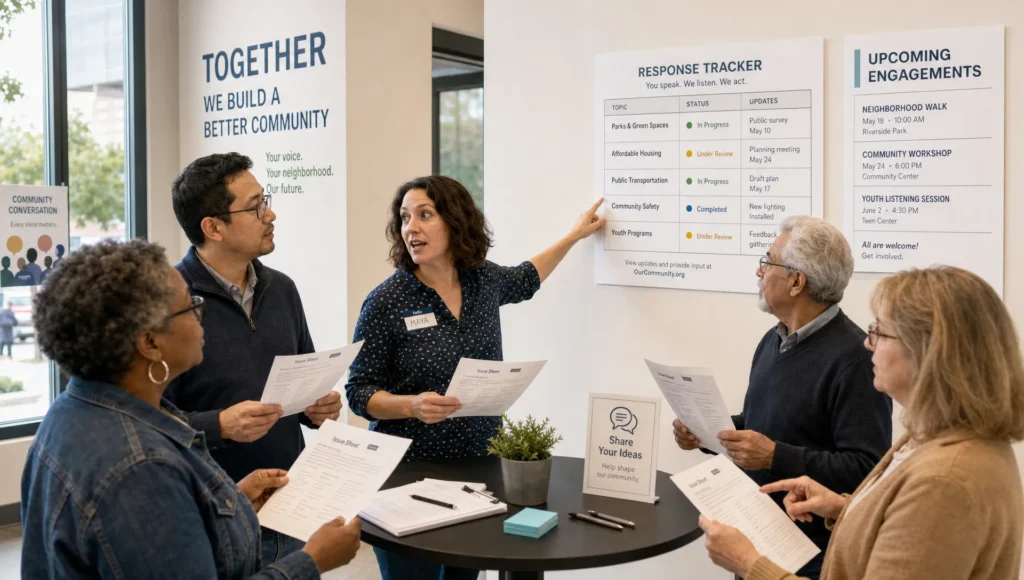
Bureaucratic drift rarely announces itself as corruption. More often, it arrives quietly: a form becomes longer, a public meeting becomes symbolic, a deadline becomes flexible for the office but rigid
Civic Participation and the Case for Public Pilot Programs
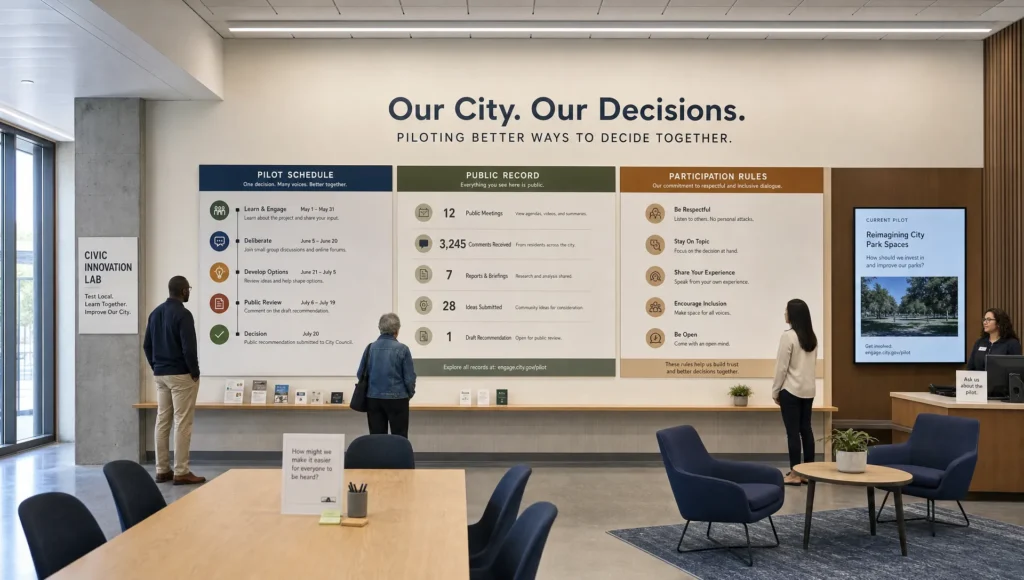
Civic participation becomes credible when it survives contact with a real public decision. It is easy for a government, party or civic group to say that people should be heard. It is harder to prove t
Civic Participation for Disability Policy That Works
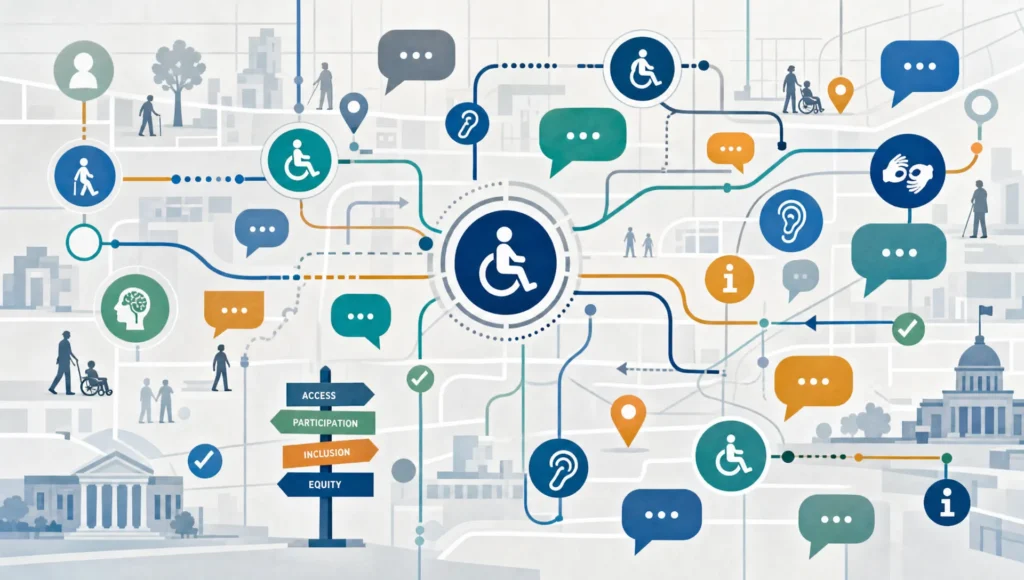
Disability policy often fails for a simple reason: it is designed around a public that does not exist. The imagined citizen is mobile, sighted, hearing, digitally confident, neurotypical, financially
Civic Participation in the Age of AI Summaries
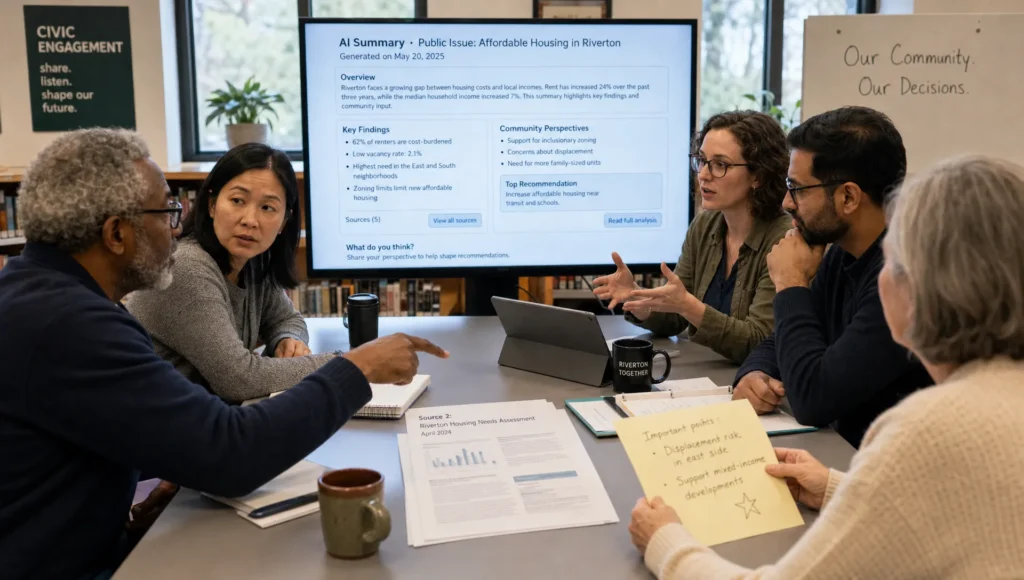
AI summaries are becoming the front door to public information. Search engines summarize news before people open articles. Messaging apps condense long threads. Government documents, committee hearing
Civic Participation for Rural and Small-Town Communities
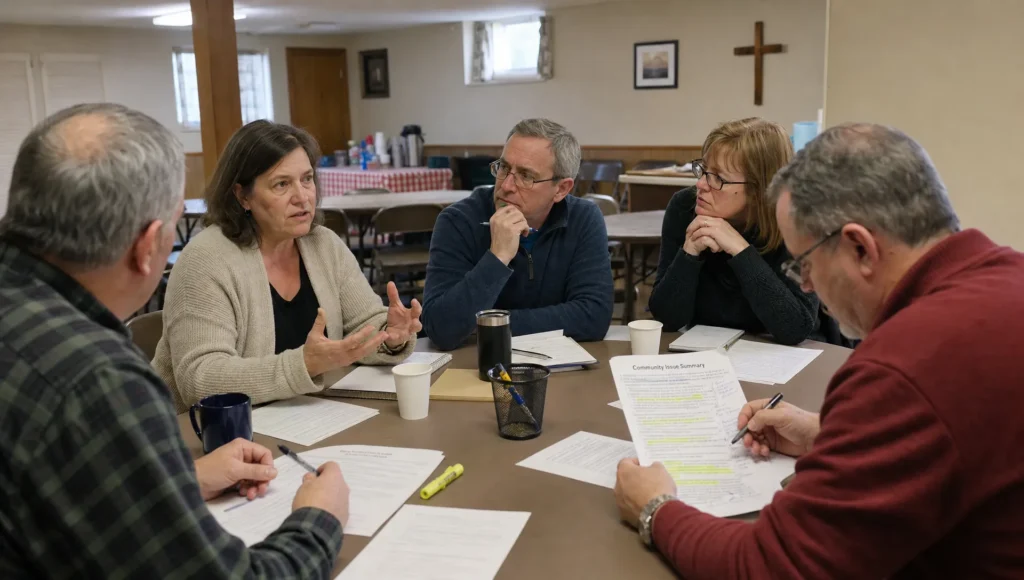
Rural and smalltown communities do not experience politics as an abstract national theater. A school board decision changes the future of a child you know. A road repair affects the farmer down the ro
How Civic Participation Can Improve Government Procurement
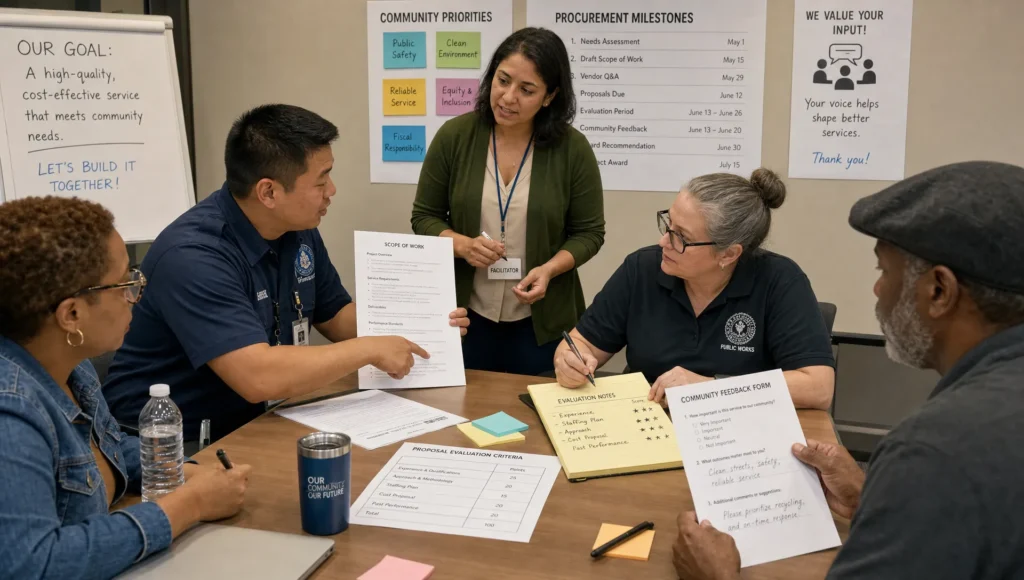
Government procurement often looks like a technical backoffice function, but it is one of the clearest places where public power becomes real. A budget line turns into a school meal contract. A policy