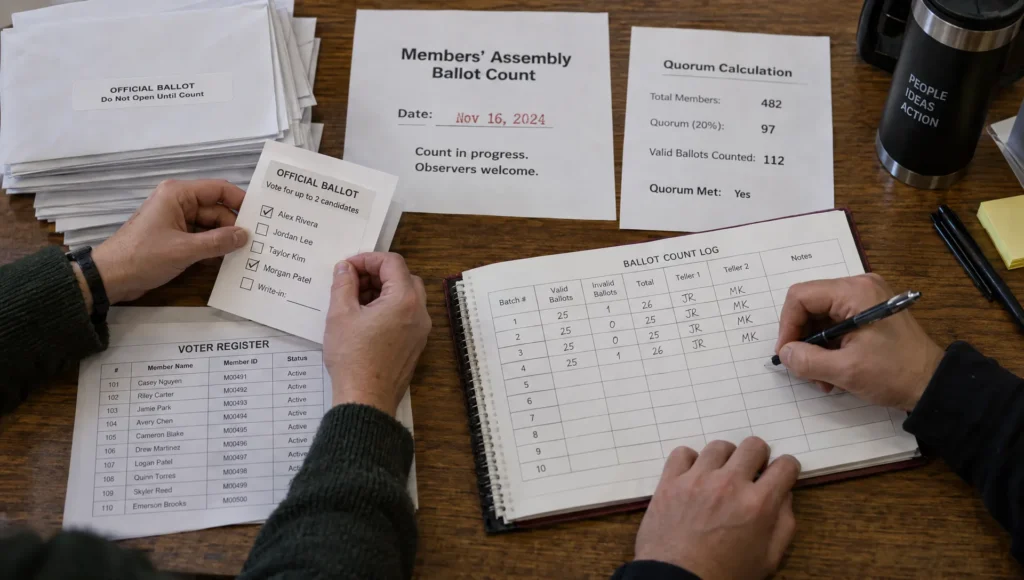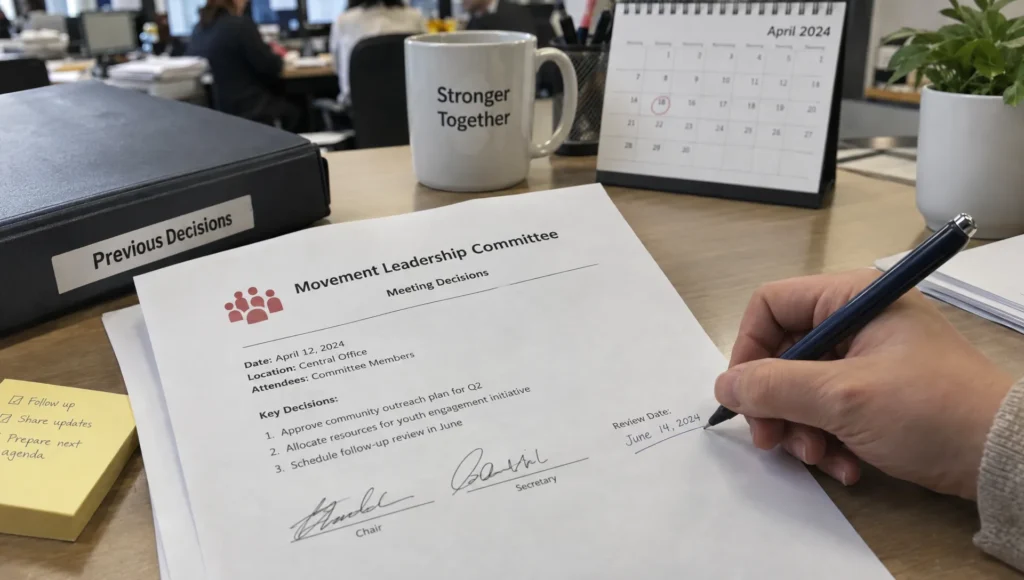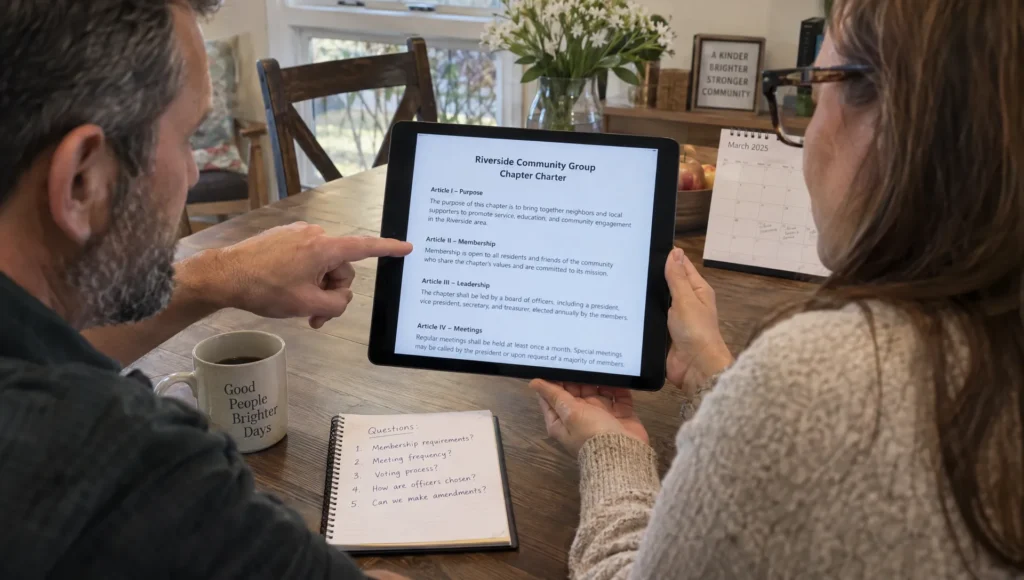
Housing policy is where democracy often feels most personal and most stuck. A city can broadly agree that rents are too high, homelessness is unacceptable, young families are being priced out, and infrastructure is strained. Then the first concrete proposal appears, and the room divides into familiar camps: homeowners fearing disruption, renters demanding relief, builders citing feasibility, advocates warning about displacement, and officials trying to survive the next meeting.
That is a policy deadlock, but it is also a democratic design failure.
Deliberative democracy offers a practical way through it. Not by pretending everyone will agree, and not by replacing elected representatives with endless town halls. It helps communities build a fair process where residents examine evidence, hear tradeoffs, produce decision-ready options, and require officials to respond in public.
This matters deeply to JustSocial’s vision. In The Face of Democracy, Yuval David Vered argues that modern citizens are too often reduced to voters, taxpayers, and consumers. Housing policy shows the cost of that reduction. People live inside the consequences of public decisions every day, but they are usually invited into the process too late, with too little information, and with no clear way to see how their input changed anything.
Why housing policy creates deadlocks so easily
Housing is not a single issue. It is a collision point for wealth, safety, family, class, infrastructure, identity, land use, schools, transportation, and local memory. That is why ordinary public participation so often fails.
A three-minute public comment cannot carry the full complexity of a zoning reform. A petition cannot explain tradeoffs between affordability requirements and project feasibility. A planning document full of technical language cannot build trust among residents who suspect that decisions were made before the meeting began.
The result is a cycle many cities know too well. Officials announce a proposal, residents react under pressure, organized interests dominate the room, social media polarizes the debate, and the final decision is attacked as illegitimate regardless of outcome.
Housing deadlocks are rarely solved by more noise. They are solved by better civic architecture.
| Housing deadlock pattern | Why ordinary politics fails | Deliberative democracy response | Public output |
|---|---|---|---|
| Zoning reform conflict | Debate becomes pro-growth vs neighborhood protection | Compare specific scenarios and tradeoffs | Options Memo with impacts and minority concerns |
| Affordable housing disputes | People agree on the goal but disagree on who pays | Surface fiscal, legal, and design constraints | Funding and tradeoff matrix |
| Shelter or supportive housing opposition | Fear, stigma, and safety concerns dominate | Separate lived experience, evidence, and operational design | Conditions for implementation and oversight |
| Anti-displacement debates | Existing residents distrust future promises | Require binding follow-through measures | Implementation tracker and response memo |
| Infrastructure capacity concerns | Residents hear promises without proof | Publish assumptions, timelines, and responsible agencies | Infrastructure evidence pack |
Deliberative democracy is not another public meeting
Deliberative democracy is a structured process where a representative group of people studies an issue, hears from different perspectives, discusses tradeoffs under fair facilitation, and produces public recommendations or options.
The key word is structured. A deliberative process is not an open microphone, a partisan rally, or a survey dressed up as participation. It has a defined decision, balanced evidence, clear rules, inclusion goals, recorded reasoning, and a visible connection to the official decision.
This is where deliberative democracy differs from discursive democracy. Discursive democracy is the broader public conversation: hearings, media debates, neighborhood forums, comments, protests, and online arguments. It is where people frame the problem, express values, challenge assumptions, and make invisible harms visible.
Deliberative democracy comes next. It takes the best material from the wider conversation and turns it into decision-grade judgment.
For housing, both layers are necessary. Discursive democracy lets the whole community speak. Deliberative democracy helps a smaller, more balanced group work through the hard question: given the constraints, what should we actually do?
A housing deadlock deliberation cycle
A city, neighborhood coalition, university, civic group, or political movement can use the following cycle before a housing decision becomes a shouting match.
1. Name the real decision
The first failure in housing participation is vagueness. People are asked what they think about affordability, density, development, or neighborhood character, but not the actual decision in front of the institution.
A better process starts with a Decision Statement:
- What decision will be made?
- Who has authority to make it?
- What is the timeline?
- What options are legally and financially possible?
- How will public input be used?
- What will officials publish after the decision?
This is the minimum condition for serious civic participation. If residents cannot identify the decision owner and the decision window, participation becomes emotional labor without power.
2. Publish a Housing Issue Pack
Before asking people to deliberate, publish a plain-language Housing Issue Pack. It should not sell one preferred outcome. It should make the decision understandable.
A strong Issue Pack includes the current housing need, existing zoning or policy rules, rent and ownership trends where available, infrastructure constraints, legal limits, fiscal costs, likely beneficiaries, likely burdens, and areas of uncertainty.
It should also include lived-experience material. Renters, disabled residents, young adults, families, seniors, unhoused people, and small landlords often experience the same housing system from radically different positions. Deliberation without lived experience becomes technocratic. Lived experience without shared evidence becomes easy to dismiss. The Issue Pack should contain both.
3. Run a discursive intake phase
Before convening a deliberative group, open a discursive phase. This is where the wider public can submit claims, concerns, evidence, stories, and proposed criteria for a good decision.
The goal is not to count comments as votes. The goal is to map the issue honestly.
Instead of asking, Do you support this proposal?, ask better prompts:
- What problem should this policy solve first?
- Who is most likely to be harmed if nothing changes?
- What would make this proposal acceptable or unacceptable?
- What evidence should decision-makers examine before voting?
- What implementation promise would you need to trust the outcome?
This turns public speech into civic material. It also gives people a way to participate without forcing every resident into a long deliberative commitment.
4. Convene a balanced deliberative group
The deliberative group should be diverse enough to see the whole problem. That does not mean every interest group gets a veto. It means the process must include people who are usually absent from housing rooms, especially renters, low-income residents, young people, people with disabilities, service workers, and future residents who cannot yet afford to live in the community.
Selection can use random recruitment, stratified sampling, targeted outreach, or a hybrid model. The method matters less than the public explanation. Publish how participants were recruited, what gaps remain, and how conflicts of interest are handled.
Facilitation should protect equal voice. Housing debates are vulnerable to domination by technical experts, frequent meeting attendees, wealthy stakeholders, and organized campaigns. A deliberative process should give participants time to learn, question, compare, revise, and record disagreement.
5. Produce options, not slogans
The most useful output is not a single sentence saying the public supports or opposes a policy. Housing decisions require options with tradeoffs.
A deliberative housing group should produce an Options Memo that compares realistic paths. For example, a city considering transit-area housing reform might receive options like these:
| Illustrative option | Potential benefit | Potential risk | Possible safeguard |
|---|---|---|---|
| Allow more apartments near transit | Adds homes where car dependence may be lower | Fear of neighborhood disruption | Design rules, phased implementation, infrastructure triggers |
| Pair upzoning with affordability requirements | Creates below-market homes | May reduce project feasibility if requirements are too high | Feasibility review and public subsidy options |
| Prioritize public land for mixed-income housing | Uses public assets for public goals | Slower delivery and procurement complexity | Clear timeline, public dashboard, anti-delay rules |
| Create anti-displacement protections first | Builds trust with existing residents | May delay supply reforms | Time-limited sequence with measurable milestones |
The point is not that these are always the right options. The point is that they are the right form of output: comparable, reasoned, and inspectable.
6. Require an official response memo
Deliberation becomes participation theater if officials can ignore it silently. The institution must commit in advance to a response memo.
The response memo should state which recommendations were accepted, modified, rejected, or deferred. It should explain why. If elected officials disagree with the deliberative group, they can still decide differently, but they must show their reasoning.
This aligns with JustSocial’s broader idea that representatives should not disappear between elections. They should function as accountable decision-makers who continuously hear, measure, and respond to the people.
7. Track implementation publicly
Housing policy trust dies in the gap between approval and delivery. A plan passes, then residents see little evidence of progress. Or a project is built, but promised protections are not enforced.
Every housing deliberation should end with an implementation tracker. It should show milestones, responsible agencies, deadlines, status updates, budget changes, and review dates. This is how civic participation becomes memory, not just expression.
Where academia and expertise fit
Housing policy requires expertise, but expertise alone cannot create legitimacy. Planners, economists, architects, social workers, tenant advocates, infrastructure engineers, and legal scholars all see parts of the truth.
The JustSocial manifesto proposes an Academic Branch as an independent democratic function that helps educate the public and regulate decision-making through evidence. Housing is a clear use case. Academic and professional experts should not dictate the answer. They should prepare balanced briefs, clarify uncertainty, test claims, and help residents understand consequences.
A useful expert brief says: here is what we know, here is what we do not know, here are the tradeoffs, and here is how we will evaluate the outcome after adoption.
That kind of expertise strengthens deliberation because it makes knowledge contestable and public.
The role of technology in housing deliberation
Technology can help housing deliberation scale, but only if it serves the process rather than replacing it.
Useful tools can publish issue packs, host accessible comment forms, summarize recurring concerns, map evidence, livestream committee meetings, timestamp public records, support multilingual participation, and track implementation after a vote. This connects directly to the manifesto’s product ideas, including rParliament for public committee visibility, rConcensus for community voting and ballots, and analytics tools that help public officials understand opinion without pretending raw sentiment is the same as judgment.
Even discoverability is democratic infrastructure. Public agencies can learn from the plain-language discipline behind Answer Engine Optimization: residents should be able to ask what is being decided, who decides, how to participate, and what happened afterward, then find clear public answers without digging through confusing portals.
But technology has limits. It cannot solve capture by itself. It cannot make unfair questions fair. It cannot turn a rushed process into a legitimate one. And it should never be used to bury political responsibility behind dashboards or AI summaries.
The right principle is simple: use technology to make the process visible, accessible, and auditable.
How a political movement can use this before winning office
A political movement does not need to control city hall to practice deliberative democracy. In fact, it should model the democracy it wants to build.
For a housing deadlock, a movement can run a shadow deliberation. It can publish a Decision Statement, build an Issue Pack, collect structured public input, convene a balanced working group, produce an Options Memo, and deliver it to the city council, planning board, or housing agency. Then it can track whether officials respond.
This does three things. First, it gives residents a constructive alternative to rage and resignation. Second, it creates public artifacts that journalists, officials, and advocates can inspect. Third, it trains people in self-government.
That is the deeper purpose. JustSocial’s idea of continuous direct democracy is not only about voting more often. It is about building the public capacity to reason, decide, and oversee together.
Guardrails that keep housing deliberation legitimate
Housing deliberation can be captured if the rules are weak. Developers, homeowners, party organizations, advocacy groups, and government staff may all try to shape the outcome. That does not make deliberation impossible. It makes safeguards necessary.
A credible process should include published rules, balanced evidence, conflict disclosures, participant support, accessibility, minority reports, and a clear duty to respond. It should separate mobilization from deliberation. Activists can mobilize publicly, but the deliberative room needs rules that protect learning, equal voice, and reasoned output.
Privacy also matters. A renter criticizing a landlord, a public employee discussing agency failure, or an unhoused person describing survival conditions may face real consequences. Some contributions should be public. Some should be anonymized. Some should be summarized with consent. Designing for safety is not anti-transparency. It is a condition of honest participation.
What success looks like
The goal is not total consensus. In housing, full consensus may be impossible. The goal is a better disagreement, one that officials and residents can inspect.
A successful process should make clear what people value, where evidence points, where uncertainty remains, which tradeoffs were considered, which options are realistic, and why the final decision was made.
| Measurement area | What to track | Why it matters |
|---|---|---|
| Inclusion | Who participated and who was missing | Legitimacy depends on affected voices |
| Evidence quality | Claims linked to sources or lived experience | Reduces rumor-driven conflict |
| Deliberative quality | Whether participants changed, refined, or clarified views | Shows learning, not just performance |
| Decision linkage | Whether officials responded to recommendations | Prevents participation theater |
| Follow-through | Whether promises were implemented on time | Builds institutional memory and trust |
If a housing process can produce these outputs, even people who dislike the final policy may be more able to understand it, challenge it intelligently, or improve it next time.
Housing deadlocks are a test of the new social contract
The manifesto’s proposed social contract is built on a simple but radical idea: citizens should have an integral day-to-day role in democracy and the state should measure, hear, safeguard, and respond to that role.
Housing policy is one of the best places to test that idea. It is local enough for residents to understand through lived experience, complex enough to require expertise, and consequential enough that decisions cannot be left to closed rooms or symbolic hearings.
If we can deliberate about housing, we can deliberate about schools, budgets, transportation, climate resilience, public safety, and digital infrastructure. Housing is not only a policy category. It is a training ground for democratic maturity.
Frequently Asked Questions
Does deliberative democracy slow down urgent housing reform? It can slow bad process, but it does not need to paralyze action. A well-designed housing deliberation can run in 4 to 8 weeks and produce clearer options, stronger legitimacy, and fewer downstream delays caused by backlash or litigation.
Does deliberative democracy replace elected officials? No. Elected officials still decide within their legal authority. The difference is that they receive better public judgment and must explain how they used it. This strengthens representative responsibility rather than erasing it.
What if the public is misinformed about housing? That is exactly why deliberation matters. The process should include an evidence pack, expert questioning, claim checking, and opportunities to revise views. It treats misinformation as a design challenge, not a reason to exclude citizens.
Can online tools handle housing deliberation fairly? Online tools can help with access, records, translation, evidence management, and follow-through. They should be paired with facilitation, privacy safeguards, offline options, and transparent rules so digital access does not become the new gatekeeper.
What should a community publish after a housing deliberation? At minimum, publish the decision statement, issue pack, participation summary, options memo, minority concerns, official response memo, and implementation tracker. These artifacts let outsiders verify the process and learn from it.
Help build democracy that can handle hard decisions
Housing deadlocks will not be solved by louder meetings or quieter citizens. They require a new democratic operating system: continuous civic participation, fair deliberation, public evidence, transparent technology, and accountable follow-through.
JustSocial exists to help build that future. If this approach speaks to you, read The Face of Democracy, share it with people working on housing in your community, and consider contributing as a volunteer, supporter, organizer, technologist, educator, or civic partner.
The next stage of democracy will not appear fully formed. We build it one decision, one public process, and one community at a time.