Blog
Most people support the idea of civic participation, but many of us live in a calendar that leaves little room for “being politically active.” The result is often guilt, doomscrolling, or bursts of outrage that never touch an actual decision.
Most people who try civic participation eventually hit the same wall: you show up, you comment, you sign, you volunteer, and then the decision happens somewhere else.
Most people want better politics, but they are stuck between two bad options: doomscrolling (high emotion, low impact) or activism that burns out (high effort, unclear results). The good news is that political engagement can be practical, measurable, and doable today when it is connected to real decisions and built as a habit.
If “democracy” feels like something you do once every few years, it’s easy to treat civic life as background noise. But civic involvement is the opposite idea: it treats public decision-making as something citizens can shape routinely, not occasionally.
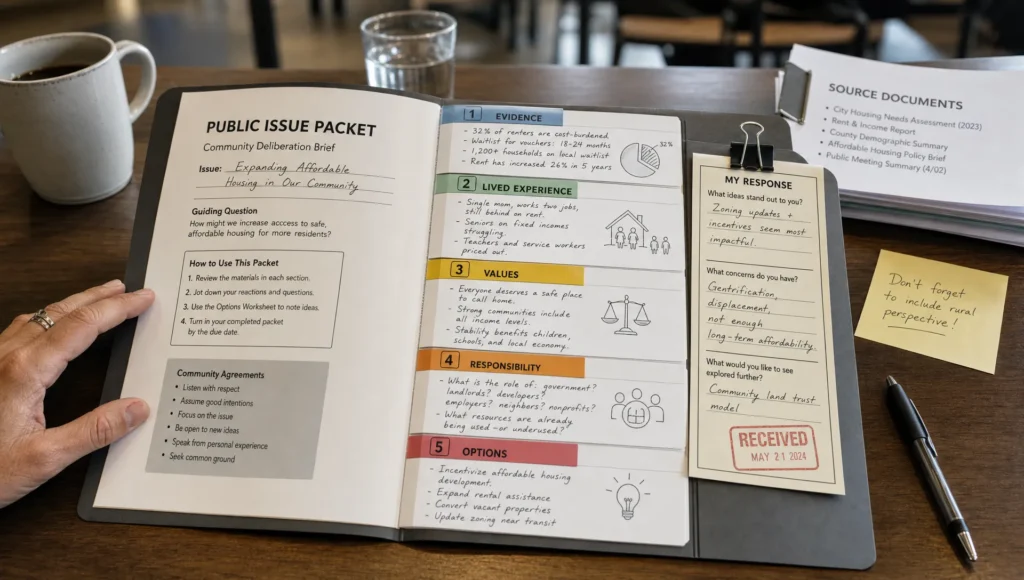
If you are looking for a clear definition of deliberative democracy, here is the simplest way to think about it: it is a model of democracy where legitimacy comes not only from counting votes, but from citizens (or their representatives) reasoning together in a fair process before a decision is made.
Most people are taught that civic participation means one thing: voting on election day. But if democracy is meant to reflect the public will between elections, then participation has to be broader, more continuous, and more practical.
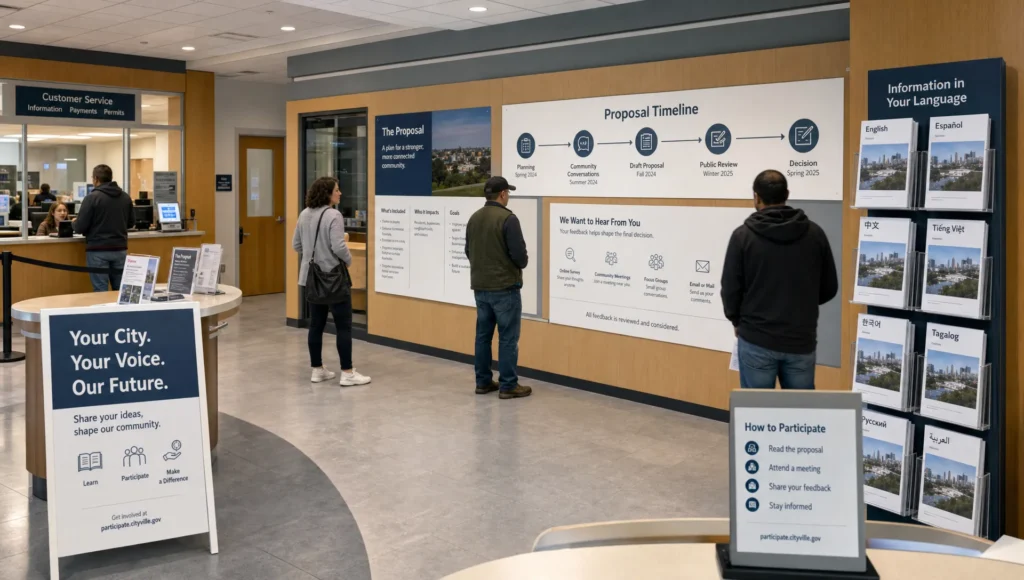
Democracy tech has a deceptively simple promise: give more people a voice, more often. But if the tools are hard to use, require the latest devices, assume high literacy, ignore disability needs, or only work in one language, the result is not “more democracy.” It is a new participation gap.
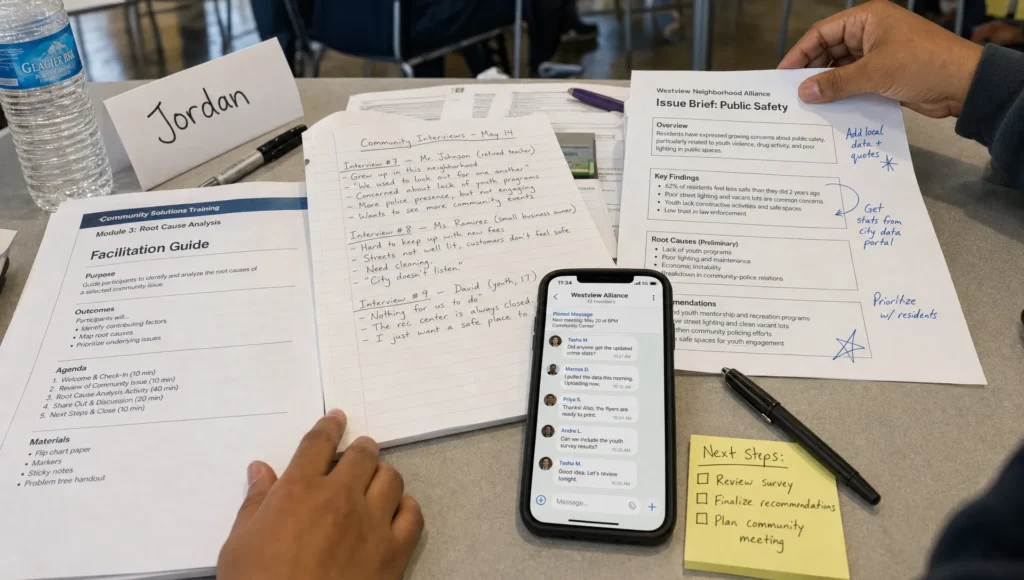
Local democracy is built (or broken) in everyday places: city council meetings, school boards, neighborhood associations, mutual aid groups, parent groups, tenant unions, and local issue coalitions. When people say “politics doesn’t listen,” they are often reacting to a simple pattern: input gets collected, but decisions feel disconnected, and follow-through is hard to see.
During the twentieth century, Western nations built impressive public systems designed to provide citizens with services in health, education, welfare, and social security. The promise was clear: the state would care for every citizen from cradle to grave. But somewhere along the way, something went wrong. Systems built to serve citizens became exhausting bureaucratic labyrinths, while the organic communities that provided human support for thousands of years shrank and disintegrated.
While many countries are dealing with a crisis of trust in political institutions and a growing sense of alienation among citizens, two small countries in Europe offer a completely different model. Switzerland and Iceland, different from each other in history, culture, and population size, implement different forms of direct democracy that give citizens real influence on policy shaping. The accumulated experience of these countries teaches that direct democracy is not just a utopian idea, but a system that works in practice and produces measurable results.
Once every four years we go to the ballot box, vote, and go home. For a few hours we feel that we have power, that we are influencing the future of the country. And then? Four years of silence, during which decisions are made on our behalf, without us being asked, without being consulted, and sometimes in complete contradiction to what we were promised. This is representative democracy as it works today, and there is a fundamental problem with it.
In the business world of 2026, economic success alone is not enough. Consumers, employees, and investors expect companies and organizations to act responsibly toward the environment, toward employees, and toward the community. Social responsibility has evolved from a marginal idea to a central factor in organizational success, and companies that ignore it risk damaging public trust and their ability to compete in the long term.
The democracy we know is at a crossroads. According to the Israel Democracy Institute's Democracy Survey for 2024, only 29% of Israelis express trust in political institutions. Many citizens feel disconnected from the decision-making processes that affect their lives.
Utopia, as coined by Thomas More in 1516, is not merely an imaginary and unattainable perfection. In fact, it serves as a critical instrument that holds a mirror to society and outlines practical alternatives to reality.
Communism is a social and political idea centered on abolishing class divisions and transferring ownership of the means of production from the individual to the collective, in order to distribute output and power fairly.