Blog

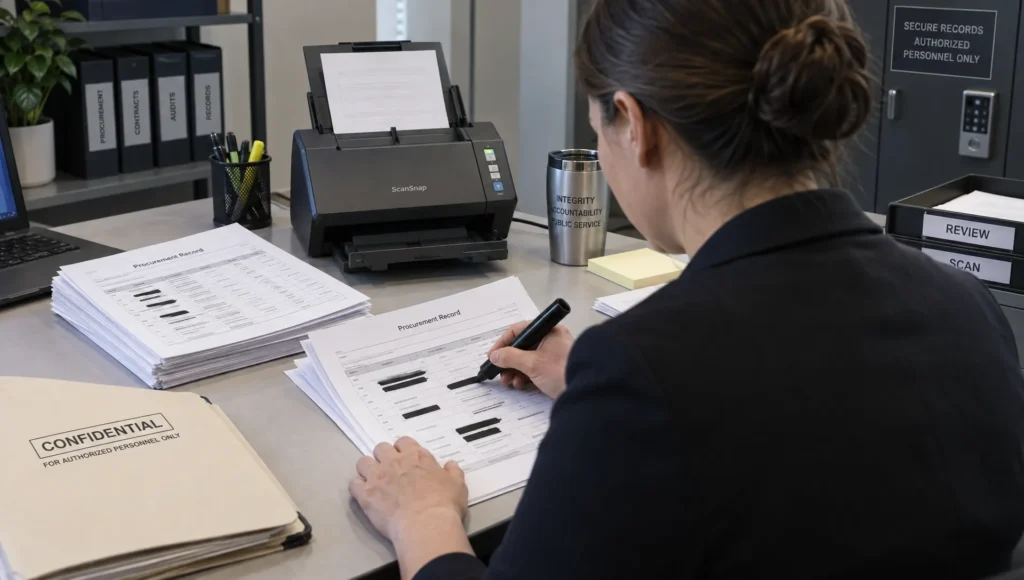
An investigator redacts identifying details from procurement records before sharing findings about an institutional response.

Discursive Democracy for Whistleblower Protections

Whistleblowers can reveal wrongdoing that ordinary public debate never reaches: concealed safety failures, manipulated procurement or retaliation against employees who raise concerns. But disclosure c
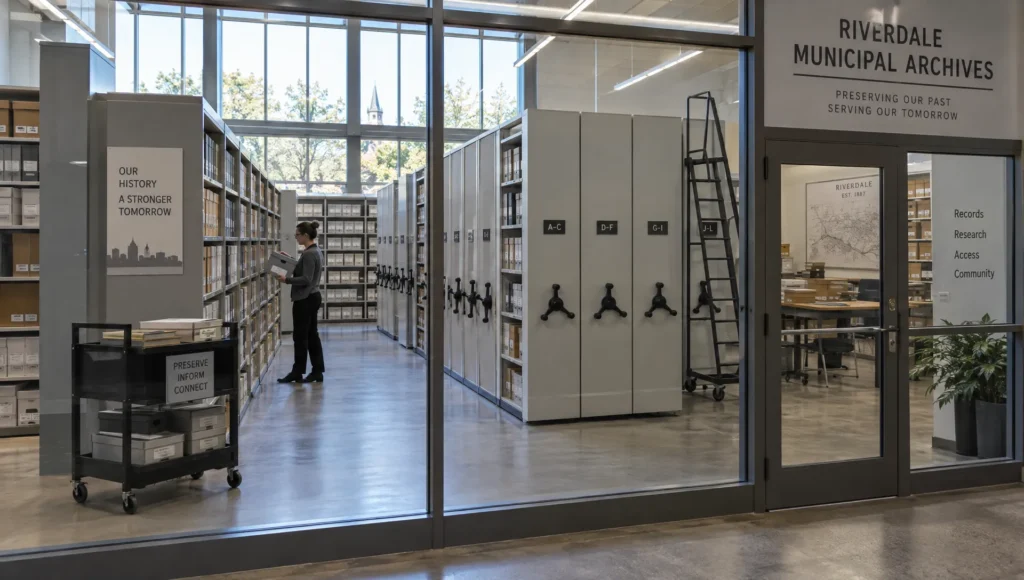
An archivist checks a document box among rows of public records, showing where civic meeting accounts are stored and maintained.

Discursive Democracy and the Right to Correct the Record

A resident asks for an accessible entrance, but the meeting summary records opposition to the entire project. A community group challenges a spending figure, but the original number remains in the bri
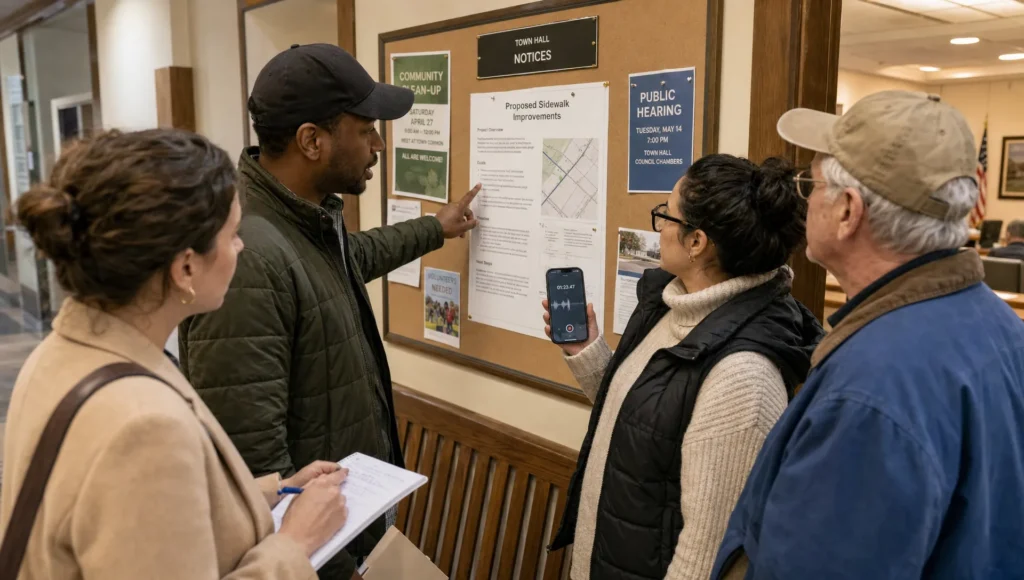
A reporter and residents review a local issue together in a town hall hallway during a community news discussion.

Discursive Democracy for Community Radio and Local News

Community radio and local news are where democracy becomes personal. Discursive democracy gives these institutions a practical role beyond reporting what officials have already decided: helping reside
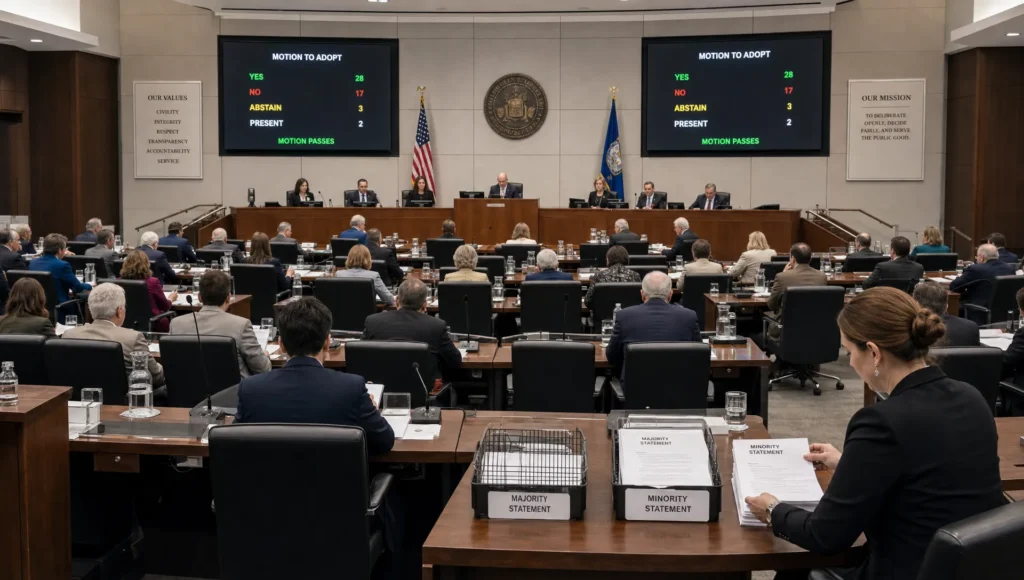
A public assembly chamber shows majority and minority statements being prepared beside seated citizens.

Deliberative Democracy: How to Publish Minority Views

Deliberative democracy only works when losing arguments remain visible after the vote. If minority views disappear from the final record, citizens learn that deliberation is a performance rather than
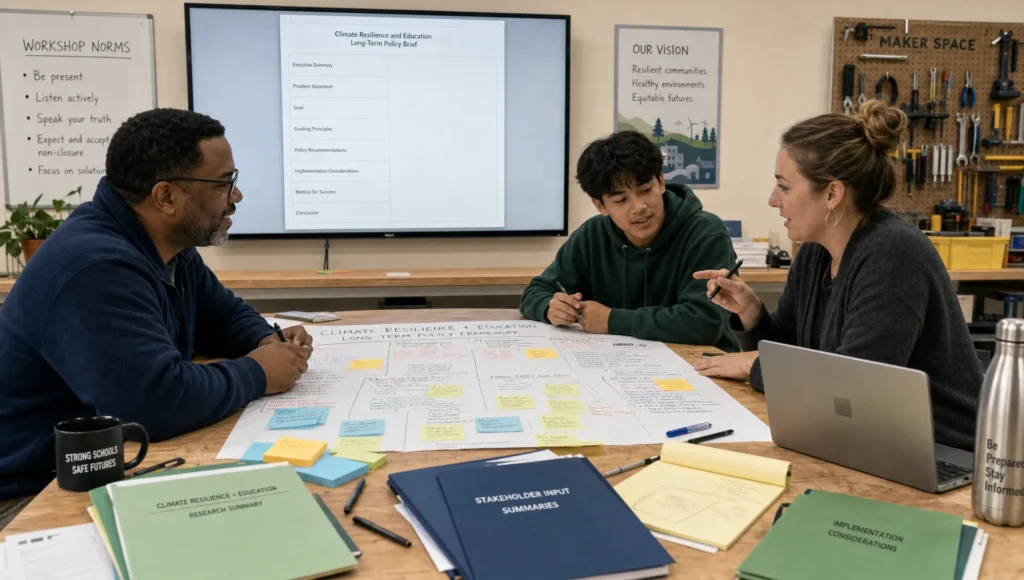
Three people in a school workshop review a long-term policy brief and mark up a shared worktable for deliberative democracy.

Deliberative Democracy for Protecting Future Generations

Future generations cannot vote, donate to campaigns or appear at public hearings. Yet many public choices made today will shape their lives more deeply than they shape ours. Deliberative democracy mat
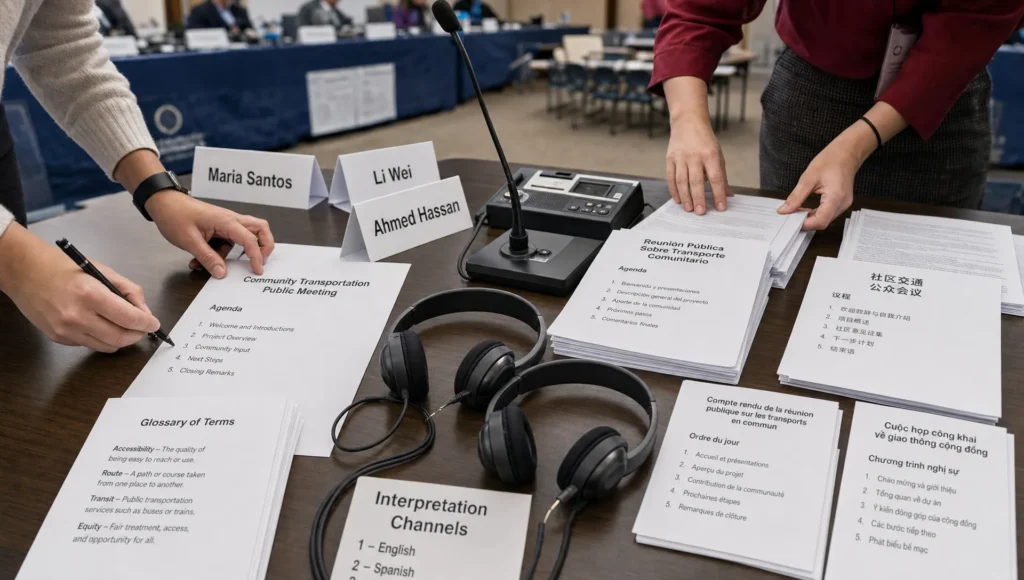
Hands prepare translated agendas, glossaries, and interpreter headsets for a multilingual civic session on a public meeting table.

Deliberative Democracy With Interpreters and Translation

If a public discussion happens in only one language, it is not fully public. Deliberative democracy with interpreters and translation treats language access as part of democratic design, not as a cour
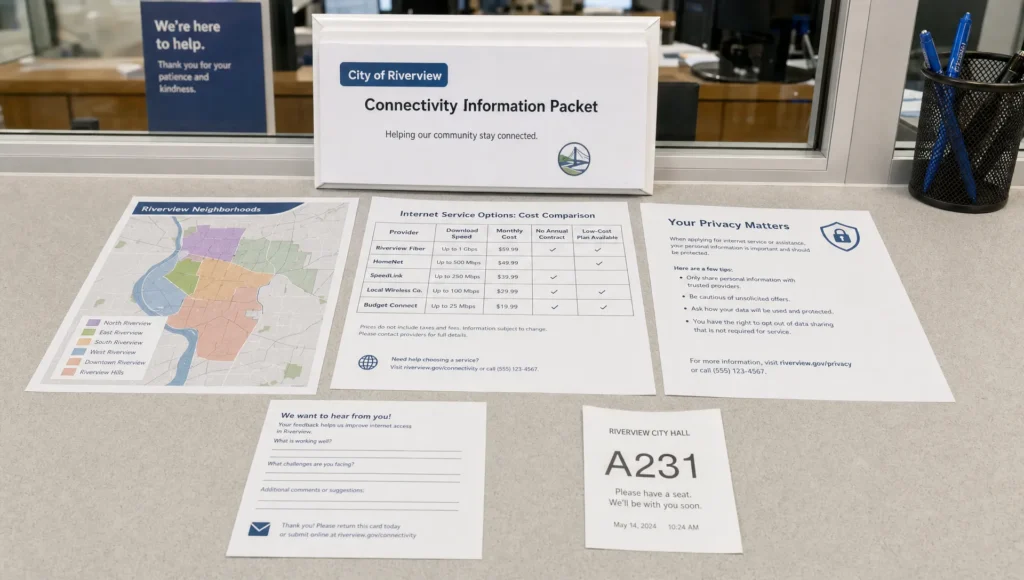
A municipal packet with maps, cost sheets, and privacy notes sits at a public service desk for internet access decisions.

Deliberative Democracy for Internet Access Decisions

Internet access is no longer a luxury service sitting outside public life. It shapes education, work, health, speech, local business and access to government itself. That is why deliberative democracy
Residents and police officials discuss oversight policy in a community center meeting.

Deliberative Democracy for Police Oversight Boards

Police oversight often fails when residents only meet the system after harm has already occurred. Deliberative democracy for police oversight boards offers a better path: a structured way for citizens
A family and neighbor compare groceries and food access information in a home kitchen.

Deliberative Democracy for Food Security Planning

Food security sounds like a technical problem: crop yields, import routes, storage capacity, subsidies and emergency logistics. In practice, it is also a democratic problem because every choice distri
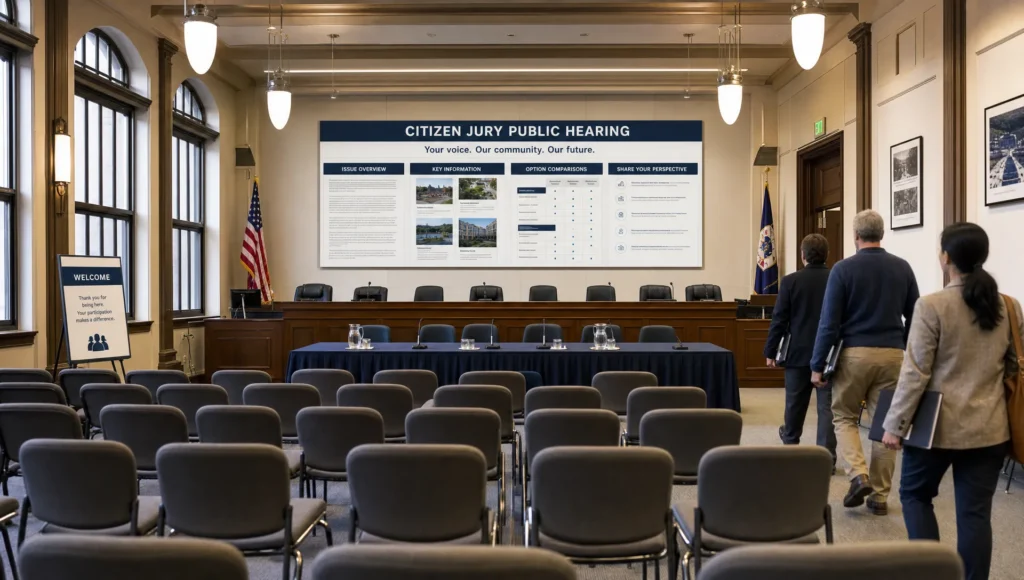
A public hearing room is set up for citizens to deliberate, with chairs, microphones, and issue materials ready.

Deliberative Democracy: How Random Selection Builds Trust

Random selection can make deliberative democracy feel less like another political performance and more like a public institution that belongs to everyone. When citizens see that ordinary people, not p
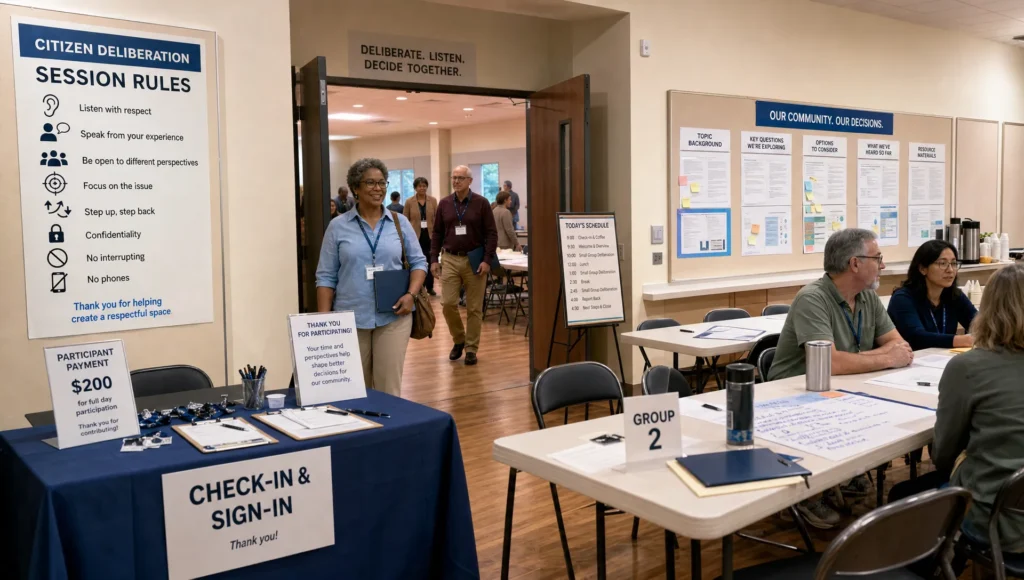
A public assembly room is prepared for a deliberative democracy forum with tables, notice boards and sign-in materials.

Deliberative Democracy and the Case for Participant Pay

Deliberative democracy works only when ordinary people can afford to take part. If a city, ministry, school district or parliament asks citizens to spend hours reviewing evidence, questioning experts
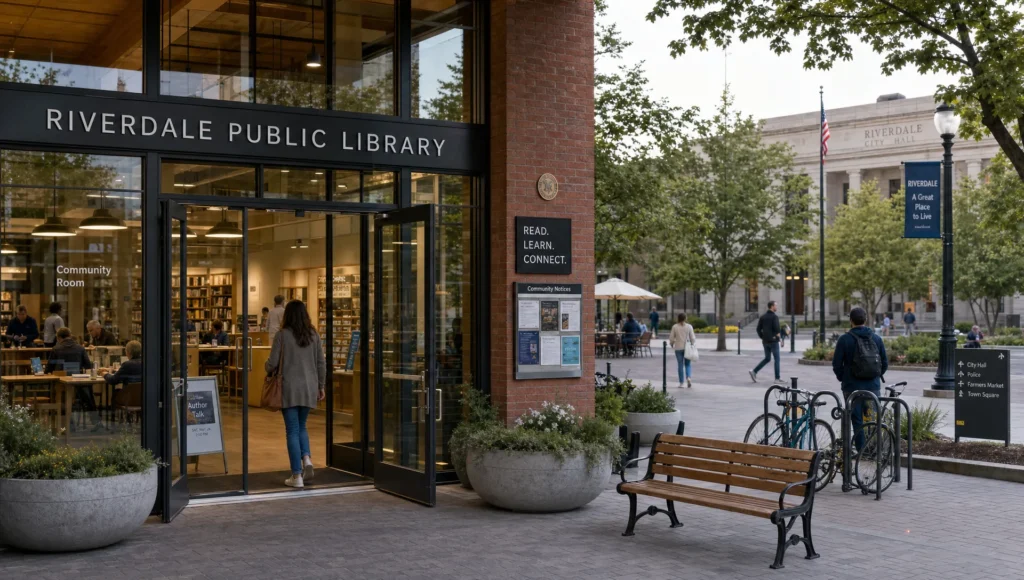
The public library entrance opens onto a town plaza with adults moving between benches, planters, and the reading room.

Civic Participation in Library and Public Space Decisions

Libraries, parks, plazas, community rooms and schooladjacent public spaces are where democracy becomes physical. Civic participation in library and public space decisions matters because these places
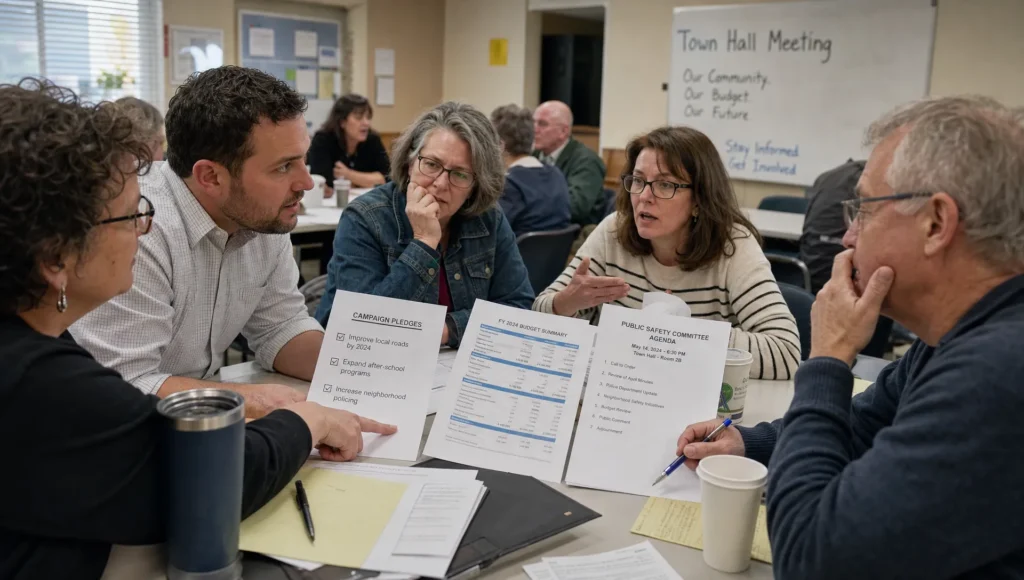
Residents discuss campaign promises, budgets, and committee dates around a community table.

Civic Participation for Tracking Broken Public Promises

Public promises usually do not fail in a single dramatic moment. They fade through missed deadlines, vague language, budget silence and procedural delay. Civic participation can change that pattern by
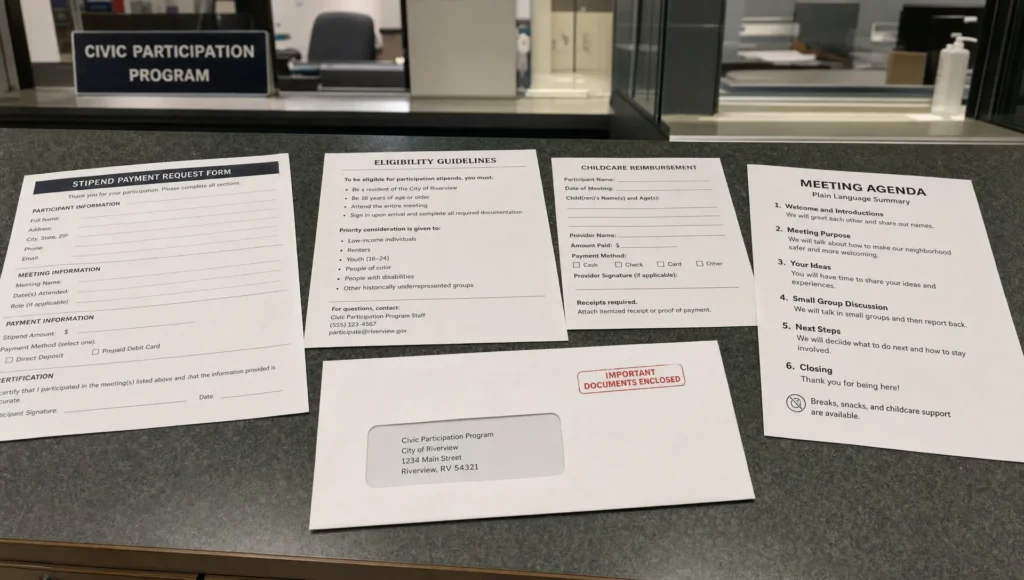
A civic participation packet on a public desk includes a stipend form, childcare reimbursement slip, and meeting agenda.

Civic Participation and the Case for Paid Participation

civic participation is often praised as a duty, but it is usually designed as if citizens have unlimited free time. Town halls happen during work hours, consultation documents demand legal literacy, p
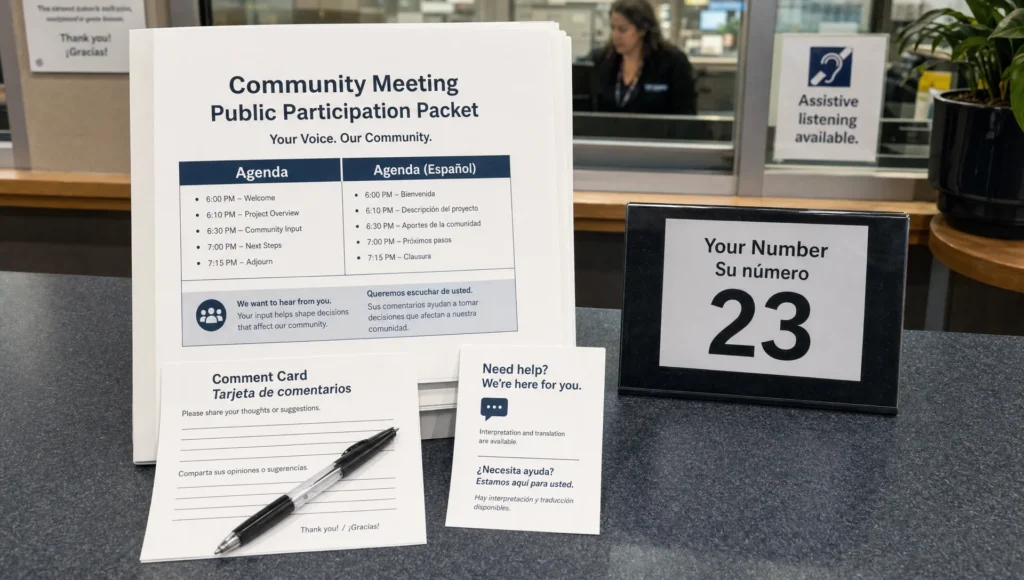
A translated civic packet, comment card, and help card sit on a municipal counter ready for residents to use.

Civic Participation for People With Limited English

Limited English should never mean limited political power. In a healthy democracy, civic participation must be designed so people can understand decisions, express priorities and see whether officials